Ancient Astronomy
Interactive passage with audio narration, comprehension questions, and printable PDF.
By completing this purchase you agree to our Terms of Use and Privacy Policy. Your subscription renews automatically until you cancel. You can cancel anytime from your account settings. All sales are final and non-refundable. Digital content is available for download in your account immediately upon purchase.
What's included
Ancient Astronomy preview and details
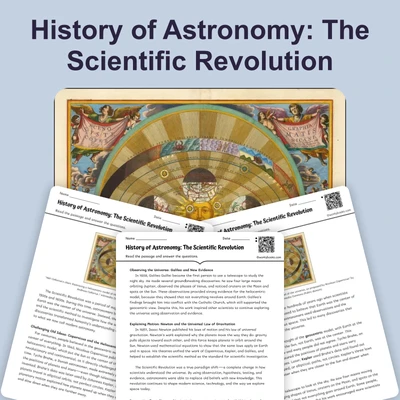
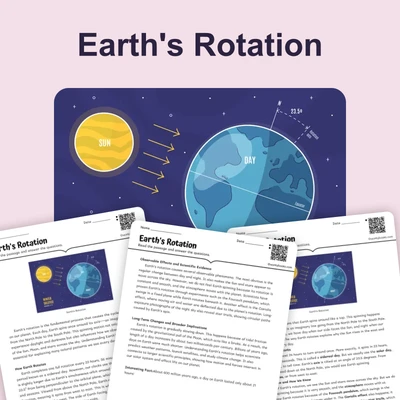
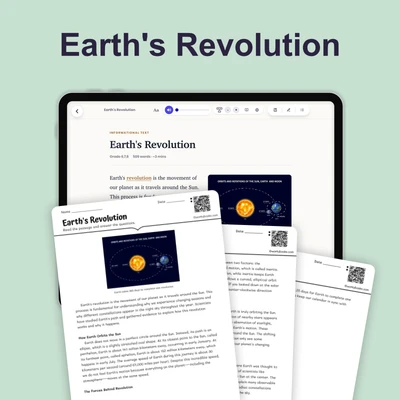
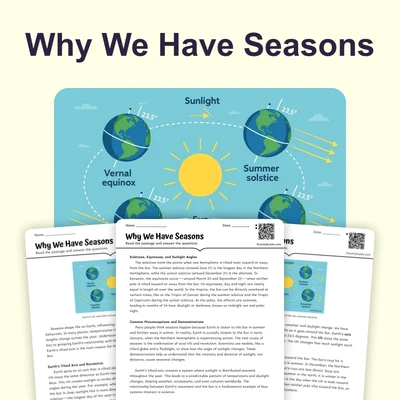
About this printable Ancient Astronomy science reading passage, NGSS-aligned (Grades 5-8)
Sample passage and quiz from Ancient Astronomy
Reading passage and comprehension quiz preview
Ancient Astronomy
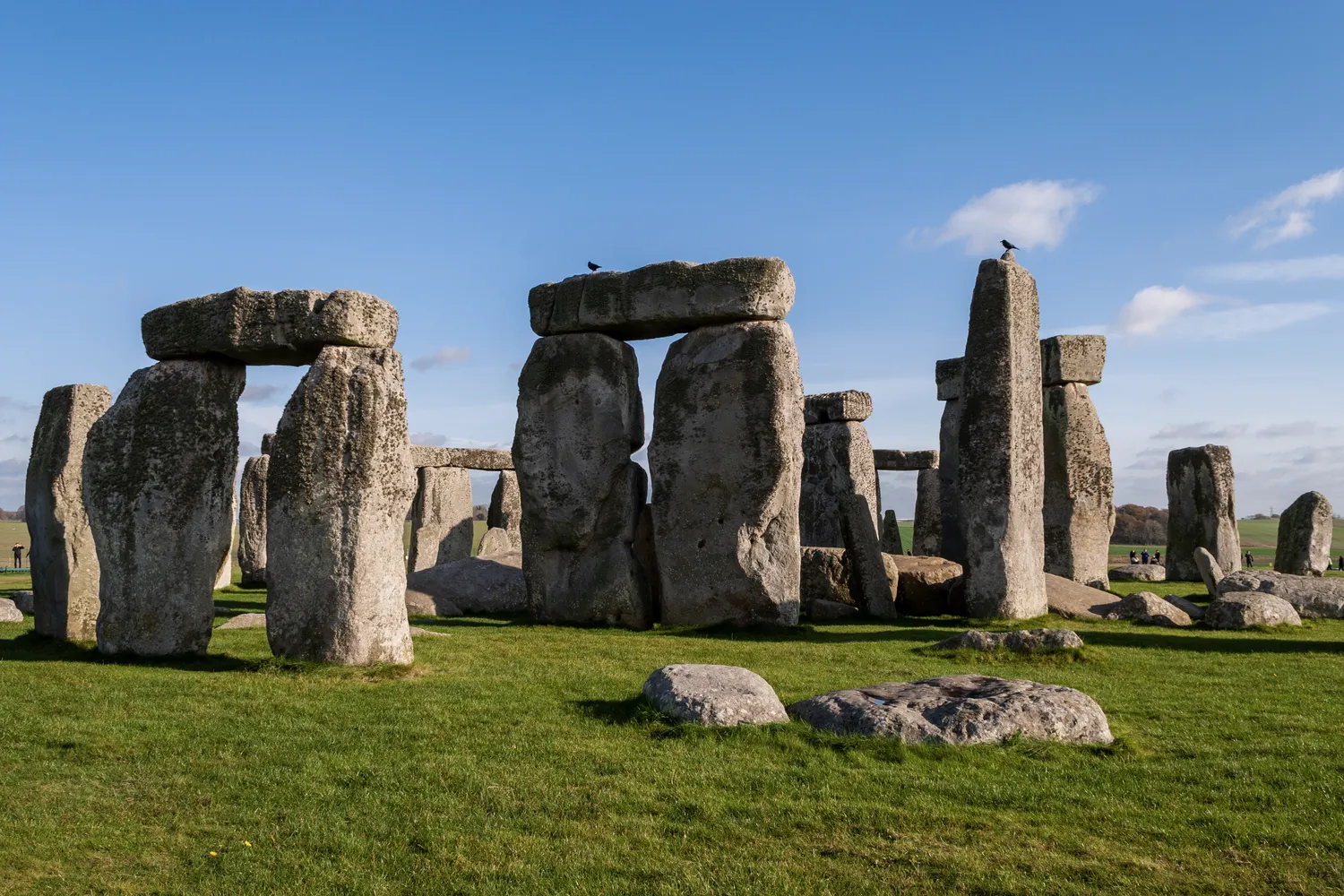
tonehenge, in England, was constructed over 5,000 years ago and is aligned with the solstice. Image by Tristan J. Wilson / Wikimedia Commons (CC0).
Across thousands of years, humans have studied the sky to understand their place in the universe. Ancient observers from many cultures noticed repeating patterns in the movement of the Sun, Moon, and stars. These careful observations helped early societies predict seasons, develop calendars, and navigate vast distances. The study of astronomy became a foundation for scientific progress and shaped the development of mathematics and technology.
Observing the Sky: Early Structures and Cultural Achievements
Ancient people built impressive structures to track the motion of celestial bodies. Stonehenge, in England, was constructed over 5,000 years ago and is aligned with the solstices, marking the longest and shortest days of the year. The Egyptian pyramids were aligned with the cardinal directions—north, south, east, and west—showing knowledge of the sky’s orientation. In Central America, Mayan astronomers built observatories that allowed them to predict eclipses and create detailed calendar systems. These achievements required precise observations and the ability to recognize regular cycles in the heavens.
Greek Contributions: Developing Models of the Universe
Greek scholars advanced astronomical thinking by creating models to explain what they saw. Aristotle proposed that Earth was at the center of the universe, a view called the geocentric model. Ptolemy improved this model by adding complex features called epicycles to explain the movement of planets. Although these models were not entirely correct, they were based on the best observations available at the time. Aristarchus, around 250 BCE, was the first to suggest a heliocentric system, with the Sun at the center, but his idea was largely ignored for centuries. Eratosthenes, another Greek scientist, used shadows and geometry to calculate Earth’s circumference with surprising accuracy, demonstrating the power of combining observation with mathematics. Hipparchus created a catalog of over 800 stars and discovered the phenomenon of precession, the slow wobble in Earth’s axis.
Global Impact and Cultural Diversity in Astronomy
Astronomy developed independently in many cultures around the world. Early astronomers in China, India, the Middle East, and Africa also made important discoveries by studying the sky. The need to track time, plan agriculture, and navigate oceans led to the invention of calendars and improvements in navigation. These advances allowed civilizations to flourish and spread knowledge across continents. As astronomy evolved, it encouraged the exchange of ideas, proving that scientific progress benefits from cultural diversity and collaboration.
Today, the legacy of ancient astronomers continues to shape our understanding of the universe. Their observations and mathematical methods laid the groundwork for modern science, showing that curiosity, careful observation, and creative thinking lead to new discoveries.
Interesting Fact:
More than 2,000 years ago, Eratosthenes estimated Earth’s circumference to be just 1% off the true value—using only sticks, shadows, and geometry!
Comprehension quiz (10 questions)
1. What did ancient cultures use careful observations of the sky for?
2. Which ancient structure is aligned with the solstices?
3. What is the geocentric model?
4. What did Eratosthenes use to calculate Earth's circumference?
5. What does the word 'precession' mean in the passage?
6. What is an 'epicycle' as used in the passage?
7. Why was Aristarchus's heliocentric idea ignored for centuries?
8. How did ancient astronomy contribute to navigation and calendars?
9. True or False: The Egyptian pyramids were aligned with the cardinal directions.
10. True or False: Astronomy developed only in Europe and never in other parts of the world.
Perfect for the way you teach
- Build comprehension skills
- Auto-graded quiz
- Differentiated reading
- Read together at home
- Improve fluency
- Quiet reading time
- Reading curriculum support
- Independent practice
- Track Lexile growth