Are Stars on Fire
Interactive passage with audio narration, comprehension questions, and printable PDF.
By completing this purchase you agree to our Terms of Use and Privacy Policy. Your subscription renews automatically until you cancel. You can cancel anytime from your account settings. All sales are final and non-refundable. Digital content is available for download in your account immediately upon purchase.
What's included
Are Stars on Fire preview and details
About this printable Are Stars on Fire science reading passage, NGSS-aligned (Grades 5-8)
Sample passage and quiz from Are Stars on Fire
Reading passage and comprehension quiz preview
Are Stars on Fire
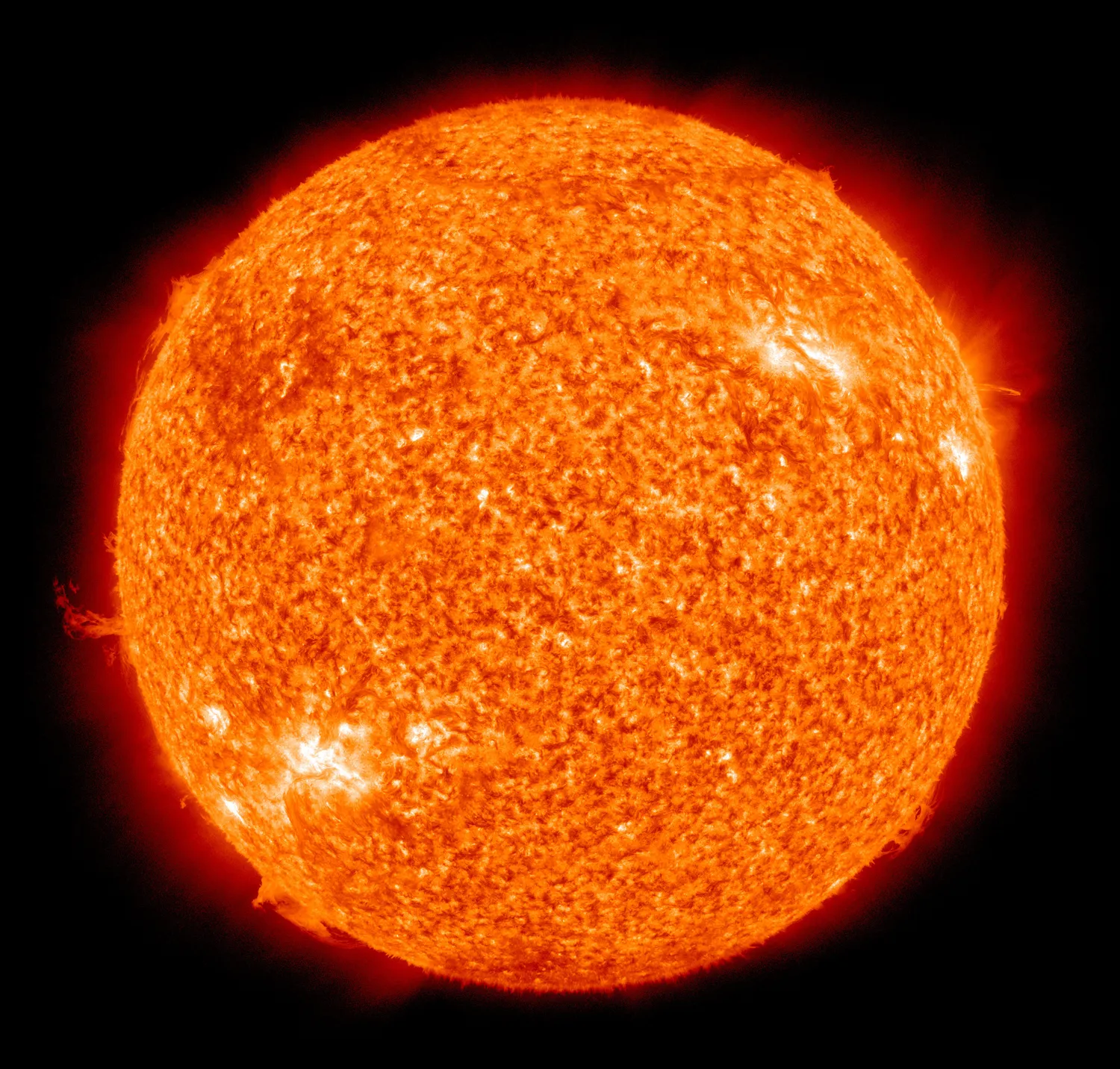
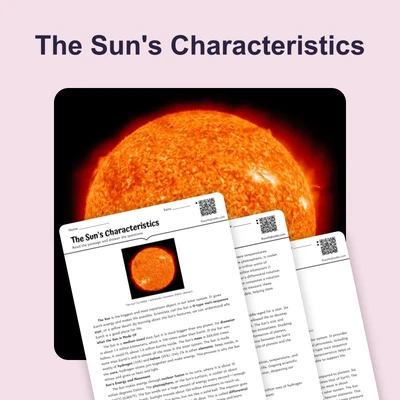
"The Sun by the Atmospheric Imaging Assembly of NASA's Solar Dynamics Observatory - 20100819" by NASA/SDO (AIA) / Wikimedia Commons (Public domain).
When you look at the night sky, stars appear to twinkle like tiny flames. Many people say stars "burn" brightly in space. However, stars are not on fire at all. Fire requires oxygen and involves chemical reactions between substances. Stars produce energy through a completely different process called nuclear fusion. Understanding this difference helps scientists explain how stars work.
Fire on Earth happens when fuel combines with oxygen in a chemical reaction called combustion. A campfire burns wood by breaking chemical bonds and releasing energy as heat and light. This process needs oxygen from the air to continue. Space contains almost no oxygen, so traditional fire cannot exist there. Stars operate through nuclear fusion instead. In a star's core, temperatures reach about 15 million degrees Celsius. At these extreme temperatures, hydrogen atoms smash together with tremendous force. The hydrogen atoms fuse to form helium atoms. This process releases enormous amounts of energy as light and heat.
Our Sun demonstrates this process every second. Scientists observe that the Sun converts about 600 million tons of hydrogen into helium each second through nuclear fusion. Evidence shows this process has continued for about 4.6 billion years. The Sun does not need oxygen or any chemical fuel. Its core acts as a massive nuclear furnace powered by gravity squeezing atoms together. The energy travels outward from the core and eventually reaches Earth as sunlight.
The word "burn" creates confusion because people use it loosely in everyday language. When someone says a star burns, they usually mean it produces light and heat. However, the physics behind stellar energy and fire are completely different. Chemical reactions like combustion rearrange molecules but leave atoms unchanged. Nuclear fusion actually changes atoms themselves by combining them into new elements. This distinction matters for understanding how the universe works. Stars can shine for billions of years because nuclear fusion releases far more energy than chemical reactions. Recognizing that stars are nuclear furnaces, not bonfires, helps explain their incredible power and longevity.
Interesting Fact: If you could somehow bring a piece of the Sun's core to Earth, it would produce more energy per cubic meter than a nuclear bomb exploding continuously!
Comprehension quiz (10 questions)
1. What process do stars use to produce energy?
2. Why can't fire exist in space?
3. What temperature does the core of a star reach?
4. In the passage, what does the term 'combustion' mean?
5. What happens to hydrogen atoms during nuclear fusion in a star?
6. Based on the passage, why can stars shine for billions of years?
7. How does nuclear fusion differ from chemical reactions like combustion?
8. What can scientists conclude from observing that the Sun converts 600 million tons of hydrogen into helium each second?
9. True or False: Fire and nuclear fusion are basically the same process, just at different temperatures.
10. True or False: The word 'burn' is scientifically accurate when describing how stars produce energy.
Perfect for the way you teach
- Build comprehension skills
- Auto-graded quiz
- Differentiated reading
- Read together at home
- Improve fluency
- Quiet reading time
- Reading curriculum support
- Independent practice
- Track Lexile growth