What Is a Recessive Allele
Interactive passage with audio narration, comprehension questions, and printable PDF.
What's included
What Is a Recessive Allele preview and details
About this printable What Is a Recessive Allele science reading passage, NGSS-aligned (Grades 5-8)
Sample passage and quiz from What Is a Recessive Allele
Reading passage and comprehension quiz preview
What Is a Recessive Allele?

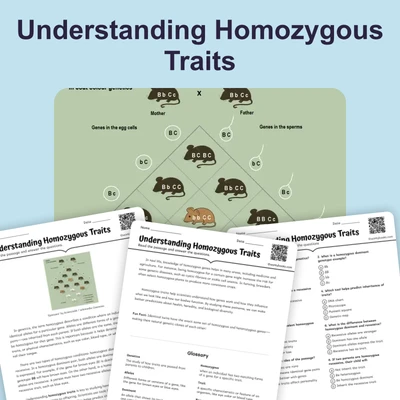
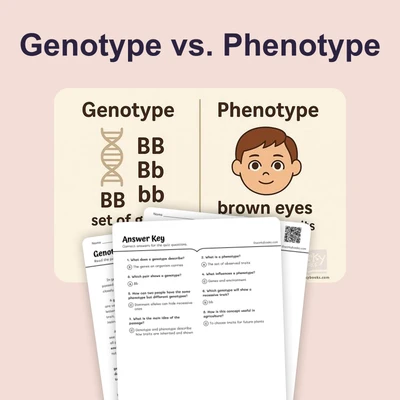
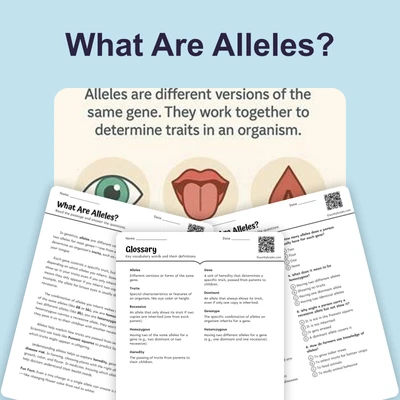
In genetics, traits are controlled by genes, and each gene has different versions called alleles. A recessive allele is a type of allele that only shows its trait when both copies of the gene are recessive. This means the trait will only appear if an individual inherits the recessive allele from both parents.
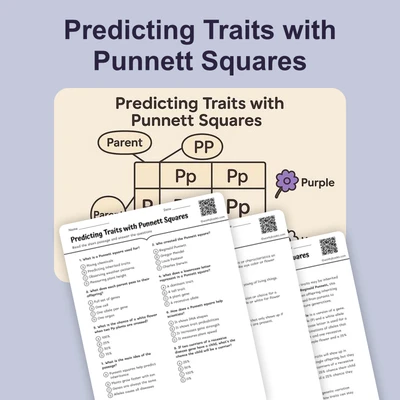
For example, imagine a gene that controls flower color. A dominant allele (represented by a capital letter, like R) might produce red flowers, while a recessive allele (represented by a lowercase letter, like r) produces white flowers. If a plant has one of each allele (Rr), the dominant allele will mask the recessive one, and the plant will have red flowers. Only when the plant has rr, two recessive alleles, will it have white flowers.
Recessive traits can be hidden for generations. This happens because someone can carry a recessive allele without showing the trait. These individuals are called carriers. For example, two parents who each carry the recessive allele for blue eyes (but have brown eyes) can have a child with blue eyes if the child inherits the recessive allele from both of them.
Recessive alleles are a key reason why genetic variation exists. They allow traits to pass silently from generation to generation and reappear under the right genetic conditions. This is also important in understanding some genetic disorders, which can only appear when both alleles are recessive.
Fun Fact: Blue eyes are caused by a recessive allele—and scientists believe all people with blue eyes share a single common ancestor who first had that mutation!
Comprehension quiz (8 questions)
1. What is an allele?
2. When does a recessive allele show its trait?
3. What does “Rr” mean in genetics?
4. What is a carrier?
5. What eye color is mentioned as recessive in the passage?
6. Why can recessive traits skip generations?
7. What is the main idea of the passage?
8. If both parents are carriers of a recessive allele, what is the chance their child will have the trait?
Perfect for the way you teach
- Build comprehension skills
- Auto-graded quiz
- Differentiated reading
- Read together at home
- Improve fluency
- Quiet reading time
- Reading curriculum support
- Independent practice
- Track Lexile growth