What Is a Genotype
Interactive passage with audio narration, comprehension questions, and printable PDF.
What's included
What Is a Genotype preview and details
About this printable What Is a Genotype science reading passage, NGSS-aligned (Grades 5-8)
Sample passage and quiz from What Is a Genotype
Reading passage and comprehension quiz preview
What Is a Genotype?

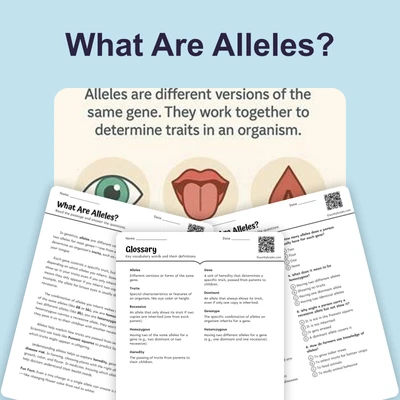
In genetics, a genotype is the set of genes that an organism carries. It is made up of alleles, which are different versions of a gene. These alleles are inherited from an organism’s parents—one from the mother and one from the father. The genotype determines the potential traits an organism may have, even if some traits are not visible on the outside.
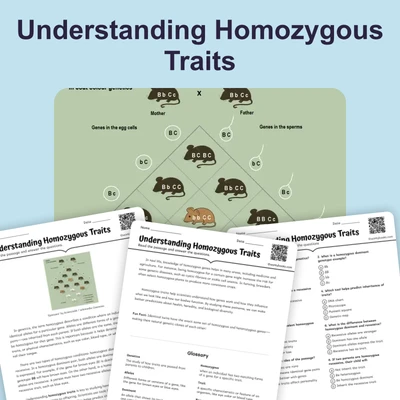
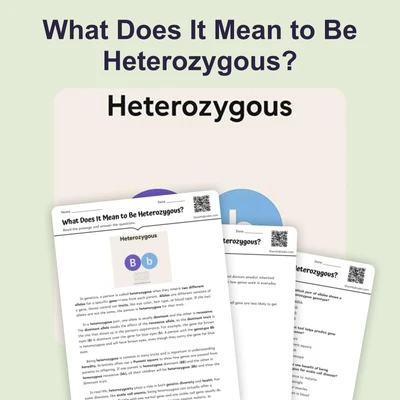
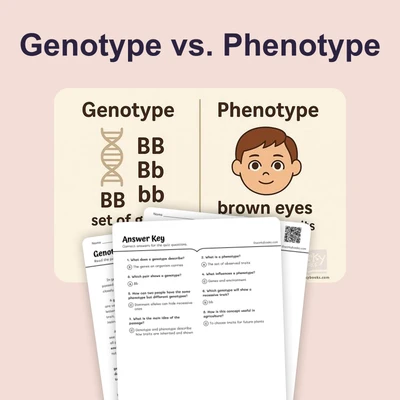
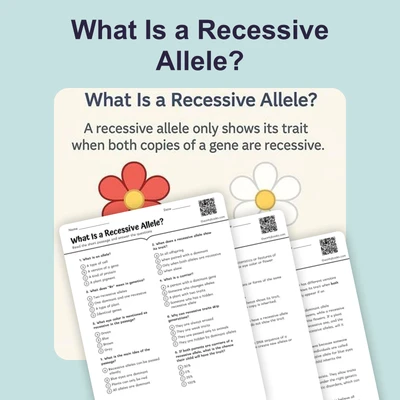
Each gene usually comes in at least two forms: a dominant allele and a recessive allele. The combination of these alleles makes up the genotype. For example, a person might have a BB, Bb, or bb genotype for eye color. BB and Bb genotypes would both show the dominant trait, such as brown eyes, while bb would show the recessive trait, like blue eyes.
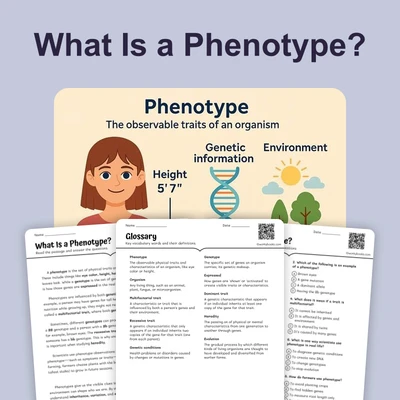
Even though two organisms may look the same on the outside, their genotypes can be different. This is because the genotype includes both dominant and recessive alleles, even if the recessive allele doesn't affect appearance. This difference between what you see (called the phenotype) and the genes inside (the genotype) is important in understanding how traits are passed down.
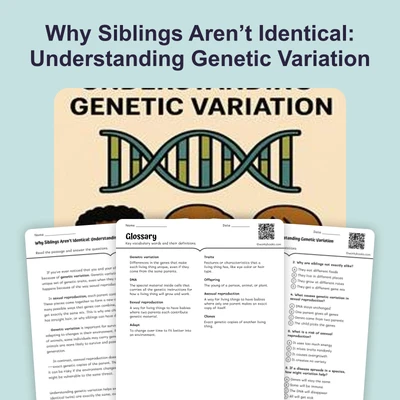
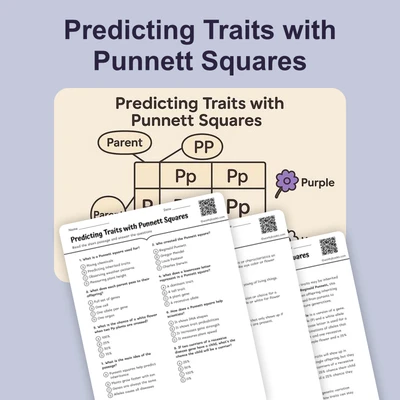
Scientists use Punnett squares to predict possible genotypes of offspring. This helps explain why siblings from the same parents can look different—they inherit different combinations of alleles.
In medicine, knowing a person’s genotype can help doctors understand their risk for certain diseases, and in agriculture, breeders use genotype knowledge to grow crops with desired traits. The study of genotypes helps us better understand heredity, genetic variation, and even evolution.
Fun Fact: You share about 99.9% of your genotype with every other human being—but that tiny 0.1% is what makes you unique!
Comprehension quiz (8 questions)
1. What is a genotype?
2. What are alleles?
3. Which genotype will express a recessive trait?
4. What tool is used to predict genotypes?
5. How can two organisms look the same but have different genotypes?
6. Why can siblings look different from each other?
7. What is the main idea of the passage?
8. How is genotype knowledge useful in real life?
Perfect for the way you teach
- Build comprehension skills
- Auto-graded quiz
- Differentiated reading
- Read together at home
- Improve fluency
- Quiet reading time
- Reading curriculum support
- Independent practice
- Track Lexile growth