What Does It Mean to Be Heterozygous
Interactive passage with audio narration, comprehension questions, and printable PDF.
What's included
What Does It Mean to Be Heterozygous preview and details
About this printable What Does It Mean to Be Heterozygous science reading passage, NGSS-aligned (Grades 5-8)
Sample passage and quiz from What Does It Mean to Be Heterozygous
Reading passage and comprehension quiz preview
What Does It Mean to Be Heterozygous?

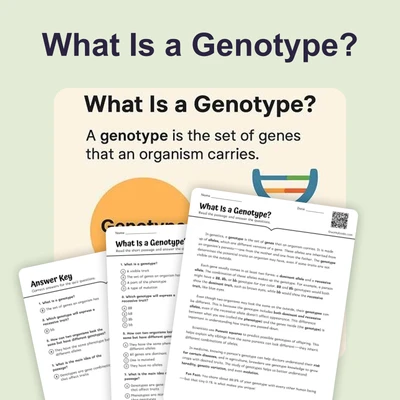
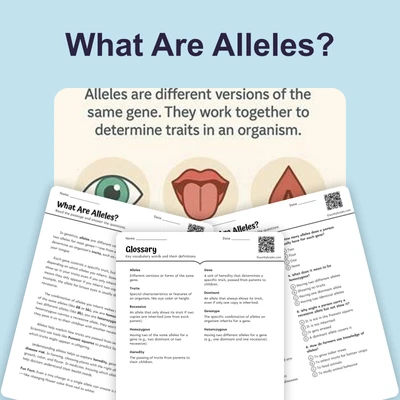
In genetics, a person is called heterozygous when they inherit two different alleles for a specific gene—one from each parent. Alleles are different versions of a gene. Genes control our traits, like eye color, hair type, or blood type. If the two alleles are not the same, the person is heterozygous for that trait.
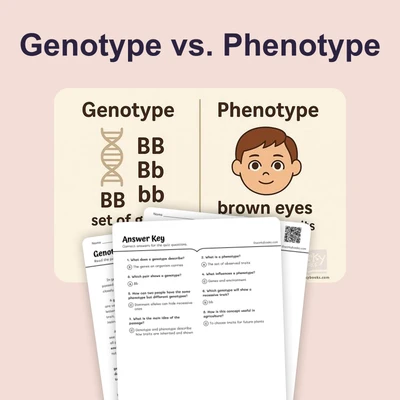
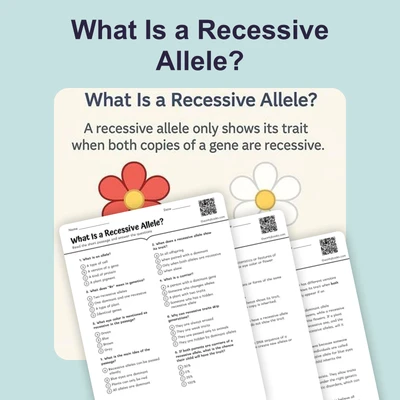
In a heterozygous pair, one allele is usually dominant and the other is recessive. The dominant allele masks the effect of the recessive allele, so the dominant trait is the one that shows up in the person's appearance. For example, the gene for brown eyes (B) is dominant over the gene for blue eyes (b). A person with the genotype Bb is heterozygous and will have brown eyes, even though they carry the gene for blue eyes.
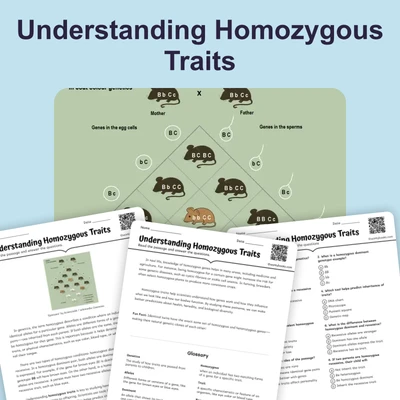
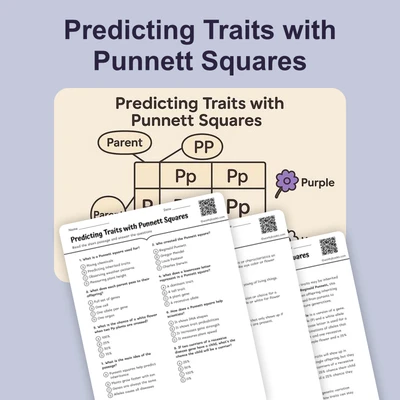
Being heterozygous is common in many traits and is important in understanding heredity. Scientists often use a Punnett square to show how genes are passed from parents to offspring. If one parent is homozygous dominant (BB) and the other is homozygous recessive (bb), all their children will be heterozygous (Bb) and show the dominant trait.
In real life, heterozygosity plays a role in both genetic diversity and health. For some diseases, like sickle cell anemia, being heterozygous can actually offer a survival advantage. People with one normal gene and one sickle cell gene usually do not get the disease, and they may have better protection against malaria. In agriculture, heterozygous plants often grow better and are more resistant to disease, a benefit known as hybrid vigor.
Understanding heterozygous traits helps scientists and doctors predict inherited conditions, breed better crops, and learn more about how genes work in everyday life.
Fun Fact: People who are heterozygous for the sickle cell gene are less likely to get malaria—this is called a “genetic advantage”!
Comprehension quiz (8 questions)
1. What does heterozygous mean?
2. Which pair of alleles shows a heterozygous genotype?
3. What kind of trait shows up in a heterozygous person?
4. What tool helps predict gene inheritance?
5. Why do children of BB and bb parents become Bb?
6. What is one benefit of being heterozygous for sickle cell disease?
7. What is the main idea of the passage?
8. How does heterozygosity help in agriculture?
Perfect for the way you teach
- Build comprehension skills
- Auto-graded quiz
- Differentiated reading
- Read together at home
- Improve fluency
- Quiet reading time
- Reading curriculum support
- Independent practice
- Track Lexile growth