Gregor Mendel
Interactive passage with audio narration, comprehension questions, and printable PDF.
What's included
Gregor Mendel preview and details
About this printable Gregor Mendel science reading passage, NGSS-aligned (Grades 5-8)
Sample passage and quiz from Gregor Mendel
Reading passage and comprehension quiz preview
Gregor Mendel: The Father of Genetics

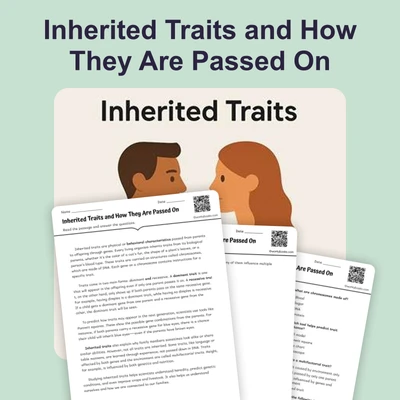
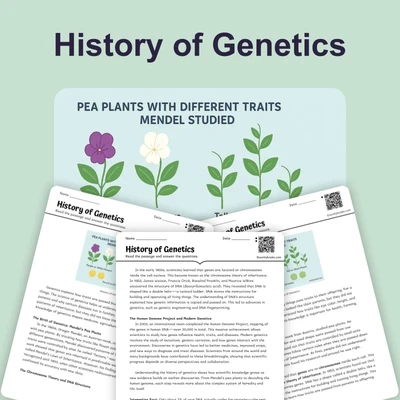
Gregor Mendel was an Austrian monk who is known as the father of genetics. In the 1800s, he performed experiments that helped scientists understand how traits are passed from parents to offspring. Mendel used pea plants in his experiments because they had easily observable traits, such as flower color and seed shape. His careful observations and data collection led to the discovery of patterns in how traits are inherited. This work formed the foundation for modern genetics, the study of heredity.
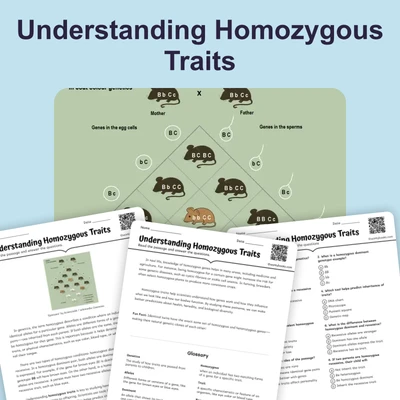
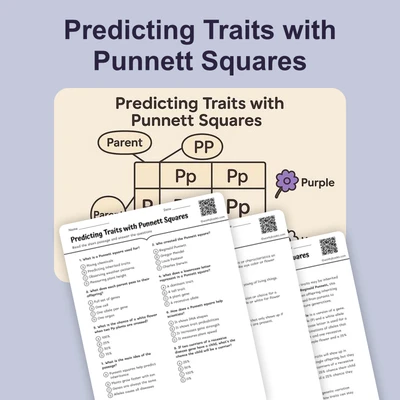
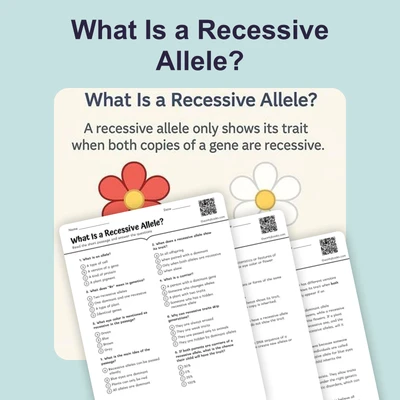
Mendel’s most famous experiments involved cross-pollinating pea plants with different traits. For example, he crossed tall plants with short ones and noticed that all the first-generation (F1) plants were tall. However, when he crossed those F1 plants with each other, the next generation (F2) had a mix of tall and short plants. From these results, Mendel concluded that traits are determined by "factors" (now called genes) that come in pairs—one from each parent. Some traits are dominant, meaning they show up even if only one parent passes them on, while others are recessive and only appear if both parents pass them on.
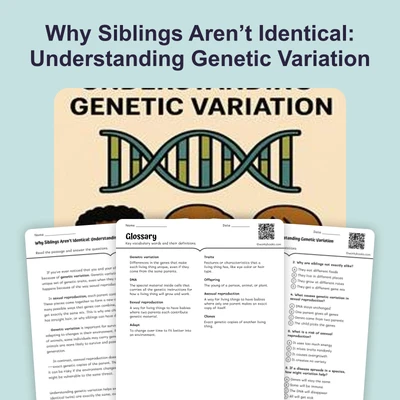
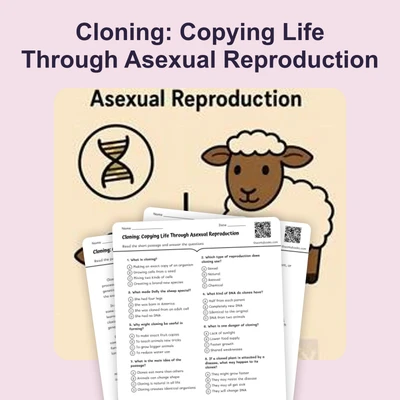
Mendel’s discoveries explain why offspring from sexual reproduction have genetic variation. Each parent contributes one copy of each gene, and these combinations can produce different traits in the offspring. This explains why siblings often look similar but not exactly alike. In contrast, asexual reproduction produces offspring that are genetically identical to the parent, since all genetic material comes from one source.
Today, Mendel’s work helps scientists understand everything from inherited diseases to how plants can be bred for better crops. His simple pea plant experiments changed science forever.
Fun Fact: Gregor Mendel was also a beekeeper and studied how bees passed traits to their offspring, but he found them much harder to work with than pea plants!
Comprehension quiz (8 questions)
1. What is Gregor Mendel best known for?
2. Why did Mendel use pea plants in his experiments?
3. What happened when Mendel crossed tall and short pea plants?
4. What do we now call Mendel’s "factors"?
5. What is a dominant trait?
6. How does sexual reproduction cause variation?
7. What is the main idea of the passage?
8. If two parents both have a recessive gene for blue eyes, what might happen?
Perfect for the way you teach
- Build comprehension skills
- Auto-graded quiz
- Differentiated reading
- Read together at home
- Improve fluency
- Quiet reading time
- Reading curriculum support
- Independent practice
- Track Lexile growth