What Is a Phenotype
Interactive passage with audio narration, comprehension questions, and printable PDF.
By completing this purchase you agree to our Terms of Use and Privacy Policy. Your subscription renews automatically until you cancel. You can cancel anytime from your account settings. All sales are final and non-refundable. Digital content is available for download in your account immediately upon purchase.
What's included
What Is a Phenotype preview and details
About this printable What Is a Phenotype science reading passage, NGSS-aligned (Grades 5-8)
Sample passage and quiz from What Is a Phenotype
Reading passage and comprehension quiz preview
What Is a Phenotype?

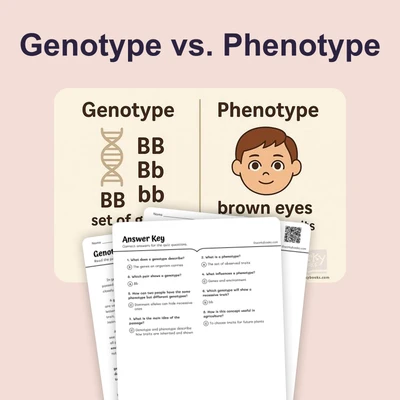
A phenotype is the set of physical traits and behaviors that an organism shows. These include things like eye color, height, hair texture, and even how a plant’s leaves look. While a genotype is the set of genes an organism carries, the phenotype is how those genes are expressed in the real world. It’s what you can see or measure.
Phenotypes are influenced by both genetic information and the environment. For example, a person may have genes for tall height, but if they don’t get enough nutrition while growing up, they might not reach their full potential height. This is called a multifactorial trait, where both genes and environment play a role.
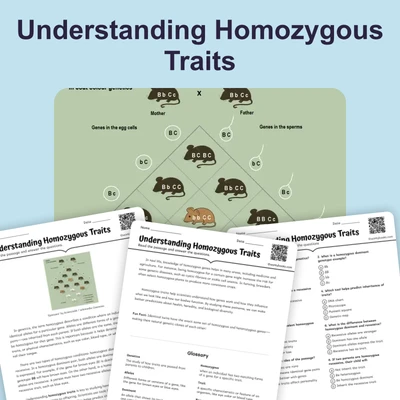
Sometimes, different genotypes can produce the same phenotype. A person with a BB genotype and a person with a Bb genotype will both show the dominant trait—for example, brown eyes. The recessive trait, like blue eyes, only shows up when someone has a bb genotype. This is why understanding both genotype and phenotype is important when studying heredity.
Scientists use phenotype observations in many areas. In medicine, a patient’s phenotype—such as symptoms or traits—helps diagnose genetic conditions. In farming, farmers choose plants with the best phenotypes (like the juiciest fruit or tallest stalks) to grow in future seasons.
Phenotypes give us the visible clues to how our genes work and how the environment can shape who we are. By studying them, scientists can better understand inheritance, variation, and evolution.
Fun Fact: Identical twins have the same genotype, but their phenotypes can still be different—especially as they grow up in different environments!
Comprehension quiz (8 questions)
1. What is a phenotype?
2. Which of the following is an example of a phenotype?
3. What influences a phenotype?
4. What does it mean if a trait is multifactorial?
5. Why might two people with different genotypes look the same?
6. What is one way scientists use phenotype in real life?
7. What is the main idea of the passage?
8. How do farmers use phenotype?
Perfect for the way you teach
- Build comprehension skills
- Auto-graded quiz
- Differentiated reading
- Read together at home
- Improve fluency
- Quiet reading time
- Reading curriculum support
- Independent practice
- Track Lexile growth