This learning resource is available in interactive and printable formats. The interactive worksheet can be played online and assigned to students. The Printable PDF version can be downloaded and printed for completion by hand.
This engaging U.S. history reading passage explores the invention and impact of the assembly line during the Progressive Era. Students will learn how Henry Ford and other innovators changed the way products were made, making goods faster and cheaper for everyone. The passage uses clear language and a chronological structure to help students understand cause and effect in history. Key vocabulary is highlighted and explained. The resource includes activities such as a quiz, timeline, writing prompts, and a graphic organizer to support comprehension. The passage is aligned with C3 Framework and Common Core standards, making it perfect for classroom learning. Audio read aloud and Spanish translation are included for accessibility. Ideal for lessons on the Industrial Revolution, innovation, and social change.
CONTENT PREVIEW
Expand content preview
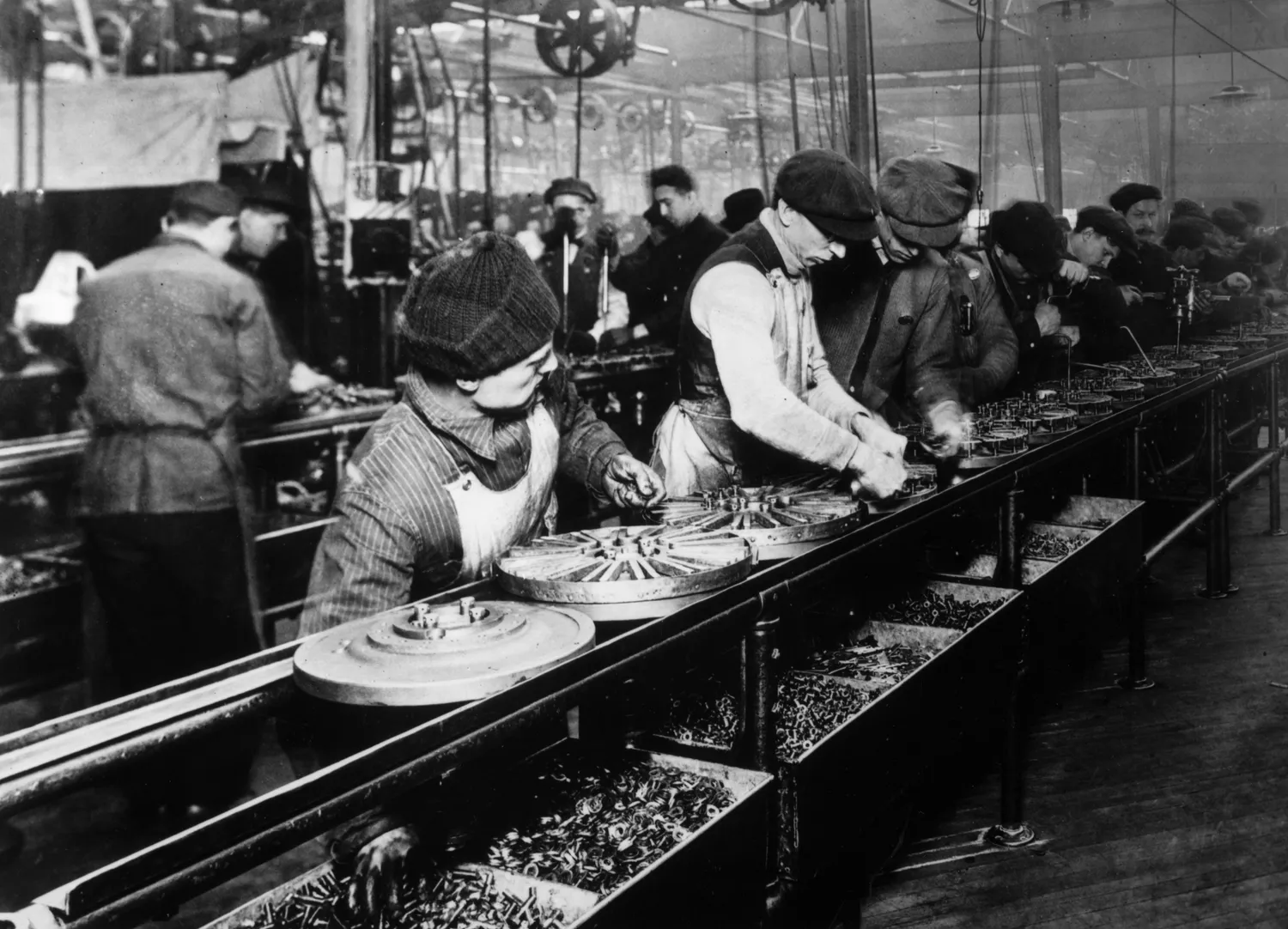
"Ford assembly line - 1913" by Unknown authorUnknown author / Wikimedia Commons (Public domain).
During the Progressive Era, factories in the United States changed the way they made goods. One important change was the creation of the assembly line. An assembly line is a way of making things step by step. Each worker does just one job as the product moves past them on a moving belt.
Before the assembly line, building a car took a long time. Workers had to move around the car and do many different jobs. This was slow and tiring. It could take over 12 hours to build just one car.
Henry Ford was a car maker who wanted to build cars faster and cheaper. In 1913, Ford introduced the assembly line to his factory in Detroit. With this new system, each worker only had to do one small part of building a car. For example, one worker might put on the wheels. Another worker would attach the doors. The car moved along a track from station to station. This made the work much quicker and easier.
The assembly line led to mass production. This means making many things quickly and all the same. With mass production, Ford’s factory could build a car in just 93 minutes! This was a huge change from the old way. Cars became cheaper to make, so more people could buy them. Ford’s Model T car became very popular across America.
The assembly line also changed the way people worked. Workers could learn their jobs quickly because they only had to repeat one simple task. Factories became more efficient. This means they could make more things with less time and effort. Because cars were cheaper, more families could travel and explore new places. The assembly line made life different for many Americans.
The idea of the assembly line spread to other factories. Soon, companies making clothes, toys, and even food used assembly lines. This new way of working helped the United States grow. It also inspired people to think of new ways to solve problems and improve life.
Innovation like the assembly line is an important part of U.S. history. It shows how people can work together to make big changes.
Interesting Fact: The moving assembly line was so successful that by 1927, Ford’s factory had built over 15 million Model T cars!
Who introduced the assembly line?
Henry FordThomas EdisonAlexander Graham BellWright Brothers
Where was Ford’s assembly line first used?
DetroitNew YorkChicagoLos Angeles
What did workers do on an assembly line?
One job eachAll jobsSupervise othersWork alone
Why did Ford use the assembly line?
To build cars fasterTo make toysTo hire more workersTo make bigger cars
What was a main effect of the assembly line?
Cars were cheaperCars were slowerFewer workersFactories closed
How did the assembly line help America grow?
Made goods fasterStopped new ideasReduced travelBuilt fewer items
The assembly line made cars more expensive. True or false?
TrueFalse
What does 'efficient' mean?
Doing work quickly and wellBeing slow and carefulMaking only one itemUsing more time
Perfect For:
👩🏫 Teachers
• Reading comprehension practice
• Auto-graded assessments
• Literacy skill development
👨👩👧👦 Parents
• Reading practice at home
• Comprehension improvement
• Educational reading time
🏠 Homeschoolers
• Reading curriculum support
• Independent reading practice
• Progress monitoring
Reading Features:
📖
Reading Passage
Engaging fiction or nonfiction text
❓
Comprehension Quiz
Auto-graded questions
📊
Instant Feedback
Immediate results and scoring
📄
Printable Version
Download for offline reading
🔊
Read Aloud
Voice-over with word highlighting
Reviews & Ratings
No reviews yet. Be the first to share your experience!
Related Content
Native American Tribes Across America
This engaging history reading passage introduces students to Native American tribes across America, focusing on their da...
D2.HIS.1.3-5D2.HIS.2.3-5RI.4.1RI.4.2
Teepees: Homes on the Great Plains
This engaging history reading passage introduces students to teepees, the unique homes of Native American tribes on the ...
D2.HIS.2.3-5D2.HIS.14.3-5RI.4.1RI.4.2RI.4.4
Traditional Native American Clothing
This engaging history passage explores traditional Native American clothing and how it reflected the environment, values...
D2.HIS.2.3-5D2.HIS.3.3-5RI.4.3RI.4.4
The Iroquois Confederacy: A System of Peace
This engaging U.S. History reading passage introduces students to the Iroquois Confederacy, a powerful alliance of Nativ...
D2.HIS.2.3-5D2.HIS.3.3-5RI.4.3RI.4.4
The Cherokee Nation: History and Culture
This reading passage explores the rich history and culture of the Cherokee Nation, one of the largest Native American tr...
D2.HIS.2.3-5D2.HIS.14.3-5RI.4.3RI.4.4RI.4.10
The Sioux: Warriors and Tribal Leaders
This history reading passage explores the Sioux Nation, focusing on their roles as warriors and tribal leaders. Students...
D2.HIS.1.3-5D2.HIS.2.3-5RI.4.1RI.4.3
Native American Respect for Nature
This engaging history reading passage explores Native American respect for nature, emphasizing the close relationship be...
D2.HIS.2.3-5D2.HIS.3.3-5RI.4.3RI.4.4
Jamestown: The First Permanent English Colony
This engaging history passage explores the founding of Jamestown, the first permanent English colony in America. Aligned...
D2.HIS.1.3-5D2.HIS.2.3-5RI.4.3RI.4.4
Pocahontas and the Powhatan People
This engaging reading passage explores the life of Pocahontas and the Powhatan people and their important role in early ...
D2.HIS.1.3-5D2.HIS.2.3-5RI.4.1RI.4.3
Colonial Children: School and Chores
This reading passage explores the daily lives of colonial children, focusing on their experiences at school and their ma...
D2.HIS.2.3-5D2.HIS.3.3-5RI.4.1RI.4.2RI.4.4
Colonial Clothing and Homemade Goods
This engaging U.S. history passage explores the daily life of early American colonists with a focus on colonial clothing...
D2.HIS.2.3-5RI.4.3RI.4.4
Colonial Jobs: Blacksmiths, Bakers, and Craftsmen
This engaging history reading passage explores the vital roles of blacksmiths, bakers, and craftsmen in colonial America...
D2.HIS.2.3-5D2.HIS.3.3-5RI.4.3RI.4.4
Colonial Towns and Village Life
This engaging history reading passage explores the daily life, work, and unity found in colonial towns and villages. Ali...
D2.HIS.1.3-5D2.HIS.2.3-5RI.4.3RI.4.4
Colonial Trade with England and Africa
This history reading passage explores colonial trade between the American colonies, England, and Africa, focusing on the...
D2.HIS.2.3-5D2.HIS.14.3-5RI.4.3RI.4.4
Benjamin Franklin: Printer, Inventor, and Leader
This history reading passage explores the life and achievements of Benjamin Franklin, one of America's most important ea...
D2.HIS.2.3-5D2.HIS.3.3-5RI.4.1RI.4.3
George Washington Leads the Army
This engaging history reading passage explores how George Washington bravely led the Continental Army during the America...
D2.HIS.1.3-5D2.HIS.2.3-5RI.4.3RI.4.4
Women and Children During the Revolutionary War
This reading passage explores the important roles women and children played during the Revolutionary War. Students will ...
D2.HIS.2.3-5RI.4.3RI.5.3
African Americans Fight for Freedom
This educational passage explores the brave and inspiring story of how African Americans fought for freedom in the Unite...
D2.HIS.2.3-5D2.HIS.3.3-5RI.4.3RI.4.4
The Battle of Yorktown Ends War
This engaging U.S. history reading passage explores the Battle of Yorktown, a key event that ended the American Revoluti...
D2.HIS.1.3-5D2.HIS.2.3-5RI.4.1RI.4.3
Loyalists vs. Patriots: Divided Families
This engaging U.S. history reading passage explores the division between Loyalists and Patriots during the American Revo...