This learning resource is available in interactive and printable formats. The interactive worksheet can be played online and assigned to students. The Printable PDF version can be downloaded and printed for completion by hand.
This comprehensive history reading passage examines the Battle of Gettysburg, a crucial conflict in the American Civil War that occurred in Pennsylvania in 1863. Students will learn about the causes leading up to the battle, key events over its three days, and the significant consequences for both the Union and Confederate armies. The passage integrates academic vocabulary and is designed to develop students’ skills in historical analysis, cause and effect, and understanding turning points in U.S. history. With audio and Spanish translation available, as well as a differentiated version for diverse learners, this resource supports comprehension for all students. Activities include multiple-choice questions, writing prompts, and graphic organizers, all aligned to HSS 8.10.6 and CCSS RI.6-8.1, RI.6-8.6, ensuring rigorous engagement with core history and literacy standards.
CONTENT PREVIEW
Expand content preview
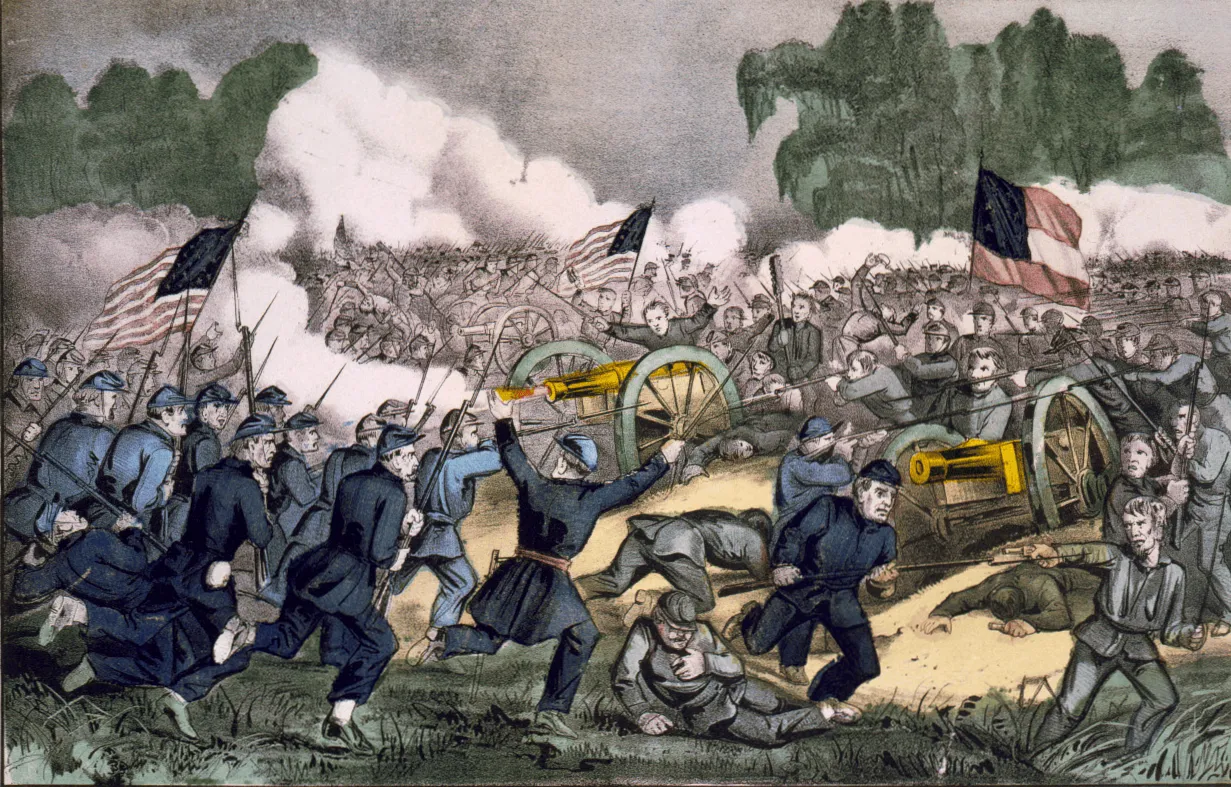
Battle of Gettysburg, by Currier and Ives.png Source: Wikimedia Commons - Nathaniel Currier and James Merritt Ives
The Battle of Gettysburg, fought from July 1 to July 3, 1863, was a crucial event in the American Civil War. Located in Pennsylvania, this battle marked the farthest point north that the Confederate Army, led by General Robert E. Lee, would ever reach. The main problem facing the Confederacy was their goal to invade Northern territory in hopes of forcing the Union to seek peace. This plan, however, faced many obstacles, including unfamiliar geography and determined Union resistance.
The Union Army, commanded by General George G. Meade, was prepared to stop the Confederate invasion. Over three intense days, both armies fought fiercely. The Confederate forces tried to break through the Union lines, especially during the famous Pickett's Charge on the third day. Despite their efforts, the Union soldiers maintained a strong defensive position and used the high ground to their advantage. The failure of the Confederate assault resulted in heavy casualties.
This turning point in the Civil War had significant consequences. Before Gettysburg, the Confederacy had experienced some victories and hoped that success in the North would lead to foreign support or negotiations. Instead, the defeat at Gettysburg crushed these hopes and weakened Confederate morale. Many historians use the term "turning point" to describe this battle because it shifted the momentum to the Union, making it more likely that the North would eventually win the war.
The casualties at Gettysburg were enormous—over 50,000 soldiers were killed, wounded, or missing. Families across both the North and South were affected by this loss. The aftermath of the battle also included President Abraham Lincoln's famous Gettysburg Address, in which he honored the fallen and redefined the purpose of the war to include freedom and equality.
Comparing the causes and outcomes of the battle helps historians understand why Gettysburg was so important. The Union's strong defensive tactics, the Confederacy's risky strategy, and the geography of the battlefield all contributed to the outcome. Evidence from letters, reports, and maps help us analyze these factors and their effects on the larger conflict.
Interesting Fact: After the battle, the town of Gettysburg became a massive field hospital, treating thousands of wounded soldiers from both sides.
Where did the Battle of Gettysburg take place?
PennsylvaniaVirginiaGeorgiaOhio
Who led the Confederate Army?
General Robert E. LeeGeneral Ulysses S. GrantGeneral ShermanPresident Lincoln
How many days did the battle last?
ThreeOneSevenFive
Why did the Confederates want to invade the North?
To force peaceFor more suppliesTo build a fortTo find gold
Why is Gettysburg called a turning point?
It changed war's directionIt ended the warIt started the warIt was the first battle
What did the Union use to their advantage?
High groundBoatsCavalryWeather
The Confederate Army won at Gettysburg. True or false?
TrueFalse
What does 'casualties' mean?
People killed or woundedSoldiers marchingVictory celebrationsField hospitals only
Perfect For:
👩🏫 Teachers
• Reading comprehension practice
• Auto-graded assessments
• Literacy skill development
👨👩👧👦 Parents
• Reading practice at home
• Comprehension improvement
• Educational reading time
🏠 Homeschoolers
• Reading curriculum support
• Independent reading practice
• Progress monitoring
Reading Features:
📖
Reading Passage
Engaging fiction or nonfiction text
❓
Comprehension Quiz
Auto-graded questions
📊
Instant Feedback
Immediate results and scoring
📄
Printable Version
Download for offline reading
🔊
Read Aloud
Voice-over with word highlighting
Reviews & Ratings
No reviews yet. Be the first to share your experience!
Related Content
Native American Tribes Across America
This engaging history reading passage introduces students to Native American tribes across America, focusing on their da...
D2.HIS.1.3-5D2.HIS.2.3-5RI.4.1RI.4.2
Teepees: Homes on the Great Plains
This engaging history reading passage introduces students to teepees, the unique homes of Native American tribes on the ...
D2.HIS.2.3-5D2.HIS.14.3-5RI.4.1RI.4.2RI.4.4
Traditional Native American Clothing
This engaging history passage explores traditional Native American clothing and how it reflected the environment, values...
D2.HIS.2.3-5D2.HIS.3.3-5RI.4.3RI.4.4
The Iroquois Confederacy: A System of Peace
This engaging U.S. History reading passage introduces students to the Iroquois Confederacy, a powerful alliance of Nativ...
D2.HIS.2.3-5D2.HIS.3.3-5RI.4.3RI.4.4
The Cherokee Nation: History and Culture
This reading passage explores the rich history and culture of the Cherokee Nation, one of the largest Native American tr...
D2.HIS.2.3-5D2.HIS.14.3-5RI.4.3RI.4.4RI.4.10
The Sioux: Warriors and Tribal Leaders
This history reading passage explores the Sioux Nation, focusing on their roles as warriors and tribal leaders. Students...
D2.HIS.1.3-5D2.HIS.2.3-5RI.4.1RI.4.3
Native American Respect for Nature
This engaging history reading passage explores Native American respect for nature, emphasizing the close relationship be...
D2.HIS.2.3-5D2.HIS.3.3-5RI.4.3RI.4.4
Jamestown: The First Permanent English Colony
This engaging history passage explores the founding of Jamestown, the first permanent English colony in America. Aligned...
D2.HIS.1.3-5D2.HIS.2.3-5RI.4.3RI.4.4
Pocahontas and the Powhatan People
This engaging reading passage explores the life of Pocahontas and the Powhatan people and their important role in early ...
D2.HIS.1.3-5D2.HIS.2.3-5RI.4.1RI.4.3
Colonial Children: School and Chores
This reading passage explores the daily lives of colonial children, focusing on their experiences at school and their ma...
D2.HIS.2.3-5D2.HIS.3.3-5RI.4.1RI.4.2RI.4.4
Colonial Clothing and Homemade Goods
This engaging U.S. history passage explores the daily life of early American colonists with a focus on colonial clothing...
D2.HIS.2.3-5RI.4.3RI.4.4
Colonial Jobs: Blacksmiths, Bakers, and Craftsmen
This engaging history reading passage explores the vital roles of blacksmiths, bakers, and craftsmen in colonial America...
D2.HIS.2.3-5D2.HIS.3.3-5RI.4.3RI.4.4
Colonial Towns and Village Life
This engaging history reading passage explores the daily life, work, and unity found in colonial towns and villages. Ali...
D2.HIS.1.3-5D2.HIS.2.3-5RI.4.3RI.4.4
Colonial Trade with England and Africa
This history reading passage explores colonial trade between the American colonies, England, and Africa, focusing on the...
D2.HIS.2.3-5D2.HIS.14.3-5RI.4.3RI.4.4
Benjamin Franklin: Printer, Inventor, and Leader
This history reading passage explores the life and achievements of Benjamin Franklin, one of America's most important ea...
D2.HIS.2.3-5D2.HIS.3.3-5RI.4.1RI.4.3
George Washington Leads the Army
This engaging history reading passage explores how George Washington bravely led the Continental Army during the America...
D2.HIS.1.3-5D2.HIS.2.3-5RI.4.3RI.4.4
Women and Children During the Revolutionary War
This reading passage explores the important roles women and children played during the Revolutionary War. Students will ...
D2.HIS.2.3-5RI.4.3RI.5.3
African Americans Fight for Freedom
This educational passage explores the brave and inspiring story of how African Americans fought for freedom in the Unite...
D2.HIS.2.3-5D2.HIS.3.3-5RI.4.3RI.4.4
The Battle of Yorktown Ends War
This engaging U.S. history reading passage explores the Battle of Yorktown, a key event that ended the American Revoluti...
D2.HIS.1.3-5D2.HIS.2.3-5RI.4.1RI.4.3
Loyalists vs. Patriots: Divided Families
This engaging U.S. history reading passage explores the division between Loyalists and Patriots during the American Revo...