Battle of Iwo Jima 1945: Costly Victory — Reading Comprehension
Rate this
Premium Resource
Present
Present in classroom. No work saved
Assign
Classroom with student accounts, Track progress
Quick Play
No student accounts, assign with a link
Grades
6
7
8
Standards
D2.HIS.2.3-5
D2.HIS.3.3-5
RI.4.3
RI.4.4
W.4.2
PRINT+DIGITAL RESOURCE
This learning resource is available in interactive and printable formats. The interactive worksheet can be played online and assigned to students. The Printable PDF version can be downloaded and printed for completion by hand.
This engaging reading passage examines the Battle of Iwo Jima in 1945, a pivotal yet costly victory for the United States during World War II. Students will analyze the complex causes, motivations, and consequences of the battle, exploring both American and Japanese perspectives. The passage incorporates rigorous historical reasoning, a primary source quote, and academic vocabulary to challenge middle school learners. Activities include a multiple-choice quiz, explanatory writing, a T-Chart organizer, and a clear timeline of events. A Spanish translation and read aloud audio are available for accessibility. Aligned with C3 History standards (D2.His.2.3-5, D2.His.3.3-5) and Common Core ELA standards (RI.4.3, RI.4.4, W.4.2), this resource supports the development of analytical reading, critical thinking, and evidence-based writing skills in U.S. History.
CONTENT PREVIEW
Expand content preview
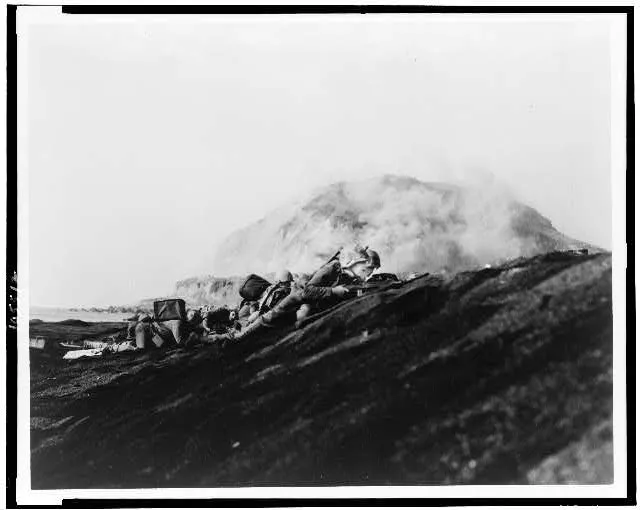
The Second Battalion, Twenty-Seventh Marines land on Iwo Jima. Source: Library of Congress - Campbell, Bob, -1968
The Battle of Iwo Jima in 1945 was one of the most intense conflicts in the Pacific Theater during World War II. The United States military aimed to capture the small volcanic island of Iwo Jima from Japanese forces. This island was considered strategic because it could serve as a critical air base for American bombers and fighter planes. Control of Iwo Jima would bring U.S. forces closer to Japan and improve their ability to launch further attacks.
The Japanese defenders had prepared complex tunnels and underground fortifications to resist the invasion. For more than a month, U.S. Marines and Navy units faced fierce resistance, suffering heavy casualties. Despite the difficult terrain and strong opposition, American forces used teamwork, advanced weapons, and persistent effort to overcome each obstacle.
One of the most memorable moments occurred when a group of U.S. Marines raised the American flag on Mount Suribachi. This act was captured in a famous photograph that quickly became a symbol of American determination and unity. The image inspired people back home and boosted morale among troops.
The battle, however, came at a high cost. Nearly 7,000 American service members died, and about 20,000 were wounded. Japanese losses were even higher, with most defenders fighting to the end rather than surrendering. These numbers show the extraordinary commitment and the tragic consequences of war.
The capture of Iwo Jima allowed the United States to use the island as an emergency landing site for damaged aircraft and as a base for future missions. This outcome contributed to the eventual Allied victory in the Pacific. However, the battle also raised difficult questions about the human cost of achieving military objectives during wartime.
Historians continue to discuss the significance of Iwo Jima. Some emphasize its military value, while others focus on the personal experiences of the soldiers involved. The battle’s legacy is remembered not just for strategic reasons, but for the courage and sacrifice shown by those on both sides.
Interesting Fact: The iconic flag-raising photograph taken by Joe Rosenthal won the Pulitzer Prize and became one of the most reproduced images of the 20th century.
When did the Battle of Iwo Jima begin?
February 19, 1945June 6, 1944December 7, 1941August 6, 1945
What was Iwo Jima used for after capture?
ShipyardAir baseSupply depotTraining camp
Who took the famous flag-raising photo?
Joe RosenthalDwight EisenhowerChester NimitzFranklin Roosevelt
Why was Iwo Jima considered strategic?
It was close to JapanIt had oil fieldsIt was a tourist spotIt had large cities
What made the battle especially difficult?
Underground tunnelsBad weather onlyLack of suppliesNaval blockades
What does the flag-raising photo symbolize?
American determinationDefeatSurrenderPeace treaty
Most Japanese defenders surrendered. True or false?
TrueFalse
What does 'casualties' mean?
People lost in battlePeople who wonPeople who built fortsPeople who cooked meals
Perfect For:
👩🏫 Teachers
• Reading comprehension practice
• Auto-graded assessments
• Literacy skill development
👨👩👧👦 Parents
• Reading practice at home
• Comprehension improvement
• Educational reading time
🏠 Homeschoolers
• Reading curriculum support
• Independent reading practice
• Progress monitoring
Reading Features:
📖
Reading Passage
Engaging fiction or nonfiction text
❓
Comprehension Quiz
Auto-graded questions
📊
Instant Feedback
Immediate results and scoring
📄
Printable Version
Download for offline reading
🔊
Read Aloud
Voice-over with word highlighting
Reviews & Ratings
No reviews yet. Be the first to share your experience!
Related Content
Native American Tribes Across America
This engaging history reading passage introduces students to Native American tribes across America, focusing on their da...
D2.HIS.1.3-5D2.HIS.2.3-5RI.4.1RI.4.2
Teepees: Homes on the Great Plains
This engaging history reading passage introduces students to teepees, the unique homes of Native American tribes on the ...
D2.HIS.2.3-5D2.HIS.14.3-5RI.4.1RI.4.2RI.4.4
Traditional Native American Clothing
This engaging history passage explores traditional Native American clothing and how it reflected the environment, values...
D2.HIS.2.3-5D2.HIS.3.3-5RI.4.3RI.4.4
The Iroquois Confederacy: A System of Peace
This engaging U.S. History reading passage introduces students to the Iroquois Confederacy, a powerful alliance of Nativ...
D2.HIS.2.3-5D2.HIS.3.3-5RI.4.3RI.4.4
The Cherokee Nation: History and Culture
This reading passage explores the rich history and culture of the Cherokee Nation, one of the largest Native American tr...
D2.HIS.2.3-5D2.HIS.14.3-5RI.4.3RI.4.4RI.4.10
The Sioux: Warriors and Tribal Leaders
This history reading passage explores the Sioux Nation, focusing on their roles as warriors and tribal leaders. Students...
D2.HIS.1.3-5D2.HIS.2.3-5RI.4.1RI.4.3
Native American Respect for Nature
This engaging history reading passage explores Native American respect for nature, emphasizing the close relationship be...
D2.HIS.2.3-5D2.HIS.3.3-5RI.4.3RI.4.4
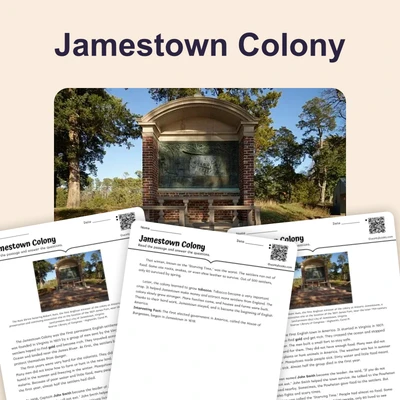
Jamestown: The First Permanent English Colony
This engaging history passage explores the founding of Jamestown, the first permanent English colony in America. Aligned...
D2.HIS.1.3-5D2.HIS.2.3-5RI.4.3RI.4.4
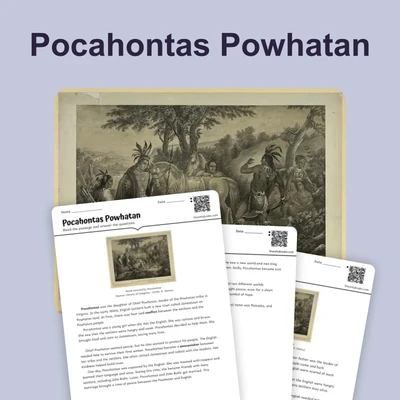
Pocahontas and the Powhatan People
This engaging reading passage explores the life of Pocahontas and the Powhatan people and their important role in early ...
D2.HIS.1.3-5D2.HIS.2.3-5RI.4.1RI.4.3
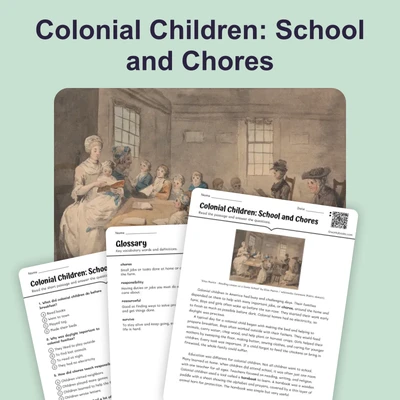
Colonial Children: School and Chores
This reading passage explores the daily lives of colonial children, focusing on their experiences at school and their ma...
D2.HIS.2.3-5D2.HIS.3.3-5RI.4.1RI.4.2RI.4.4
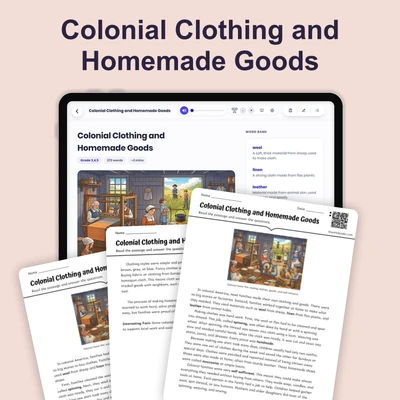
Colonial Clothing and Homemade Goods
This engaging U.S. history passage explores the daily life of early American colonists with a focus on colonial clothing...
D2.HIS.2.3-5RI.4.3RI.4.4
Colonial Jobs: Blacksmiths, Bakers, and Craftsmen
This engaging history reading passage explores the vital roles of blacksmiths, bakers, and craftsmen in colonial America...
D2.HIS.2.3-5D2.HIS.3.3-5RI.4.3RI.4.4
Colonial Towns and Village Life
This engaging history reading passage explores the daily life, work, and unity found in colonial towns and villages. Ali...
D2.HIS.1.3-5D2.HIS.2.3-5RI.4.3RI.4.4
Colonial Trade with England and Africa
This history reading passage explores colonial trade between the American colonies, England, and Africa, focusing on the...
D2.HIS.2.3-5D2.HIS.14.3-5RI.4.3RI.4.4
Benjamin Franklin: Printer, Inventor, and Leader
This history reading passage explores the life and achievements of Benjamin Franklin, one of America's most important ea...
D2.HIS.2.3-5D2.HIS.3.3-5RI.4.1RI.4.3
George Washington Leads the Army
This engaging history reading passage explores how George Washington bravely led the Continental Army during the America...
D2.HIS.1.3-5D2.HIS.2.3-5RI.4.3RI.4.4
Women and Children During the Revolutionary War
This reading passage explores the important roles women and children played during the Revolutionary War. Students will ...
D2.HIS.2.3-5RI.4.3RI.5.3
African Americans Fight for Freedom
This educational passage explores the brave and inspiring story of how African Americans fought for freedom in the Unite...
D2.HIS.2.3-5D2.HIS.3.3-5RI.4.3RI.4.4
The Battle of Yorktown Ends War
This engaging U.S. history reading passage explores the Battle of Yorktown, a key event that ended the American Revoluti...
D2.HIS.1.3-5D2.HIS.2.3-5RI.4.1RI.4.3
Loyalists vs. Patriots: Divided Families
This engaging U.S. history reading passage explores the division between Loyalists and Patriots during the American Revo...