This learning resource is available in interactive and printable formats. The interactive worksheet can be played online and assigned to students. The Printable PDF version can be downloaded and printed for completion by hand.
This passage explores the Battle of Yorktown in 1781, a pivotal moment in the American Revolutionary War. Students will analyze the causes, multiple perspectives, and consequences of the American and French victory over the British. The text features vocabulary support, a primary source quote, and an analytical approach to historical events. This resource is aligned to the C3 Framework and Common Core standards, and includes reading comprehension questions, a writing activity, a timeline, graphic organizers, and a glossary. Audio read aloud and a full Spanish translation are included to support diverse learners. Key figures such as George Washington, General Cornwallis, and the French military are discussed. This passage encourages students to use evidence and historical reasoning to understand the significance of Yorktown in the broader context of the American Revolution.
CONTENT PREVIEW
Expand content preview
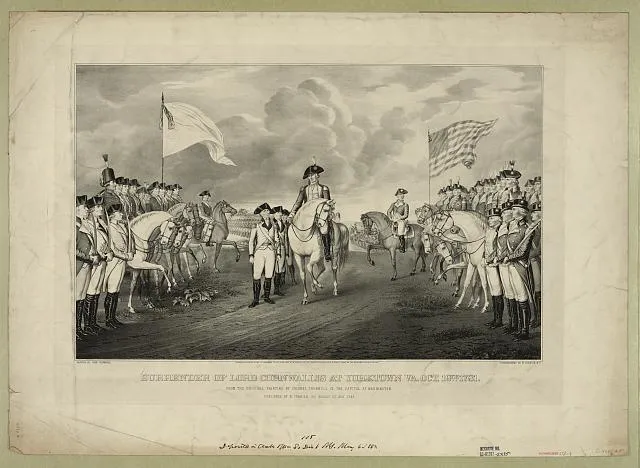
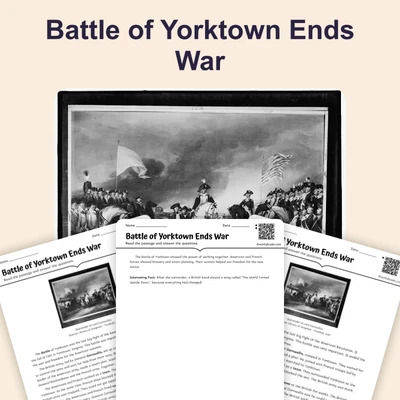
Surrender of Lord Cornwallis at Yorktown Va. Oct. 19th. 1781. Source: Library of Congress - N. Currier (Firm)
The Battle of Yorktown in 1781 was a crucial turning point in the American Revolution. By this time, the war had dragged on for years, exhausting both the British and American sides. British General Charles Cornwallis moved his army to the coastal town of Yorktown, Virginia, hoping to maintain a strong defensive position. However, this decision ultimately contributed to a major problem for the British: they became trapped by their enemies.
American and French forces saw an opportunity to strike a decisive blow. General George Washington, commander of the Continental Army, worked closely with French General Rochambeau to plan a coordinated attack. Together, they marched their combined armies over 400 miles to Yorktown. At the same time, the French navy under Admiral de Grasse blocked British ships from entering or leaving the Chesapeake Bay. This joint strategy cut off Cornwallis’s army from reinforcements and supplies, creating a classic siege situation.
The siege lasted for several weeks. American and French troops built trenches and artillery positions, bombarding the British day and night. Food and ammunition inside Yorktown ran dangerously low, while morale among British soldiers dropped. Cornwallis hoped for rescue, but the British navy failed to break through the French blockade. Facing rapidly worsening conditions, British forces reached a breaking point.
On October 19, 1781, General Cornwallis agreed to surrender. More than 7,000 British soldiers laid down their arms, marking a humiliating defeat for Britain. For the Americans and their French allies, the victory at Yorktown was both decisive and symbolic. The event convinced the British government that further fighting was hopeless, leading to peace negotiations. In 1783, the Treaty of Paris officially recognized the independence of the United States.
The outcome at Yorktown demonstrates the importance of alliances, strategy, and geography in warfare. The American and French partnership, careful planning, and control of land and sea made the British position impossible. This battle did not end every conflict, but it effectively stopped the major fighting and shifted the balance of power. Historians continue to study Yorktown as a key example of how cooperation and leadership can determine the fate of nations.
Interesting Fact: At the surrender ceremony, British musicians played a tune called “The World Turned Upside Down,” reflecting how dramatically the war’s outcome had changed expectations.
Who led the American army at Yorktown?
George WashingtonCharles CornwallisAdmiral de GrasseThomas Jefferson
Which country allied with the Americans?
FranceSpainGermanyPortugal
What year did the Battle of Yorktown occur?
1776178117831775
Why was the French navy important?
They blocked British shipsThey led the British armyThey supplied the BritishThey built Yorktown
What effect did the siege have on the British?
They ran out of suppliesThey won quicklyThey received reinforcementsThey left Yorktown
Why is the Battle of Yorktown significant?
It ended major fightingIt started the warIt helped Britain winIt was fought in France
The British surrendered at Yorktown. True or false?
TrueFalse
What does 'siege' mean?
Surround and cut off a placeQuick retreatDirect attackPeace negotiation
Perfect For:
👩🏫 Teachers
• Reading comprehension practice
• Auto-graded assessments
• Literacy skill development
👨👩👧👦 Parents
• Reading practice at home
• Comprehension improvement
• Educational reading time
🏠 Homeschoolers
• Reading curriculum support
• Independent reading practice
• Progress monitoring
Reading Features:
📖
Reading Passage
Engaging fiction or nonfiction text
❓
Comprehension Quiz
Auto-graded questions
📊
Instant Feedback
Immediate results and scoring
📄
Printable Version
Download for offline reading
🔊
Read Aloud
Voice-over with word highlighting
Reviews & Ratings
No reviews yet. Be the first to share your experience!
Related Content
Native American Tribes Across America
This engaging history reading passage introduces students to Native American tribes across America, focusing on their da...
D2.HIS.1.3-5D2.HIS.2.3-5RI.4.1RI.4.2
Teepees: Homes on the Great Plains
This engaging history reading passage introduces students to teepees, the unique homes of Native American tribes on the ...
D2.HIS.2.3-5D2.HIS.14.3-5RI.4.1RI.4.2RI.4.4
Traditional Native American Clothing
This engaging history passage explores traditional Native American clothing and how it reflected the environment, values...
D2.HIS.2.3-5D2.HIS.3.3-5RI.4.3RI.4.4
The Iroquois Confederacy: A System of Peace
This engaging U.S. History reading passage introduces students to the Iroquois Confederacy, a powerful alliance of Nativ...
D2.HIS.2.3-5D2.HIS.3.3-5RI.4.3RI.4.4
The Cherokee Nation: History and Culture
This reading passage explores the rich history and culture of the Cherokee Nation, one of the largest Native American tr...
D2.HIS.2.3-5D2.HIS.14.3-5RI.4.3RI.4.4RI.4.10
The Sioux: Warriors and Tribal Leaders
This history reading passage explores the Sioux Nation, focusing on their roles as warriors and tribal leaders. Students...
D2.HIS.1.3-5D2.HIS.2.3-5RI.4.1RI.4.3
Native American Respect for Nature
This engaging history reading passage explores Native American respect for nature, emphasizing the close relationship be...
D2.HIS.2.3-5D2.HIS.3.3-5RI.4.3RI.4.4
Jamestown: The First Permanent English Colony
This engaging history passage explores the founding of Jamestown, the first permanent English colony in America. Aligned...
D2.HIS.1.3-5D2.HIS.2.3-5RI.4.3RI.4.4
Pocahontas and the Powhatan People
This engaging reading passage explores the life of Pocahontas and the Powhatan people and their important role in early ...
D2.HIS.1.3-5D2.HIS.2.3-5RI.4.1RI.4.3
Colonial Children: School and Chores
This reading passage explores the daily lives of colonial children, focusing on their experiences at school and their ma...
D2.HIS.2.3-5D2.HIS.3.3-5RI.4.1RI.4.2RI.4.4
Colonial Clothing and Homemade Goods
This engaging U.S. history passage explores the daily life of early American colonists with a focus on colonial clothing...
D2.HIS.2.3-5RI.4.3RI.4.4
Colonial Jobs: Blacksmiths, Bakers, and Craftsmen
This engaging history reading passage explores the vital roles of blacksmiths, bakers, and craftsmen in colonial America...
D2.HIS.2.3-5D2.HIS.3.3-5RI.4.3RI.4.4
Colonial Towns and Village Life
This engaging history reading passage explores the daily life, work, and unity found in colonial towns and villages. Ali...
D2.HIS.1.3-5D2.HIS.2.3-5RI.4.3RI.4.4
Colonial Trade with England and Africa
This history reading passage explores colonial trade between the American colonies, England, and Africa, focusing on the...
D2.HIS.2.3-5D2.HIS.14.3-5RI.4.3RI.4.4
Benjamin Franklin: Printer, Inventor, and Leader
This history reading passage explores the life and achievements of Benjamin Franklin, one of America's most important ea...
D2.HIS.2.3-5D2.HIS.3.3-5RI.4.1RI.4.3
George Washington Leads the Army
This engaging history reading passage explores how George Washington bravely led the Continental Army during the America...
D2.HIS.1.3-5D2.HIS.2.3-5RI.4.3RI.4.4
Women and Children During the Revolutionary War
This reading passage explores the important roles women and children played during the Revolutionary War. Students will ...
D2.HIS.2.3-5RI.4.3RI.5.3
African Americans Fight for Freedom
This educational passage explores the brave and inspiring story of how African Americans fought for freedom in the Unite...
D2.HIS.2.3-5D2.HIS.3.3-5RI.4.3RI.4.4
The Battle of Yorktown Ends War
This engaging U.S. history reading passage explores the Battle of Yorktown, a key event that ended the American Revoluti...
D2.HIS.1.3-5D2.HIS.2.3-5RI.4.1RI.4.3
Loyalists vs. Patriots: Divided Families
This engaging U.S. history reading passage explores the division between Loyalists and Patriots during the American Revo...