This learning resource is available in interactive and printable formats. The interactive worksheet can be played online and assigned to students. The Printable PDF version can be downloaded and printed for completion by hand.
This comprehensive U.S. History reading passage examines the Black Hawk War of 1832, a pivotal event in Native American and United States history. Students will analyze the causes, motivations, and consequences of the conflict between the Sauk leader Black Hawk and expanding American settlers. The text integrates multiple perspectives, including those of Native Americans and settlers, and models historical reasoning using primary source evidence. Key vocabulary is highlighted and explained, supporting ELA development. Activities include a reading comprehension quiz, writing tasks that emphasize causation and significance, a compare-and-contrast graphic organizer, and a timeline of major events. A Spanish translation and read aloud audio are provided for accessibility. The lesson aligns with C3 Framework (D2.His.2.3-5, D2.His.3.3-5) and Common Core (RI.4.3, RI.4.4, W.4.2) standards, making it ideal for building both historical understanding and literacy skills.
CONTENT PREVIEW
Expand content preview
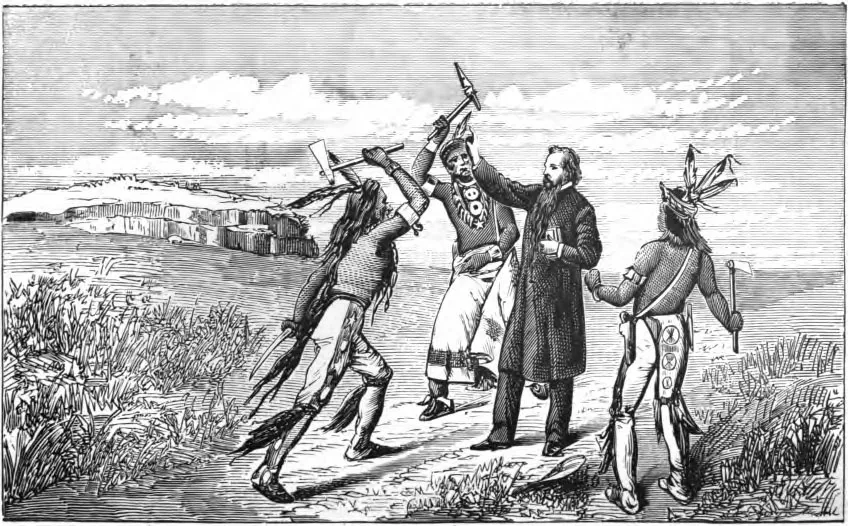
"1832 Adam Payne murder" by Matson, Nehemiah. / Wikimedia Commons (Public domain).
The Black Hawk War of 1832 was a significant conflict during the period of American westward expansion. In the early 1800s, the United States government encouraged settlers to move west into territories that had long been home to Native American communities. This movement often led to disputes over land, treaties, and resources.
The war began when Black Hawk, a respected leader of the Sauk nation, led a group of Sauk and Fox people back across the Mississippi River into their former lands in Illinois. Years earlier, the Sauk and Fox had signed a treaty that forced them to leave their territory, but many believed the agreement was unfair or obtained through pressure. Black Hawk’s return was an act of resistance against the loss of their homeland and the displacement of his people.
Settlers in Illinois saw Black Hawk’s return as a threat, fearing violence and competition for land. The U.S. government responded by mobilizing state militias and federal troops. The resulting campaign involved a series of battles and skirmishes. Although Black Hawk hoped to find support from other Native nations and even the British, most allies did not join, leaving the Sauk and Fox at a disadvantage.
The Black Hawk War was marked by confusion, misunderstandings, and tragic losses. Many Sauk and Fox people, including women and children, suffered from hunger and exhaustion as they tried to escape pursuing soldiers. The final battle at Bad Axe River ended in a devastating defeat for Black Hawk’s band. Hundreds of Native people were killed or captured, and Black Hawk himself was taken prisoner.
The outcome of the war had lasting effects. The defeat led to further removal of Native American nations from the Midwest and opened the region to more settlers. The war also highlighted the challenges of different cultures negotiating over land and power, as well as the consequences of broken treaties and mistrust. For many, the Black Hawk War became a symbol of Native resistance and the harsh realities of American expansion.
Today, historians study the Black Hawk War to better understand the complex relationships between Native nations and the United States. The conflict reminds us of the importance of fairness in agreements and the impact of government policies on people’s lives.
Interesting Fact: After the war, Black Hawk was taken on a tour of Eastern U.S. cities, where he met President Andrew Jackson and became a symbol of both Native resistance and American curiosity about Indigenous leaders.
Who led the Sauk and Fox in 1832?
Black HawkAndrew JacksonTecumsehSitting Bull
Where did the Sauk and Fox return?
IllinoisTexasCaliforniaFlorida
What ended the Black Hawk War?
Battle of Bad AxeTrail of TearsGold RushBoston Tea Party
Why did Black Hawk return to Illinois?
Resist unfair treatiesFind goldMeet the PresidentBuild a fort
What happened to many Sauk and Fox?
They were displacedThey became settlersThey led the U.S. ArmyThey signed new treaties
How did settlers feel about Black Hawk's return?
ThreatenedExcitedIndifferentWelcoming
Black Hawk was taken prisoner. True or false?
TrueFalse
What does "displacement" mean?
Forced to leave homeMaking a new treatyStarting a farmBuilding a house
Perfect For:
👩🏫 Teachers
• Reading comprehension practice
• Auto-graded assessments
• Literacy skill development
👨👩👧👦 Parents
• Reading practice at home
• Comprehension improvement
• Educational reading time
🏠 Homeschoolers
• Reading curriculum support
• Independent reading practice
• Progress monitoring
Reading Features:
📖
Reading Passage
Engaging fiction or nonfiction text
❓
Comprehension Quiz
Auto-graded questions
📊
Instant Feedback
Immediate results and scoring
📄
Printable Version
Download for offline reading
🔊
Read Aloud
Voice-over with word highlighting
Reviews & Ratings
No reviews yet. Be the first to share your experience!
Related Content
Native American Tribes Across America
This engaging history reading passage introduces students to Native American tribes across America, focusing on their da...
D2.HIS.1.3-5D2.HIS.2.3-5RI.4.1RI.4.2
Teepees: Homes on the Great Plains
This engaging history reading passage introduces students to teepees, the unique homes of Native American tribes on the ...
D2.HIS.2.3-5D2.HIS.14.3-5RI.4.1RI.4.2RI.4.4
Traditional Native American Clothing
This engaging history passage explores traditional Native American clothing and how it reflected the environment, values...
D2.HIS.2.3-5D2.HIS.3.3-5RI.4.3RI.4.4
The Iroquois Confederacy: A System of Peace
This engaging U.S. History reading passage introduces students to the Iroquois Confederacy, a powerful alliance of Nativ...
D2.HIS.2.3-5D2.HIS.3.3-5RI.4.3RI.4.4
The Cherokee Nation: History and Culture
This reading passage explores the rich history and culture of the Cherokee Nation, one of the largest Native American tr...
D2.HIS.2.3-5D2.HIS.14.3-5RI.4.3RI.4.4RI.4.10
The Sioux: Warriors and Tribal Leaders
This history reading passage explores the Sioux Nation, focusing on their roles as warriors and tribal leaders. Students...
D2.HIS.1.3-5D2.HIS.2.3-5RI.4.1RI.4.3
Native American Respect for Nature
This engaging history reading passage explores Native American respect for nature, emphasizing the close relationship be...
D2.HIS.2.3-5D2.HIS.3.3-5RI.4.3RI.4.4
Jamestown: The First Permanent English Colony
This engaging history passage explores the founding of Jamestown, the first permanent English colony in America. Aligned...
D2.HIS.1.3-5D2.HIS.2.3-5RI.4.3RI.4.4
Pocahontas and the Powhatan People
This engaging reading passage explores the life of Pocahontas and the Powhatan people and their important role in early ...
D2.HIS.1.3-5D2.HIS.2.3-5RI.4.1RI.4.3
Colonial Children: School and Chores
This reading passage explores the daily lives of colonial children, focusing on their experiences at school and their ma...
D2.HIS.2.3-5D2.HIS.3.3-5RI.4.1RI.4.2RI.4.4
Colonial Clothing and Homemade Goods
This engaging U.S. history passage explores the daily life of early American colonists with a focus on colonial clothing...
D2.HIS.2.3-5RI.4.3RI.4.4
Colonial Jobs: Blacksmiths, Bakers, and Craftsmen
This engaging history reading passage explores the vital roles of blacksmiths, bakers, and craftsmen in colonial America...
D2.HIS.2.3-5D2.HIS.3.3-5RI.4.3RI.4.4
Colonial Towns and Village Life
This engaging history reading passage explores the daily life, work, and unity found in colonial towns and villages. Ali...
D2.HIS.1.3-5D2.HIS.2.3-5RI.4.3RI.4.4
Colonial Trade with England and Africa
This history reading passage explores colonial trade between the American colonies, England, and Africa, focusing on the...
D2.HIS.2.3-5D2.HIS.14.3-5RI.4.3RI.4.4
Benjamin Franklin: Printer, Inventor, and Leader
This history reading passage explores the life and achievements of Benjamin Franklin, one of America's most important ea...
D2.HIS.2.3-5D2.HIS.3.3-5RI.4.1RI.4.3
George Washington Leads the Army
This engaging history reading passage explores how George Washington bravely led the Continental Army during the America...
D2.HIS.1.3-5D2.HIS.2.3-5RI.4.3RI.4.4
Women and Children During the Revolutionary War
This reading passage explores the important roles women and children played during the Revolutionary War. Students will ...
D2.HIS.2.3-5RI.4.3RI.5.3
African Americans Fight for Freedom
This educational passage explores the brave and inspiring story of how African Americans fought for freedom in the Unite...
D2.HIS.2.3-5D2.HIS.3.3-5RI.4.3RI.4.4
The Battle of Yorktown Ends War
This engaging U.S. history reading passage explores the Battle of Yorktown, a key event that ended the American Revoluti...
D2.HIS.1.3-5D2.HIS.2.3-5RI.4.1RI.4.3
Loyalists vs. Patriots: Divided Families
This engaging U.S. history reading passage explores the division between Loyalists and Patriots during the American Revo...