This learning resource is available in interactive and printable formats. The interactive worksheet can be played online and assigned to students. The Printable PDF version can be downloaded and printed for completion by hand.
This rigorous U.S. history reading passage examines the Boston Massacre of 1770, analyzing the event through both factual evidence and the lens of propaganda. Students will explore multiple perspectives, including those of British soldiers and colonial patriots, and learn how propaganda shaped public opinion in the lead-up to the American Revolution. Key academic vocabulary is integrated and explained within context. The passage aligns with C3 Framework and Common Core standards, providing a strong foundation in historical reasoning, cause and effect, and the evaluation of primary sources. Activities include a reading comprehension quiz, writing prompts, a T-Chart graphic organizer, and a timeline. A read aloud audio option and full Spanish translation are included, making the content accessible for diverse learners. This resource is ideal for building critical literacy and historical thinking skills.
CONTENT PREVIEW
Expand content preview
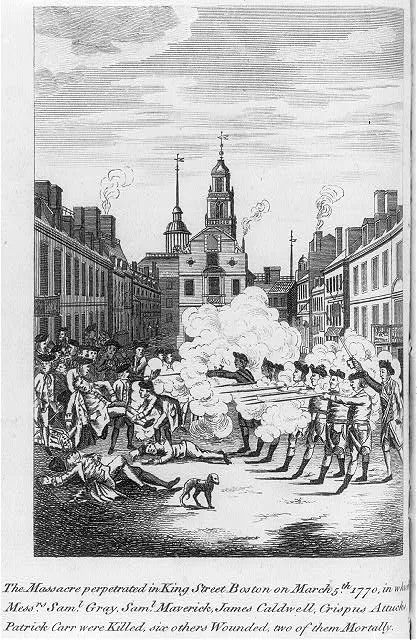
The massacre perpetrated in King Street Boston on March 5th 1770. Source: Library of Congress
The Boston Massacre occurred on March 5, 1770, when a violent confrontation erupted between British soldiers and colonists in Boston, Massachusetts. This event was the result of rising tension caused by British laws and taxes. British troops had been stationed in Boston to enforce unpopular policies and maintain order, but their presence only increased resentment among the colonists.
The conflict began when a group of colonists started to protest outside the Customs House, angered by the presence of armed soldiers in their city. The colonists shouted insults, threw snowballs, and even small objects at the soldiers. As the crowd grew larger and louder, the situation quickly escalated. The British soldiers, feeling threatened and confused, fired their muskets into the crowd without a clear order.
As a result, five colonists were killed and several others were wounded. Among those who died was Crispus Attucks, a man of African and Native American descent, who is often remembered as the first casualty of the American Revolution. The news of the killings spread rapidly throughout the colonies, and colonial leaders used the incident as powerful evidence of British oppression.
Both sides told different accounts of what happened that night. The British soldiers claimed they acted in self-defense, while colonists argued it was an unprovoked attack. The event was widely publicized in newspapers and through engravings like Paul Revere’s famous depiction of the massacre, which helped shape public opinion.
The Boston Massacre became a crucial turning point in colonial resistance. It united many colonists in opposition to British rule and inspired further resistance such as boycotts and the formation of committees of correspondence. The trial of the British soldiers, in which John Adams served as their lawyer, demonstrated the colonists’ commitment to justice and fair trials, even in moments of deep anger.
The massacre’s legacy influenced the course of the American Revolution. It highlighted the dangers of military occupation in civilian areas and showed how violence could push people to demand change. The event also encouraged colonists to question the legitimacy of British authority over their lives.
In conclusion, the Boston Massacre was more than just a tragic event; it was a catalyst that transformed colonial attitudes. By analyzing the causes and consequences, historians see how the massacre helped forge a stronger movement for American independence.
Interesting Fact: Just weeks after the Boston Massacre, the British government repealed most of the Townshend Acts, but kept the tax on tea, which would later spark the Boston Tea Party.
When did the Boston Massacre occur?
March 5, 1770July 4, 1776May 10, 1773December 16, 1773
Who was Crispus Attucks?
First casualty of the massacreBritish generalColonial governorTea merchant
How many colonists were killed?
ThreeFiveSevenTen
Why did colonists protest at the Customs House?
Unfair British lawsTea shortageElection resultsHarsh winter weather
What effect did the Boston Massacre have?
United colonists against BritainEnded all protestsStarted the Civil WarLed to new British taxes
What was John Adams' role after the massacre?
Defended British soldiersLed protestsWrote the DeclarationWas a judge
The Boston Massacre led to the Boston Tea Party. True or False?
TrueFalse
What does 'tension' mean in the passage?
A feeling of hostilityA kind of teaA lawA type of protest
Perfect For:
👩🏫 Teachers
• Reading comprehension practice
• Auto-graded assessments
• Literacy skill development
👨👩👧👦 Parents
• Reading practice at home
• Comprehension improvement
• Educational reading time
🏠 Homeschoolers
• Reading curriculum support
• Independent reading practice
• Progress monitoring
Reading Features:
📖
Reading Passage
Engaging fiction or nonfiction text
❓
Comprehension Quiz
Auto-graded questions
📊
Instant Feedback
Immediate results and scoring
📄
Printable Version
Download for offline reading
🔊
Read Aloud
Voice-over with word highlighting
Reviews & Ratings
No reviews yet. Be the first to share your experience!
Related Content
Native American Tribes Across America
This engaging history reading passage introduces students to Native American tribes across America, focusing on their da...
D2.HIS.1.3-5D2.HIS.2.3-5RI.4.1RI.4.2
Teepees: Homes on the Great Plains
This engaging history reading passage introduces students to teepees, the unique homes of Native American tribes on the ...
D2.HIS.2.3-5D2.HIS.14.3-5RI.4.1RI.4.2RI.4.4
Traditional Native American Clothing
This engaging history passage explores traditional Native American clothing and how it reflected the environment, values...
D2.HIS.2.3-5D2.HIS.3.3-5RI.4.3RI.4.4
The Iroquois Confederacy: A System of Peace
This engaging U.S. History reading passage introduces students to the Iroquois Confederacy, a powerful alliance of Nativ...
D2.HIS.2.3-5D2.HIS.3.3-5RI.4.3RI.4.4
The Cherokee Nation: History and Culture
This reading passage explores the rich history and culture of the Cherokee Nation, one of the largest Native American tr...
D2.HIS.2.3-5D2.HIS.14.3-5RI.4.3RI.4.4RI.4.10
The Sioux: Warriors and Tribal Leaders
This history reading passage explores the Sioux Nation, focusing on their roles as warriors and tribal leaders. Students...
D2.HIS.1.3-5D2.HIS.2.3-5RI.4.1RI.4.3
Native American Respect for Nature
This engaging history reading passage explores Native American respect for nature, emphasizing the close relationship be...
D2.HIS.2.3-5D2.HIS.3.3-5RI.4.3RI.4.4
Jamestown: The First Permanent English Colony
This engaging history passage explores the founding of Jamestown, the first permanent English colony in America. Aligned...
D2.HIS.1.3-5D2.HIS.2.3-5RI.4.3RI.4.4
Pocahontas and the Powhatan People
This engaging reading passage explores the life of Pocahontas and the Powhatan people and their important role in early ...
D2.HIS.1.3-5D2.HIS.2.3-5RI.4.1RI.4.3
Colonial Children: School and Chores
This reading passage explores the daily lives of colonial children, focusing on their experiences at school and their ma...
D2.HIS.2.3-5D2.HIS.3.3-5RI.4.1RI.4.2RI.4.4
Colonial Clothing and Homemade Goods
This engaging U.S. history passage explores the daily life of early American colonists with a focus on colonial clothing...
D2.HIS.2.3-5RI.4.3RI.4.4
Colonial Jobs: Blacksmiths, Bakers, and Craftsmen
This engaging history reading passage explores the vital roles of blacksmiths, bakers, and craftsmen in colonial America...
D2.HIS.2.3-5D2.HIS.3.3-5RI.4.3RI.4.4
Colonial Towns and Village Life
This engaging history reading passage explores the daily life, work, and unity found in colonial towns and villages. Ali...
D2.HIS.1.3-5D2.HIS.2.3-5RI.4.3RI.4.4
Colonial Trade with England and Africa
This history reading passage explores colonial trade between the American colonies, England, and Africa, focusing on the...
D2.HIS.2.3-5D2.HIS.14.3-5RI.4.3RI.4.4
Benjamin Franklin: Printer, Inventor, and Leader
This history reading passage explores the life and achievements of Benjamin Franklin, one of America's most important ea...
D2.HIS.2.3-5D2.HIS.3.3-5RI.4.1RI.4.3
George Washington Leads the Army
This engaging history reading passage explores how George Washington bravely led the Continental Army during the America...
D2.HIS.1.3-5D2.HIS.2.3-5RI.4.3RI.4.4
Women and Children During the Revolutionary War
This reading passage explores the important roles women and children played during the Revolutionary War. Students will ...
D2.HIS.2.3-5RI.4.3RI.5.3
African Americans Fight for Freedom
This educational passage explores the brave and inspiring story of how African Americans fought for freedom in the Unite...
D2.HIS.2.3-5D2.HIS.3.3-5RI.4.3RI.4.4
The Battle of Yorktown Ends War
This engaging U.S. history reading passage explores the Battle of Yorktown, a key event that ended the American Revoluti...
D2.HIS.1.3-5D2.HIS.2.3-5RI.4.1RI.4.3
Loyalists vs. Patriots: Divided Families
This engaging U.S. history reading passage explores the division between Loyalists and Patriots during the American Revo...