Building Log Cabin Homes
Interactive passage with audio narration, comprehension questions, and printable PDF.
By completing this purchase you agree to our Terms of Use and Privacy Policy. Your subscription renews automatically until you cancel. You can cancel anytime from your account settings. All sales are final and non-refundable. Digital content is available for download in your account immediately upon purchase.
What's included
Part of this bundle

Building Log Cabin Homes preview and details
About this printable Building Log Cabin Homes reading passage (Grades 3-5)
Sample passage and quiz from Building Log Cabin Homes
Reading passage and comprehension quiz preview
Pioneer Log Cabins
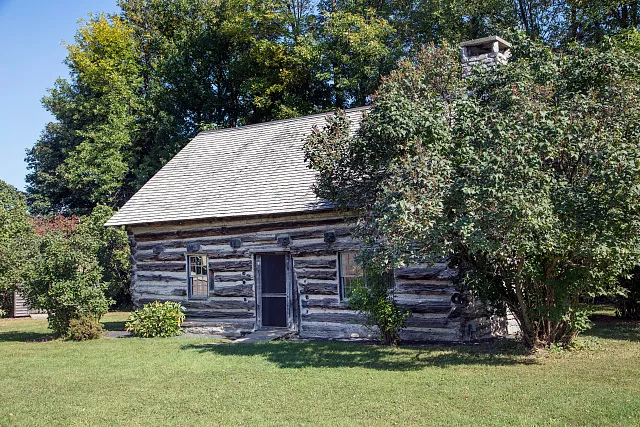
Source: Library of Congress - Highsmith, Carol M.
Pioneer families moving west across America built log cabins to have a safe place to live. These frontier homes were made using only the tools and trees found nearby. Most cabins were built by hand with axes and teamwork. Building a cabin was hard work, but it helped families survive in new and wild places.
The first step was to find a good spot. Pioneers looked for land near water and trees. Water was needed for drinking and washing. Trees were used for building and for firewood. Next, men and older boys cut down trees with axes. They trimmed off the branches and carried the logs to the cabin site. Each log was heavy, so many people had to help lift and move them.
The logs were stacked on top of each other to form the walls. Pioneers used notches to fit the logs together tightly. The gaps between the logs were filled with a mix of mud, clay, and moss, called chinking. Chinking kept out wind, rain, and bugs. The roof was usually made of logs or wooden shingles. The floor could be packed dirt or, if the family had time, made from wooden planks.
Pioneer log cabins were often just one room. The whole family cooked, ate, worked, and slept together in the same space. Inside, there might be a small fireplace for heat and cooking. Beds were made from straw or dried grass, and simple tables and chairs were built from leftover wood. There was little privacy, but families worked together to stay safe and warm.
Building a log cabin was a big challenge. Sometimes, neighbors came to help in a special gathering called a house-raising. Working together made the job faster and built strong friendships. Once the cabin was finished, families could focus on farming and daily chores. These homes protected people from harsh weather and wild animals. They also gave families a sense of hope and a new start in the West.
Pioneer log cabins were more than just shelters. They showed how people could solve problems with teamwork and creativity. By building their own homes, pioneers created strong communities and helped shape the future of the United States.
Interesting Fact: Some pioneer log cabins are still standing today and can be visited at historic sites!
Comprehension quiz (8 questions)
1. What did pioneers use to build cabins?
2. Why did pioneers build near water?
3. What is chinking made from?
4. Why were house-raisings important?
5. What effect did teamwork have?
6. How did cabins help families?
7. Pioneer cabins had many rooms. True or false?
8. What is a 'frontier'?
Common Core standards for Building Log Cabin Homes
Explain events, procedures, ideas, or concepts in a historical, scientific, or technical text, including what happened and why, based on specific information in the text.
Determine the meaning of general academic and domain-specific words or phrases in a text relevant to a grade 4 topic or subject area.
Explain the relationships or interactions between two or more individuals, events, ideas, or concepts in a historical, scientific, or technical text based on specific information in the text.
Determine the meaning of general academic and domain-specific words and phrases in a text relevant to a grade 5 topic or subject area.
Perfect for the way you teach
- Build comprehension skills
- Auto-graded quiz
- Differentiated reading
- Read together at home
- Improve fluency
- Quiet reading time
- Reading curriculum support
- Independent practice
- Track Lexile growth