California WWII Military
Interactive passage with audio narration, comprehension questions, and printable PDF.
By completing this purchase you agree to our Terms of Use and Privacy Policy. Your subscription renews automatically until you cancel. You can cancel anytime from your account settings. All sales are final and non-refundable. Digital content is available for download in your account immediately upon purchase.
What's included
Part of this bundle

California WWII Military preview and details
About this printable California WWII Military reading passage (Grades 3-5)
Sample passage and quiz from California WWII Military
Reading passage and comprehension quiz preview
California WWII Military
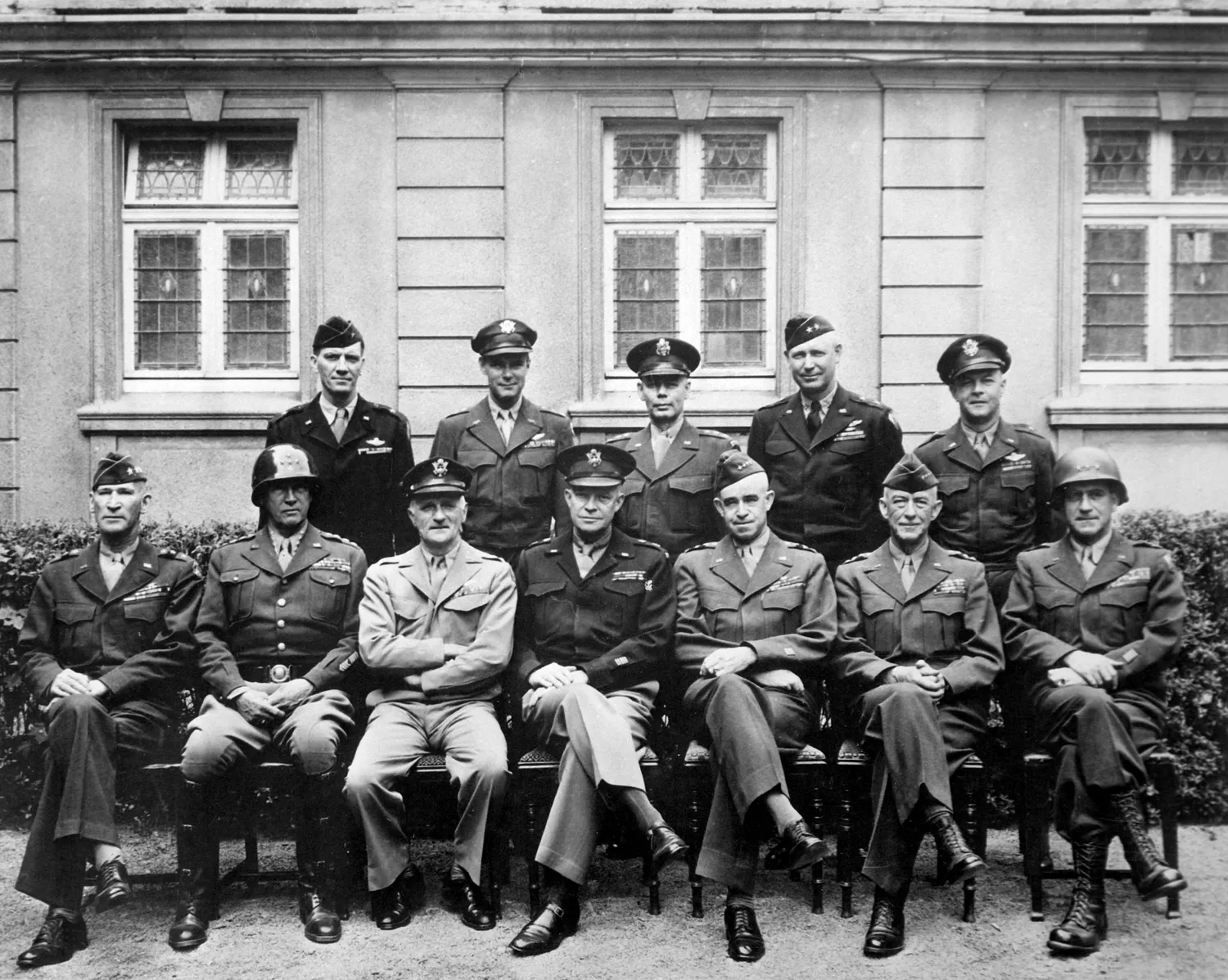
"American World War II senior military officials, 1945" by Army; part of the collection of the Office of War Information.
Source: Wikimedia Commons (Public domain).
During World War II, California became a vital center for the U.S. military. The war began in 1939, but the United States joined in 1941 after the attack on Pearl Harbor. California’s location on the Pacific Ocean made it important for defending the country and sending supplies to soldiers overseas.
Many new military bases were built across the state. These bases trained soldiers, pilots, and sailors. Some famous bases included Camp Pendleton and Fort Ord. California's long coastline made it a perfect place for the Navy and Air Force to practice and prepare for war.
The need for ships and airplanes led to a huge growth in California’s defense industry. Shipyards in places like Richmond and Long Beach built hundreds of new ships. Factories in Los Angeles and San Diego made thousands of airplanes. This work was called wartime production. It created many new jobs for men and women.
People from all over the United States moved to California for work. They came from small towns and big cities, hoping to find better lives. The population in cities like Los Angeles, San Francisco, and Oakland grew quickly. New neighborhoods, schools, and businesses appeared almost overnight.
California’s economy changed forever. Before the war, it was mostly farms and small towns. After the war, it became known for factories, technology, and a strong workforce. The skills people learned during wartime helped them start new businesses and industries after the war ended.
The state also became more diverse, as people of different backgrounds and cultures moved in. Women and people of color found new opportunities in the workforce. Their hard work was important to the war effort and helped change old ideas about who could do certain jobs.
California’s role in World War II showed how people working together could solve big problems. The teamwork and bravery of everyone involved helped the United States win the war and shaped California’s future for generations.
Interesting Fact: The city of Richmond, California, built more Liberty Ships during World War II than any other shipyard in the country.
Comprehension quiz (8 questions)
1. When did the U.S. join WWII?
2. Which industry grew most in California?
3. Which city built the most Liberty Ships?
4. Why did people move to California?
5. How did WWII change California's economy?
6. What does 'diverse' mean in this passage?
7. Women found new jobs in WWII. True or false?
8. A 'military base' is a place to:
Common Core standards for California WWII Military
Explain the relationships or interactions between two or more individuals, events, ideas, or concepts in a historical, scientific, or technical text based on specific information in the text.
Determine the meaning of general academic and domain-specific words and phrases in a text relevant to a grade 5 topic or subject area.
Write informative/explanatory texts to examine a topic and convey ideas and information clearly.
Perfect for the way you teach
- Build comprehension skills
- Auto-graded quiz
- Differentiated reading
- Read together at home
- Improve fluency
- Quiet reading time
- Reading curriculum support
- Independent practice
- Track Lexile growth