Causes of Current Climate Change — Reading Comprehension
Rate this
Premium Resource
Present
Present in classroom. No work saved
Assign
Classroom with student accounts, Track progress
Quick Play
No student accounts, assign with a link
Grades
5
6
7
8
Standards
MS-ESS3-5
PRINT+DIGITAL RESOURCE
This learning resource is available in interactive and printable formats. The interactive worksheet can be played online and assigned to students. The Printable PDF version can be downloaded and printed for completion by hand.
This middle school science passage explores the causes of current climate change, focusing on human-driven factors like fossil fuel use, deforestation, and methane emissions. The reading aligns with NGSS standard MS-ESS3-5 and explains the enhanced greenhouse effect, how carbon dioxide and methane contribute to global warming, and how scientists know that recent climate changes are primarily caused by humans. The passage includes a glossary, multiple-choice quiz, writing prompts, and graphic organizers to deepen student understanding. Both the passage and activities are designed for grades 6-8, supporting both English and Spanish speakers, and are compatible with audio integration. This resource helps students develop science literacy and critical thinking about one of the most important environmental challenges of our time.
CONTENT PREVIEW
Expand content preview
Causes of Current Climate Change
Over the last 150 years, Earth’s average temperature has risen more rapidly than at any other time in recent history. This unusual warming is a key environmental challenge for people, wildlife, and ecosystems. Understanding what causes current climate change helps scientists, governments, and communities make informed decisions about the future. This passage explores the mechanisms behind today’s warming, the main sources of greenhouse gases, and the evidence linking humans to these changes.
How the Enhanced Greenhouse Effect Works
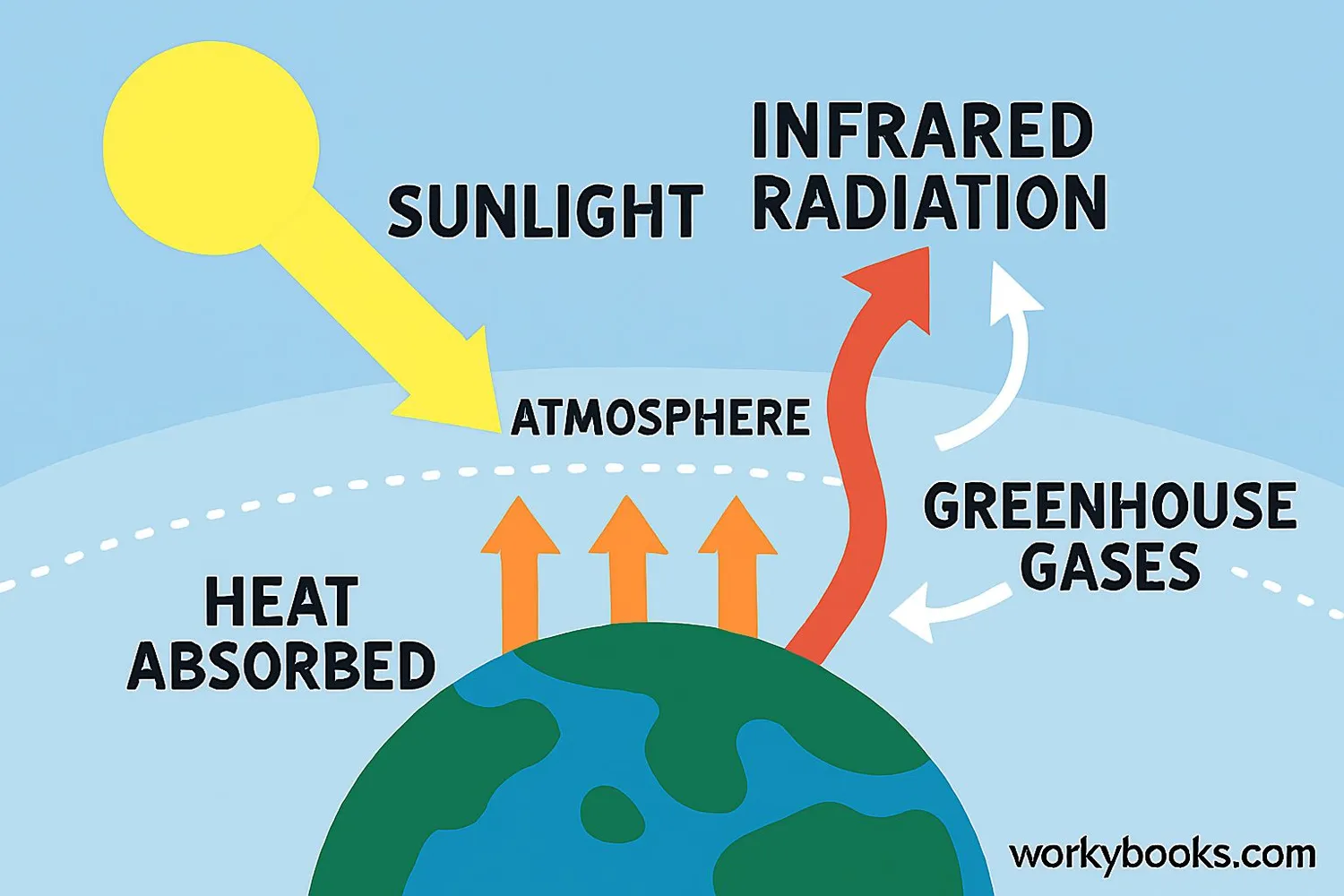
Earth’s greenhouse effect is a natural process that keeps the planet warm enough for life. Gases in our atmosphere, including carbon dioxide (CO₂) and methane (CH₄), trap some of the heat energy from the Sun. This process is like a blanket that keeps the planet comfortable. However, burning fossil fuels—such as coal, oil, and natural gas—has added billions of tons of CO₂ to the atmosphere since the Industrial Revolution. Deforestation, or cutting down forests, also increases CO₂ because trees absorb this gas. As a result, greenhouse gas levels today are higher than at any point in at least 800,000 years. This extra “blanket” traps more heat, causing the enhanced greenhouse effect and leading to global warming.
Main Human Sources of Greenhouse Gases
Most of the recent increase in greenhouse gases comes from human activities. About 76% of global greenhouse gas emissions come from CO₂, mainly from burning fossil fuels for electricity, heating, transportation, and industry. Deforestation adds even more CO₂ by reducing the number of trees that can absorb this gas. Methane is another powerful greenhouse gas, responsible for around 16% of emissions. Major sources of methane include livestock (especially cows), natural gas leaks, and landfills. Although methane stays in the atmosphere for a shorter time than CO₂, it traps over 25 times more heat per molecule. These human-driven emissions upset the natural balance of Earth’s climate system.
How Scientists Know Humans Are Causing Warming
Scientists use a field called attribution science to determine the causes of climate change. By comparing climate data, chemical “fingerprints” of gases, and computer models, they can separate natural changes from those caused by human activities. For example, natural factors like volcanic eruptions or changes in the Sun do not explain the current rate of warming. Instead, the sharp rise in CO₂ and methane from fossil fuels matches the timing and amount of observed warming. Over 97% of climate scientists agree that human activities are the main cause of recent global warming. This scientific consensus is based on thousands of studies and decades of careful observation.
Addressing climate change requires understanding both the science and the choices we make. By reducing fossil fuel use, protecting forests, and changing farming practices, people can help slow the rate of global warming and protect the planet for future generations.
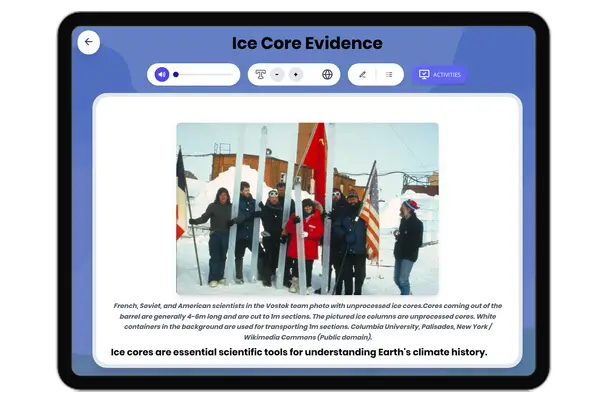
Interesting Fact: The amount of carbon dioxide in Earth’s atmosphere today is higher than at any time in the past 800,000 years, according to ice core records.
What is the main cause of the recent rapid increase in Earth's temperature?
Human activities, especially burning fossil fuels and deforestationNatural changes in sunlightIncreased volcanic eruptionsEarth’s orbit shifting
Which gas is responsible for about 76% of global greenhouse gas emissions?
What is the role of the greenhouse effect on Earth?
It keeps the planet warm enough for life by trapping heat.It blocks all sunlight from reaching the surface.It causes harmful chemicals to form in the air.It makes the air thinner at high altitudes.
What is 'attribution science' as described in the passage?
A field that identifies the causes of climate change using data and models.The study of animal migrations due to climate.A system for naming greenhouse gases.A way to measure rainfall patterns.
In the passage, what does 'enhanced greenhouse effect' mean?
A stronger greenhouse effect caused by increased greenhouse gases from humans.The natural warming of Earth by sunlight.The cooling of Earth by volcanic ash.A decline in greenhouse gas levels.
Which of the following is a major source of methane emissions?
Livestock such as cowsWind turbinesSolar panelsOcean currents
Why do scientists believe humans are the main cause of current climate change?
Because the timing and amount of CO₂ and methane increases match human activities.Because volcanoes have stopped erupting.Because the Sun is getting weaker.Because there are fewer earthquakes.
True or False: Methane traps over 25 times more heat per molecule than carbon dioxide.
TrueFalse
True or False: Most climate scientists disagree about the causes of recent global warming.
TrueFalse
Which of the following actions can help slow climate change, according to the passage?
Reducing fossil fuel use and protecting forestsBurning more coalCutting down more treesIgnoring greenhouse gas emissions
Perfect For:
👩🏫 Teachers
• Reading comprehension practice
• Auto-graded assessments
• Literacy skill development
👨👩👧👦 Parents
• Reading practice at home
• Comprehension improvement
• Educational reading time
🏠 Homeschoolers
• Reading curriculum support
• Independent reading practice
• Progress monitoring
Reading Features:
📖
Reading Passage
Engaging fiction or nonfiction text
❓
Comprehension Quiz
Auto-graded questions
📊
Instant Feedback
Immediate results and scoring
📄
Printable Version
Download for offline reading
🔊
Read Aloud
Voice-over with word highlighting
Reviews & Ratings
No reviews yet. Be the first to share your experience!
Related Content
Natural Disaster: Hurricanes
Hurricanes are massive storms with strong winds and rain. Tracking and preparing for them helps protect people in their ...
RI.3.1RI.4.4RI.4.2RI.5.2
How Climate Change Affects Animal Migration
This NGSS-aligned science reading passage explains how climate change affects animal migration by altering seasonal cues...
MS-LS2-6MS-ESS3-5
What Is Global Warming?
This NGSS-aligned reading passage explains global warming, the greenhouse effect, and how human activities like burning ...
MS-ESS3-5
What Causes Global Warming?
This NGSS-aligned reading passage explains what causes global warming, focusing on how human activities like burning fos...
MS-ESS3-5
How to Stop Global Warming
This NGSS-aligned reading passage helps students understand how to stop global warming by reducing greenhouse gases. It ...
MS-ESS3-5
Human Impacts: Climate Change
This standards-aligned science reading passage for grades 6-8 explains the mechanisms and effects of human-driven climat...
MS-LS2-4MS-ESS3-5
Climate Change: Vulnerable Ecosystems
This middle school science passage, aligned with NGSS standards MS-ESS3-5 and MS-LS2-4, helps students understand how cl...
MS-ESS3-5MS-LS2-4
Climate Change: Solutions and Mitigation
This passage explores scientific solutions and mitigation strategies for climate change, designed for middle school scie...
MS-ESS3-4MS-ESS3-5
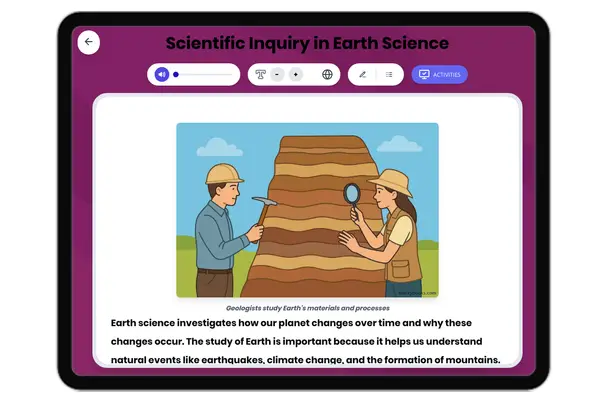
Scientific Inquiry in Earth Science
This passage explores scientific inquiry in Earth science for grades 6-8, aligned with NGSS standards MS-ESS1-4, MS-ESS2...
MS-ESS1-4MS-ESS2-1MS-ESS3-5SEP
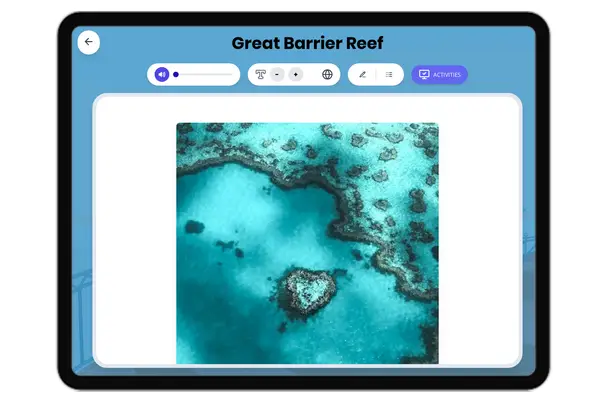
Great Barrier Reef
This passage introduces middle school students to the Great Barrier Reef, the world's largest coral reef system, located...
MS-LS2-1MS-LS2-4MS-ESS3-5
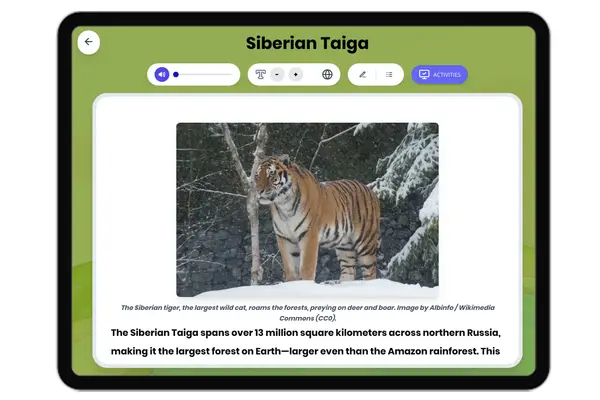
Siberian Taiga
This engaging middle school science passage explores the Siberian Taiga, the world’s largest forest ecosystem, stretchin...
MS-LS2-1MS-ESS3-5
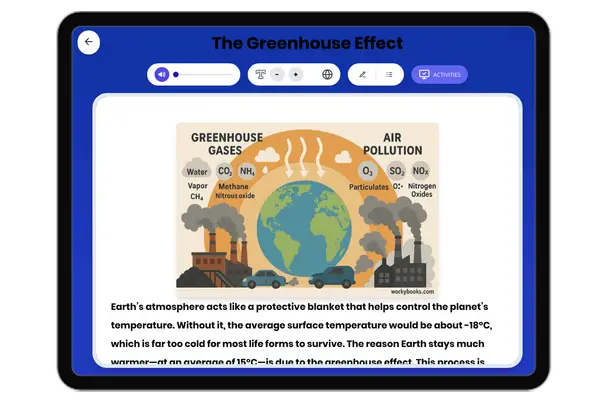
The Greenhouse Effect
This comprehensive middle school science passage explores the greenhouse effect, a process essential to maintaining Eart...
MS-ESS2-6MS-ESS3-5
Melting Ice and Snow
This passage, designed for grades 6-8 and aligned with NGSS MS-ESS3-5, explores the mechanisms and impacts of melting ic...
MS-ESS3-5
Rising Sea Levels
This science passage, written for grades 6-8, explores the phenomenon of rising sea levels, a key topic aligned with NGS...
MS-ESS3-5
Ice Cores
This passage, aligned with NGSS standards MS-ESS3-5 and MS-ESS1-4, explores the scientific process of extracting and ana...
MS-ESS3-5MS-ESS1-4
How Climate Change Affects Weather
This middle school science passage explores how and why weather patterns are changing globally. Students will learn abou...
MS-ESS3-5
How Climate Change Affects Oceans
This NGSS-aligned passage explores major changes occurring in Earth’s oceans, focusing on the mechanisms and impacts of ...
MS-ESS3-5
Carbon Footprint
This NGSS-aligned passage for grades 6-8 explores the concept of a carbon footprint, focusing on how personal activities...
MS-ESS3-4MS-ESS3-5
El Niño
This middle school science passage provides an in-depth exploration of El Niño, the warm phase of the El Niño-Southern O...
MS-ESS2-6MS-ESS3-5
ENSO and Global Climate
This comprehensive passage explores the El Niño-Southern Oscillation (ENSO), a crucial driver of global climate variabil...