Cultural Exchange in the Crusades
Interactive passage with audio narration, comprehension questions, and printable PDF.
By completing this purchase you agree to our Terms of Use and Privacy Policy. Your subscription renews automatically until you cancel. You can cancel anytime from your account settings. All sales are final and non-refundable. Digital content is available for download in your account immediately upon purchase.
What's included
Cultural Exchange in the Crusades preview and details
About this printable Cultural Exchange in the Crusades reading passage (Grades 5-8)
Sample passage and quiz from Cultural Exchange in the Crusades
Reading passage and comprehension quiz preview
Cultural Exchange in the Crusades
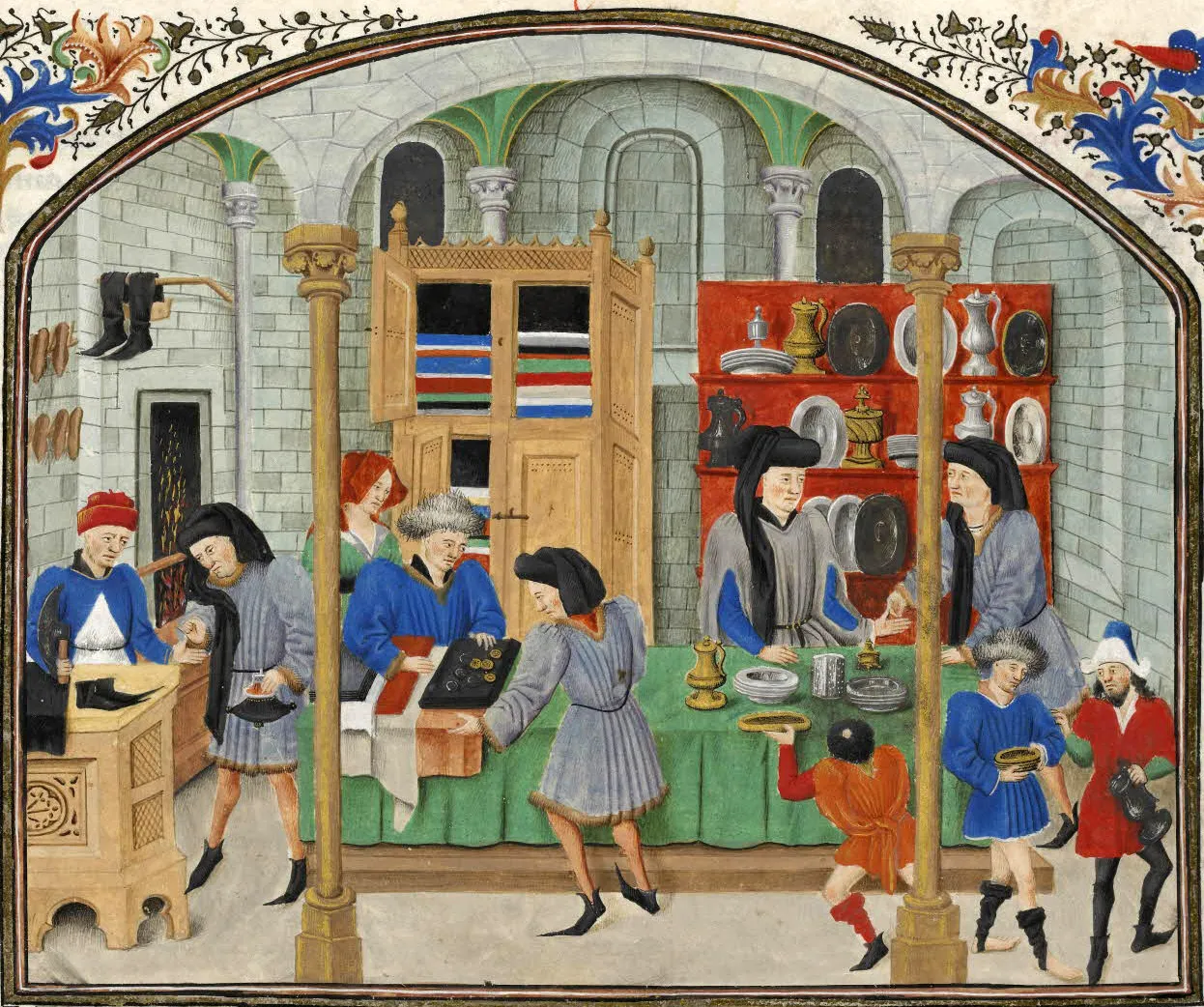
"Medieval market" by Nicole Oresme, translation of Aristotle's Ethics, Politics, and Economics, Rouen (France), Municipal library, Ms. 927, fol. 145 / Wikimedia Commons.
The Crusades were a series of religious wars that took place between 1096 and 1291, when European Christians traveled to the Middle East to try to capture Jerusalem and other holy sites. These journeys, though marked by conflict, led to important periods of cultural exchange between Europe and the Islamic world. As Crusaders passed through cities like Constantinople, Antioch, and Jerusalem, they encountered new ideas and technologies that would change life in Europe for centuries.
One of the most important areas of exchange was in scholarship. European Crusaders came into contact with Islamic mathematicians, doctors, and astronomers who had preserved and expanded upon ancient Greek and Roman knowledge. For example, the works of the Persian mathematician Al-Khwarizmi on algebra were translated into Latin and brought back to Europe. Medical texts by Ibn Sina (Avicenna) were copied and studied in European universities. In astronomy, Crusaders learned about more accurate calendars and navigational tools like the astrolabe, which were widely used in Islamic societies.
The Crusades also introduced Europeans to new products and goods. Spices such as pepper, cinnamon, and cloves were highly valued in Europe for their ability to flavor and preserve food. Fine silk fabrics, sugar, rice, and citrus fruits made their way into European markets. Archaeological evidence from trade routes, such as coins and ceramics, shows increased movement of these goods after the Crusades began. Letters from Crusaders describe their amazement at the bustling markets and exotic foods they discovered in the Middle East.
This contact with the Islamic world had lasting effects. European cities like Venice and Genoa became key trading hubs, importing goods from the East and spreading them throughout Europe. The transfer of scientific knowledge led to advances in European mathematics, medicine, and navigation, paving the way for the Renaissance. At the same time, some social hierarchies shifted as merchants gained wealth by trading these new products. However, historians note that not all contact was peaceful, and some knowledge was adopted slowly due to religious and language barriers.
Overall, the Crusades were a turning point in world history, connecting distant regions and encouraging the exchange of ideas, goods, and technologies. This period demonstrates how even conflict can lead to new opportunities for learning and growth. The spread of Islamic knowledge and goods helped shape the course of European development for centuries to come.
This cultural exchange during the Crusades connects to broader themes in world history, such as the movement of people and ideas, and the ways geography influences human societies.
Interesting Fact: One Crusader returning from Antioch wrote in 1100 about tasting sugar for the first time, calling it "sweet as honey and white as snow."
Comprehension quiz (8 questions)
1. When did the First Crusade begin?
2. Which city was a Crusader destination?
3. What did Crusaders bring back to Europe?
4. How did Islamic scholarship affect Europe?
5. Why were spices valued in Europe?
6. What was a challenge for knowledge exchange?
7. Crusaders learned about algebra from Al-Khwarizmi. True or false?
8. What does 'cultural exchange' mean?
Perfect for the way you teach
- Build comprehension skills
- Auto-graded quiz
- Differentiated reading
- Read together at home
- Improve fluency
- Quiet reading time
- Reading curriculum support
- Independent practice
- Track Lexile growth