Civilian Conservation Corps — Reading Comprehension
Rate this
Premium Resource
Present
Present in classroom. No work saved
Assign
Classroom with student accounts, Track progress
Quick Play
No student accounts, assign with a link
Grades
6
7
8
Standards
D2.HIS.2.3-5
D2.HIS.3.3-5
RI.4.3
RI.4.4
W.4.2
PRINT+DIGITAL RESOURCE
This learning resource is available in interactive and printable formats. The interactive worksheet can be played online and assigned to students. The Printable PDF version can be downloaded and printed for completion by hand.
This passage explores the Civilian Conservation Corps (CCC) as a key response to the unemployment crisis during the Great Depression. The text explains how the CCC provided jobs for young men, helped their families, and contributed to conservation and the development of public lands. Students will learn about the challenges faced by the nation, the solutions implemented by President Franklin D. Roosevelt, and the lasting impact of the CCC on American landscapes and society. The passage integrates grade-appropriate vocabulary and offers both standard and simplified versions, as well as a Spanish translation. Activities include comprehension questions, writing prompts, a cause-and-effect graphic organizer, and a timeline to deepen understanding. This resource aligns with HSS 11.6.4 and CCSS.RI.6-8.1, RI.6-8.2. A read aloud audio and differentiated support make it accessible for a range of learners.
CONTENT PREVIEW
Expand content preview
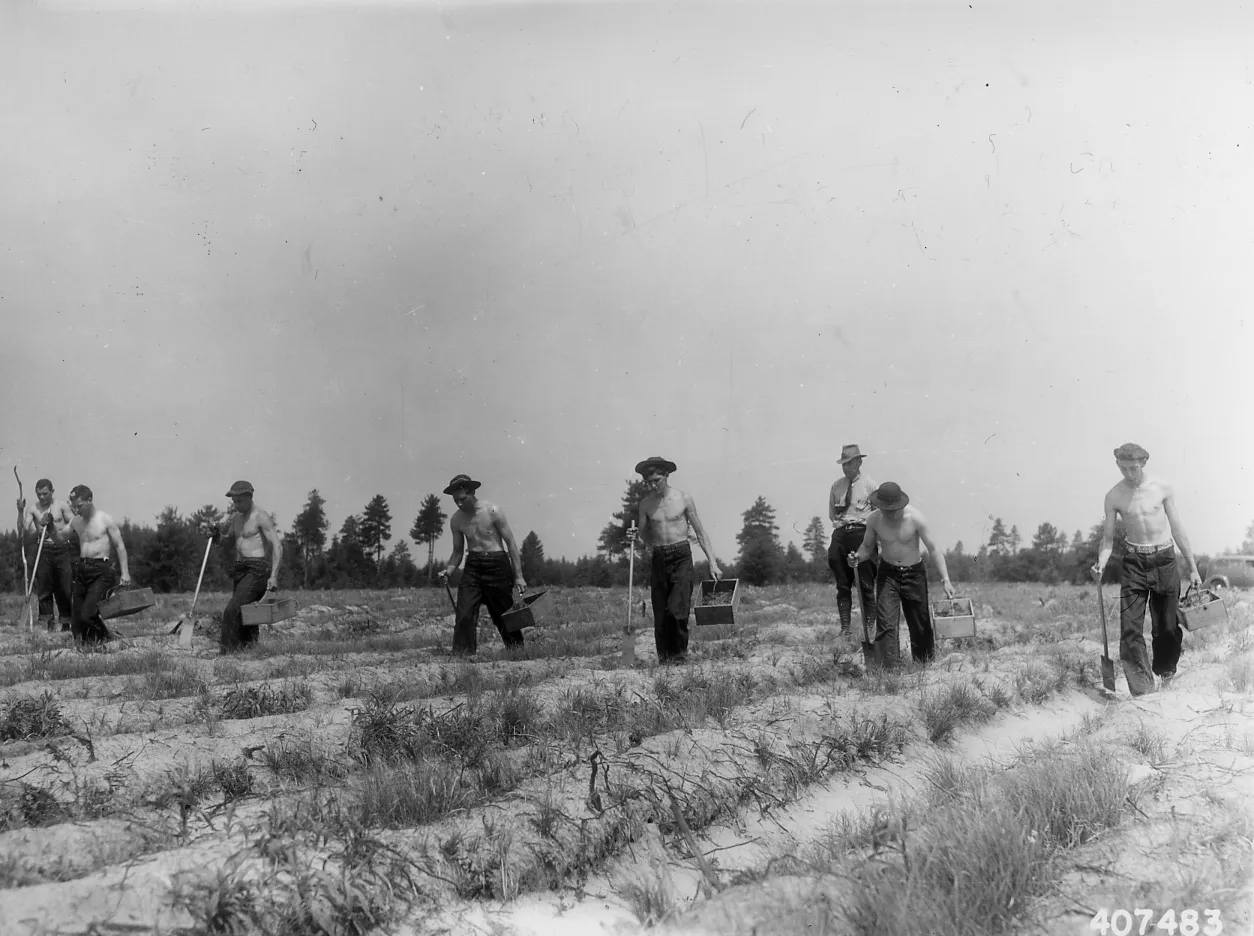
Civilian Conservation Corps (CCC) Planting Crew/ Wikimedia Commons
The Great Depression was a period of severe economic crisis beginning in 1929. Millions of Americans lost their jobs, homes, and savings. One of the most serious problems was unemployment, especially among young men. Families struggled to afford food and basic needs. The government needed to find a way to help these Americans survive and to rebuild the country’s economy.
President Franklin D. Roosevelt and his administration developed several programs to address these challenges. Among them was the Civilian Conservation Corps (CCC), which began in 1933. The CCC was a federal public works program. Its main purpose was to create employment for young, unmarried men between the ages of 18 and 25 who were out of work. The CCC also aimed to improve the nation’s natural resources and public lands through conservation projects.
CCC workers lived in camps and earned wages for their labor. Most of their pay was sent directly to their families, which provided much-needed financial relief. The types of work included planting trees, building parks, fighting forest fires, preventing soil erosion, and developing trails and campgrounds. These jobs not only helped restore the environment but also gave young men valuable skills and a sense of purpose. Their efforts improved forests and parks, which benefited communities and future generations.
Although the CCC created many opportunities, it was not without its challenges. Participation was limited mainly to white men at first, and the program was segregated by race. Over time, some African American, Native American, and other minority youth were included, but often faced discrimination or worked in separate camps. Despite these issues, the CCC is remembered as one of the most successful New Deal programs.
The CCC ended in 1942 as the United States entered World War II, but its legacy is still visible today. Many of the parks, roads, and forests improved by CCC workers are enjoyed by millions. This program demonstrated how government action and public works could provide not only relief but also lasting improvements to society and the environment.
Interesting Fact: By the time the CCC ended, its members had planted over 3 billion trees and helped develop more than 800 parks across the United States.
When did the Great Depression begin?
1929193319421918
Who started the CCC?
Franklin D. RooseveltTheodore RooseveltAbraham LincolnHerbert Hoover
What was a main goal of the CCC?
Create jobs for young menBuild factoriesStart businessesWrite new laws
How did CCC workers help their families?
Sent wages homeBought them carsTaught them skillsMoved them to camps
Why did the CCC end in 1942?
World War II beganNo more treesNot enough moneyToo many workers
What is one way the CCC improved the environment?
Planted treesBuilt skyscrapersOpened storesCut down forests
The CCC only allowed women to join. True or false?
TrueFalse
What does "conservation" mean?
Protecting natural resourcesBuilding new citiesMaking lawsEarning money
Perfect For:
👩🏫 Teachers
• Reading comprehension practice
• Auto-graded assessments
• Literacy skill development
👨👩👧👦 Parents
• Reading practice at home
• Comprehension improvement
• Educational reading time
🏠 Homeschoolers
• Reading curriculum support
• Independent reading practice
• Progress monitoring
Reading Features:
📖
Reading Passage
Engaging fiction or nonfiction text
❓
Comprehension Quiz
Auto-graded questions
📊
Instant Feedback
Immediate results and scoring
📄
Printable Version
Download for offline reading
🔊
Read Aloud
Voice-over with word highlighting
Reviews & Ratings
No reviews yet. Be the first to share your experience!
Related Content
Native American Tribes Across America
This engaging history reading passage introduces students to Native American tribes across America, focusing on their da...
D2.HIS.1.3-5D2.HIS.2.3-5RI.4.1RI.4.2
Teepees: Homes on the Great Plains
This engaging history reading passage introduces students to teepees, the unique homes of Native American tribes on the ...
D2.HIS.2.3-5D2.HIS.14.3-5RI.4.1RI.4.2RI.4.4
Traditional Native American Clothing
This engaging history passage explores traditional Native American clothing and how it reflected the environment, values...
D2.HIS.2.3-5D2.HIS.3.3-5RI.4.3RI.4.4
The Iroquois Confederacy: A System of Peace
This engaging U.S. History reading passage introduces students to the Iroquois Confederacy, a powerful alliance of Nativ...
D2.HIS.2.3-5D2.HIS.3.3-5RI.4.3RI.4.4
The Cherokee Nation: History and Culture
This reading passage explores the rich history and culture of the Cherokee Nation, one of the largest Native American tr...
D2.HIS.2.3-5D2.HIS.14.3-5RI.4.3RI.4.4RI.4.10
The Sioux: Warriors and Tribal Leaders
This history reading passage explores the Sioux Nation, focusing on their roles as warriors and tribal leaders. Students...
D2.HIS.1.3-5D2.HIS.2.3-5RI.4.1RI.4.3
Native American Respect for Nature
This engaging history reading passage explores Native American respect for nature, emphasizing the close relationship be...
D2.HIS.2.3-5D2.HIS.3.3-5RI.4.3RI.4.4
Jamestown: The First Permanent English Colony
This engaging history passage explores the founding of Jamestown, the first permanent English colony in America. Aligned...
D2.HIS.1.3-5D2.HIS.2.3-5RI.4.3RI.4.4
Pocahontas and the Powhatan People
This engaging reading passage explores the life of Pocahontas and the Powhatan people and their important role in early ...
D2.HIS.1.3-5D2.HIS.2.3-5RI.4.1RI.4.3
Colonial Children: School and Chores
This reading passage explores the daily lives of colonial children, focusing on their experiences at school and their ma...
D2.HIS.2.3-5D2.HIS.3.3-5RI.4.1RI.4.2RI.4.4
Colonial Clothing and Homemade Goods
This engaging U.S. history passage explores the daily life of early American colonists with a focus on colonial clothing...
D2.HIS.2.3-5RI.4.3RI.4.4
Colonial Jobs: Blacksmiths, Bakers, and Craftsmen
This engaging history reading passage explores the vital roles of blacksmiths, bakers, and craftsmen in colonial America...
D2.HIS.2.3-5D2.HIS.3.3-5RI.4.3RI.4.4
Colonial Towns and Village Life
This engaging history reading passage explores the daily life, work, and unity found in colonial towns and villages. Ali...
D2.HIS.1.3-5D2.HIS.2.3-5RI.4.3RI.4.4
Colonial Trade with England and Africa
This history reading passage explores colonial trade between the American colonies, England, and Africa, focusing on the...
D2.HIS.2.3-5D2.HIS.14.3-5RI.4.3RI.4.4
Benjamin Franklin: Printer, Inventor, and Leader
This history reading passage explores the life and achievements of Benjamin Franklin, one of America's most important ea...
D2.HIS.2.3-5D2.HIS.3.3-5RI.4.1RI.4.3
George Washington Leads the Army
This engaging history reading passage explores how George Washington bravely led the Continental Army during the America...
D2.HIS.1.3-5D2.HIS.2.3-5RI.4.3RI.4.4
Women and Children During the Revolutionary War
This reading passage explores the important roles women and children played during the Revolutionary War. Students will ...
D2.HIS.2.3-5RI.4.3RI.5.3
African Americans Fight for Freedom
This educational passage explores the brave and inspiring story of how African Americans fought for freedom in the Unite...
D2.HIS.2.3-5D2.HIS.3.3-5RI.4.3RI.4.4
The Battle of Yorktown Ends War
This engaging U.S. history reading passage explores the Battle of Yorktown, a key event that ended the American Revoluti...
D2.HIS.1.3-5D2.HIS.2.3-5RI.4.1RI.4.3
Loyalists vs. Patriots: Divided Families
This engaging U.S. history reading passage explores the division between Loyalists and Patriots during the American Revo...