Colonial Slave Resistance
Interactive passage with audio narration, comprehension questions, and printable PDF.
By completing this purchase you agree to our Terms of Use and Privacy Policy. Your subscription renews automatically until you cancel. You can cancel anytime from your account settings. All sales are final and non-refundable. Digital content is available for download in your account immediately upon purchase.
What's included
Colonial Slave Resistance preview and details
About this printable Colonial Slave Resistance reading passage (Grades 6-8)
Sample passage and quiz from Colonial Slave Resistance
Reading passage and comprehension quiz preview
Colonial Slave Resistance
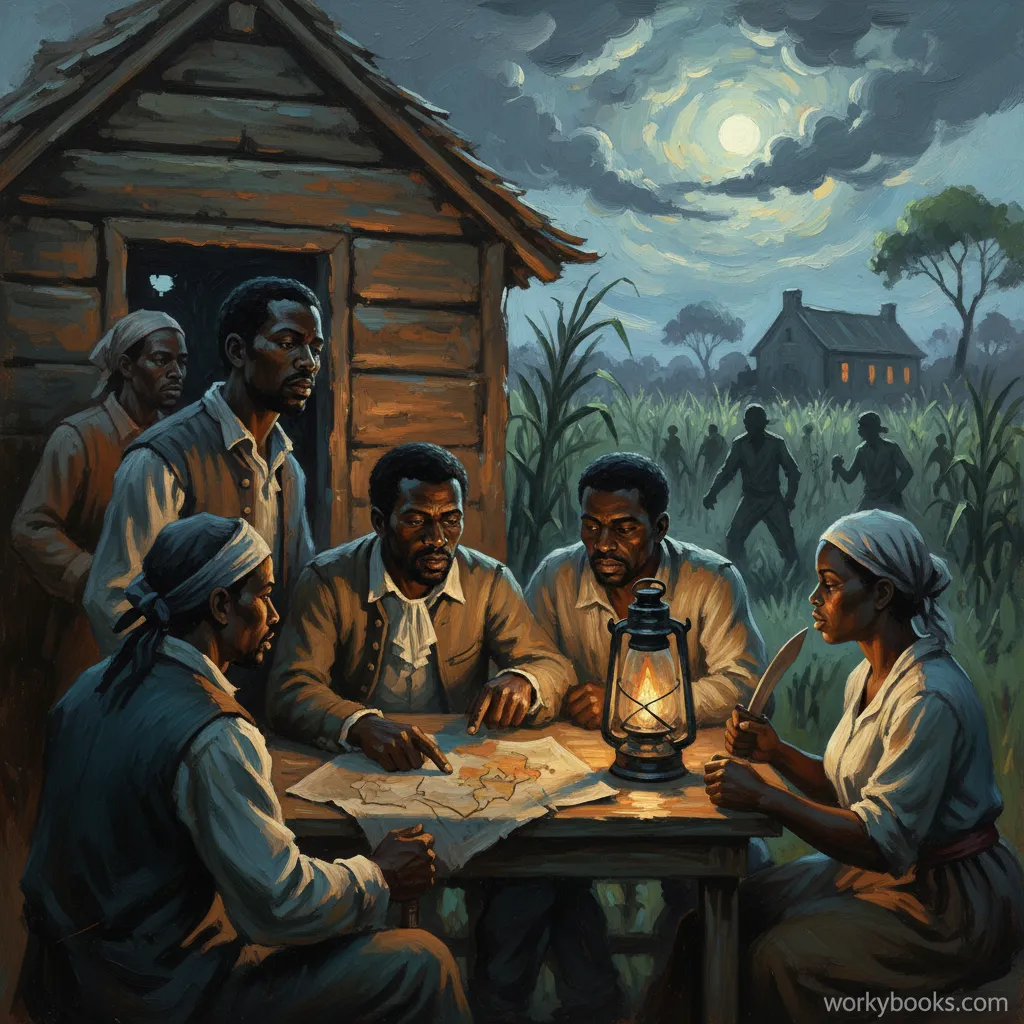
Enslaved people in colonial America did not submit to their situation without protest. Across the colonies, resistance took many forms, from subtle acts of defiance to violent rebellion. Despite harsh punishments and constant surveillance, enslaved Africans and their descendants repeatedly challenged the system that tried to control every part of their lives.
One common method of resistance was slowing down the pace of work. Enslaved workers might pretend to be sick, break tools, or work less efficiently. These actions, sometimes called "day-to-day resistance," forced slaveholders to recognize that enslaved people were not simply property, but individuals who could disrupt the plantation economy. While these acts rarely brought freedom, they allowed enslaved people to regain a sense of agency and dignity in their daily lives.
Escape was another significant form of resistance. Some enslaved people risked everything by running away, seeking refuge with Native American communities or in free colonies. The journey was dangerous and punishments for being caught were severe, ranging from brutal physical penalties to being sold farther from family and friends. Despite these risks, many attempted escape, demonstrating the powerful desire for freedom and autonomy.
Organized uprisings, although less common, had a major impact on colonial society. One of the most famous was the Stono Rebellion of 1739 in South Carolina. A group of about twenty enslaved men seized weapons and killed several white colonists, hoping to reach Spanish Florida where they had been promised freedom. The rebellion grew as more enslaved people joined, but it was eventually suppressed. In response, colonial authorities passed stricter laws known as the Slave Codes to limit the movement and activities of enslaved people.
The effects of resistance extended beyond the immediate events. Plantation owners lived in fear of further uprisings and were forced to spend resources on security and control. At the same time, acts of resistance inspired hope among enslaved communities and proved that the system of slavery could be challenged.
Historians use records such as court documents, plantation accounts, and personal narratives to piece together these stories. While not every act of resistance was recorded, the evidence shows that enslaved people never accepted their fate quietly. Their courage and determination changed colonial laws and helped sow the seeds for future movements seeking justice and equality.
Interesting Fact: During the Stono Rebellion, some rebels used drums and music to communicate and organize, drawing upon African traditions of resistance.
Comprehension quiz (8 questions)
1. What year was the Stono Rebellion?
2. What were Slave Codes?
3. Where did Stono rebels hope to go?
4. Why did enslaved people break tools?
5. What effect did resistance have on owners?
6. What did historians use to study resistance?
7. Slave resistance only happened once. True or false?
8. What does 'autonomy' mean?
Common Core standards for Colonial Slave Resistance
Explain events, procedures, ideas, or concepts in a historical, scientific, or technical text, including what happened and why, based on specific information in the text.
Determine the meaning of general academic and domain-specific words or phrases in a text relevant to a grade 4 topic or subject area.
Write informative/explanatory texts to examine a topic and convey ideas and information clearly.
Perfect for the way you teach
- Build comprehension skills
- Auto-graded quiz
- Differentiated reading
- Read together at home
- Improve fluency
- Quiet reading time
- Reading curriculum support
- Independent practice
- Track Lexile growth