This learning resource is available in interactive and printable formats. The interactive worksheet can be played online and assigned to students. The Printable PDF version can be downloaded and printed for completion by hand.
This comprehensive history reading passage delves into the complex social classes of Colonial America, exploring their origins, functions, and lasting effects. Students learn about the distinctions between gentry, middle class, indentured servants, enslaved people, and Native Americans through a compare/contrast lens. The passage integrates a primary source quote, highlights multiple perspectives, and models historical reasoning. Academic vocabulary is embedded for educational growth. Activities include a multiple-choice quiz, explanatory writing prompts, a T-Chart graphic organizer, and a timeline of key developments. A public domain image enhances visual understanding. The resource aligns with C3 Framework standards (D2.His.2.3-5, D2.His.3.3-5) and Common Core ELA standards (RI.4.3, RI.4.4, W.4.2). Spanish translation and read aloud audio support diverse learners. This passage is ideal for deepening understanding of social hierarchy and inequality in America’s colonial past.
CONTENT PREVIEW
Expand content preview
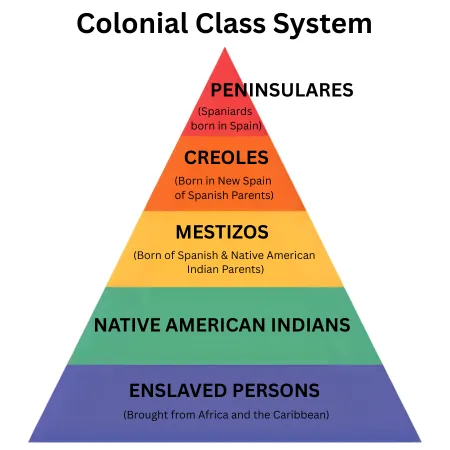
"Colonial Class System" by Altavoz Anon Source: Wikimedia Commons (CC0).
In Colonial America, a person's place in society was determined largely by wealth, family background, and race. This created a strict hierarchy, or system of social ranking. The highest social class was known as the gentry. These were wealthy landowners, merchants, and officials who often held political power and lived in large homes. The gentry set the fashion and rules for society. Their lives were filled with social gatherings, education, and influence over laws and government.
Beneath the gentry were the middle class and skilled workers. This group included small farmers, tradespeople, and artisans, such as blacksmiths and carpenters. Although the middle class did not have as much wealth or power, they could sometimes gain status through hard work or success in business. This limited chance to move up in society is called mobility. However, mobility was rare, and most people stayed in the social class of their birth.
The lower class included poor laborers, indentured servants, and, at the very bottom, enslaved Africans. Indentured servants were people who agreed to work for a certain number of years in exchange for passage to the colonies. Enslaved people had no rights or freedom and were forced to work for others for life. Laws and customs supported this inequality, making it nearly impossible for enslaved people or poor laborers to improve their conditions.
Life experiences were sharply different across the social classes. The gentry enjoyed education and leisure, while the middle class focused on trade and family farms. The poor and enslaved worked long hours with little hope for change. Women’s roles also depended on class, but most were expected to manage households and had limited legal rights. Education was usually reserved for the wealthier classes, leaving others with few chances to learn to read and write.
Colonial social classes also shaped opportunities and rights. Only property-owning men, mostly from the gentry or middle class, could vote or hold office. Meanwhile, enslaved people and many women were denied basic rights. These divisions often led to tension and conflict, as groups struggled for fairness and change. Over time, some colonists challenged the structures of class and power, planting early seeds for later movements toward equality.
Despite these efforts, most colonial communities remained divided by wealth, race, and gender. Historians use diaries, letters, and official records as evidence to learn how class shaped daily life. By comparing these sources, they gain a deeper understanding of how social class not only controlled opportunities, but also influenced laws, culture, and the development of colonial America.
Interesting Fact: In some colonies, laws banned people from wearing certain clothing styles unless they belonged to the gentry, making class differences visible to everyone.
Who were the gentry?
Wealthy landowners and leadersIndentured servantsPoor laborersReligious leaders
What limited social mobility in colonies?
Strict social hierarchyPlentiful jobsEqual rights for allNo laws about class
Who could usually vote in colonies?
Property-owning menAll menAll womenEnslaved people
What did laws about clothing show?
Class differencesReligious beliefsWork skillsSchool attendance
Why was inequality hard to change?
Laws and customs supported itEveryone had equal rightsNo one wanted changeThere was no hierarchy
How did historians learn about colonial classes?
Diaries and recordsOnly oral storiesModern interviewsMovie scripts
Enslaved Africans could become gentry. True or false?
TrueFalse
What is 'hierarchy'?
A social ranking systemA type of farmA voting lawA group of workers
Perfect For:
👩🏫 Teachers
• Reading comprehension practice
• Auto-graded assessments
• Literacy skill development
👨👩👧👦 Parents
• Reading practice at home
• Comprehension improvement
• Educational reading time
🏠 Homeschoolers
• Reading curriculum support
• Independent reading practice
• Progress monitoring
Reading Features:
📖
Reading Passage
Engaging fiction or nonfiction text
❓
Comprehension Quiz
Auto-graded questions
📊
Instant Feedback
Immediate results and scoring
📄
Printable Version
Download for offline reading
🔊
Read Aloud
Voice-over with word highlighting
Reviews & Ratings
No reviews yet. Be the first to share your experience!
Related Content
Native American Tribes Across America
This engaging history reading passage introduces students to Native American tribes across America, focusing on their da...
D2.HIS.1.3-5D2.HIS.2.3-5RI.4.1RI.4.2
Teepees: Homes on the Great Plains
This engaging history reading passage introduces students to teepees, the unique homes of Native American tribes on the ...
D2.HIS.2.3-5D2.HIS.14.3-5RI.4.1RI.4.2RI.4.4
Traditional Native American Clothing
This engaging history passage explores traditional Native American clothing and how it reflected the environment, values...
D2.HIS.2.3-5D2.HIS.3.3-5RI.4.3RI.4.4
The Iroquois Confederacy: A System of Peace
This engaging U.S. History reading passage introduces students to the Iroquois Confederacy, a powerful alliance of Nativ...
D2.HIS.2.3-5D2.HIS.3.3-5RI.4.3RI.4.4
The Cherokee Nation: History and Culture
This reading passage explores the rich history and culture of the Cherokee Nation, one of the largest Native American tr...
D2.HIS.2.3-5D2.HIS.14.3-5RI.4.3RI.4.4RI.4.10
The Sioux: Warriors and Tribal Leaders
This history reading passage explores the Sioux Nation, focusing on their roles as warriors and tribal leaders. Students...
D2.HIS.1.3-5D2.HIS.2.3-5RI.4.1RI.4.3
Native American Respect for Nature
This engaging history reading passage explores Native American respect for nature, emphasizing the close relationship be...
D2.HIS.2.3-5D2.HIS.3.3-5RI.4.3RI.4.4
Jamestown: The First Permanent English Colony
This engaging history passage explores the founding of Jamestown, the first permanent English colony in America. Aligned...
D2.HIS.1.3-5D2.HIS.2.3-5RI.4.3RI.4.4
Pocahontas and the Powhatan People
This engaging reading passage explores the life of Pocahontas and the Powhatan people and their important role in early ...
D2.HIS.1.3-5D2.HIS.2.3-5RI.4.1RI.4.3
Colonial Children: School and Chores
This reading passage explores the daily lives of colonial children, focusing on their experiences at school and their ma...
D2.HIS.2.3-5D2.HIS.3.3-5RI.4.1RI.4.2RI.4.4
Colonial Clothing and Homemade Goods
This engaging U.S. history passage explores the daily life of early American colonists with a focus on colonial clothing...
D2.HIS.2.3-5RI.4.3RI.4.4
Colonial Jobs: Blacksmiths, Bakers, and Craftsmen
This engaging history reading passage explores the vital roles of blacksmiths, bakers, and craftsmen in colonial America...
D2.HIS.2.3-5D2.HIS.3.3-5RI.4.3RI.4.4
Colonial Towns and Village Life
This engaging history reading passage explores the daily life, work, and unity found in colonial towns and villages. Ali...
D2.HIS.1.3-5D2.HIS.2.3-5RI.4.3RI.4.4
Colonial Trade with England and Africa
This history reading passage explores colonial trade between the American colonies, England, and Africa, focusing on the...
D2.HIS.2.3-5D2.HIS.14.3-5RI.4.3RI.4.4
Benjamin Franklin: Printer, Inventor, and Leader
This history reading passage explores the life and achievements of Benjamin Franklin, one of America's most important ea...
D2.HIS.2.3-5D2.HIS.3.3-5RI.4.1RI.4.3
George Washington Leads the Army
This engaging history reading passage explores how George Washington bravely led the Continental Army during the America...
D2.HIS.1.3-5D2.HIS.2.3-5RI.4.3RI.4.4
Women and Children During the Revolutionary War
This reading passage explores the important roles women and children played during the Revolutionary War. Students will ...
D2.HIS.2.3-5RI.4.3RI.5.3
African Americans Fight for Freedom
This educational passage explores the brave and inspiring story of how African Americans fought for freedom in the Unite...
D2.HIS.2.3-5D2.HIS.3.3-5RI.4.3RI.4.4
The Battle of Yorktown Ends War
This engaging U.S. history reading passage explores the Battle of Yorktown, a key event that ended the American Revoluti...
D2.HIS.1.3-5D2.HIS.2.3-5RI.4.1RI.4.3
Loyalists vs. Patriots: Divided Families
This engaging U.S. history reading passage explores the division between Loyalists and Patriots during the American Revo...