This learning resource is available in interactive and printable formats. The interactive worksheet can be played online and assigned to students. The Printable PDF version can be downloaded and printed for completion by hand.
This history reading passage examines the complex roles, rights, and daily experiences of women in colonial America. Students will learn how colonial women's legal and social status differed across regions and cultures, as well as how their daily lives were shaped by colonial laws, social expectations, and economic realities. The passage incorporates primary source quotes and disciplinary vocabulary to help students analyze the motivations and consequences of limited women's rights. The activities encourage students to compare and contrast different perspectives, use evidence to support their answers, and connect the topic to broader historical contexts. Additional features include a glossary of key terms, a multiple-choice quiz, writing prompts, a graphic organizer, a timeline of key events, and a Spanish translation. This resource aligns with C3 Framework and Common Core standards and supports both English and Spanish learners. Read aloud audio is available for accessibility.
CONTENT PREVIEW
Expand content preview
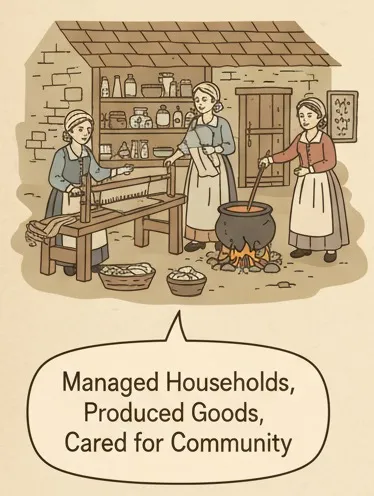
In Puritan New England, women contributed significantly to their communities. They managed households, produced textiles, preserved food, and cared for the sick.
In colonial America, women’s lives were shaped by strict laws and customs that defined their roles and responsibilities. Most women were expected to focus on domesticity, which meant managing the household, cooking, cleaning, and raising children. According to the legal system of coverture, a married woman’s legal identity was covered by her husband’s. As a result, women could not vote, own property independently, or sign contracts without their husband’s approval. This system created a clear inequality between men and women.
Despite these limitations, colonial women made vital contributions to their families and communities. Women were responsible for producing much of what their household needed, from clothing to food. In addition to daily chores, women often cared for sick relatives and taught their children basic skills. When husbands were away, many women managed farms or shops, showing their ability to adapt and take on leadership roles.
Some women went even further, running their own businesses or practicing crafts such as weaving, baking, or midwifery. These activities provided extra income and sometimes allowed women a degree of autonomy. However, these successes did not erase the barriers women faced. Laws and customs limited how much women could control their own lives and resources.
Religion and culture also influenced women’s status. Many colonial communities followed Puritan beliefs, which emphasized obedience and modesty for women. Girls were taught to be helpful, quiet, and respectful. However, not all women conformed. Some, like Anne Hutchinson, challenged religious norms and paid heavy consequences. Such women were rare, but their actions revealed cracks in the system of control.
The daily life of a colonial woman was filled with hard work. From sunrise to sunset, women cooked, cleaned, sewed, and tended gardens. Even young girls contributed by spinning thread or fetching water. This labor was essential for family survival but was often undervalued. Despite this, women’s efforts helped build the economic and social strength of the colonies.
Over time, some women began to question their limited rights. Through letters, storytelling, and mutual aid, women created networks of support. Their actions planted early seeds for future movements toward women’s rights. Historians have begun to recognize these early challenges as important steps in the ongoing struggle for equality.
Interesting Fact: Some colonial women, such as Deborah Read Franklin, helped their husbands run prominent businesses, proving that women’s skills and intelligence were vital to colonial success—even if society rarely gave them public credit.
What was coverture?
A law removing women's rightsA tool for making clothingA religious ceremonyA farming method
What work did most colonial women do?
Manage households and raise childrenFight in warsWork as lawyersTravel overseas
Who was Anne Hutchinson?
A woman who challenged religious normsA famous colonial governorA military leaderA merchant from England
Why did some women run farms or shops?
Their husbands were awayThey wanted to travelThey were required by lawThey disliked household work
How did Puritan beliefs affect women?
Encouraged obedience and modestyGave women voting rightsAllowed property ownershipMade women community leaders
What impact did women's labor have on colonies?
Helped family survival and colonial growthCaused economic downfallWas unnecessaryLimited trade
Women could always vote in colonial America. True or false?
TrueFalse
What does inequality mean?
Fairness for allDifference in rightsOwning propertyMaking contracts
Perfect For:
👩🏫 Teachers
• Reading comprehension practice
• Auto-graded assessments
• Literacy skill development
👨👩👧👦 Parents
• Reading practice at home
• Comprehension improvement
• Educational reading time
🏠 Homeschoolers
• Reading curriculum support
• Independent reading practice
• Progress monitoring
Reading Features:
📖
Reading Passage
Engaging fiction or nonfiction text
❓
Comprehension Quiz
Auto-graded questions
📊
Instant Feedback
Immediate results and scoring
📄
Printable Version
Download for offline reading
🔊
Read Aloud
Voice-over with word highlighting
Reviews & Ratings
No reviews yet. Be the first to share your experience!
Related Content
Native American Tribes Across America
This engaging history reading passage introduces students to Native American tribes across America, focusing on their da...
D2.HIS.1.3-5D2.HIS.2.3-5RI.4.1RI.4.2
Teepees: Homes on the Great Plains
This engaging history reading passage introduces students to teepees, the unique homes of Native American tribes on the ...
D2.HIS.2.3-5D2.HIS.14.3-5RI.4.1RI.4.2RI.4.4
Traditional Native American Clothing
This engaging history passage explores traditional Native American clothing and how it reflected the environment, values...
D2.HIS.2.3-5D2.HIS.3.3-5RI.4.3RI.4.4
The Iroquois Confederacy: A System of Peace
This engaging U.S. History reading passage introduces students to the Iroquois Confederacy, a powerful alliance of Nativ...
D2.HIS.2.3-5D2.HIS.3.3-5RI.4.3RI.4.4
The Cherokee Nation: History and Culture
This reading passage explores the rich history and culture of the Cherokee Nation, one of the largest Native American tr...
D2.HIS.2.3-5D2.HIS.14.3-5RI.4.3RI.4.4RI.4.10
The Sioux: Warriors and Tribal Leaders
This history reading passage explores the Sioux Nation, focusing on their roles as warriors and tribal leaders. Students...
D2.HIS.1.3-5D2.HIS.2.3-5RI.4.1RI.4.3
Native American Respect for Nature
This engaging history reading passage explores Native American respect for nature, emphasizing the close relationship be...
D2.HIS.2.3-5D2.HIS.3.3-5RI.4.3RI.4.4
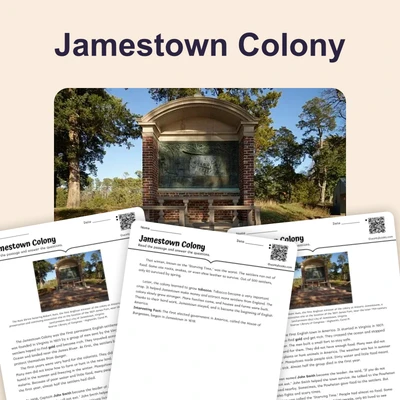
Jamestown: The First Permanent English Colony
This engaging history passage explores the founding of Jamestown, the first permanent English colony in America. Aligned...
D2.HIS.1.3-5D2.HIS.2.3-5RI.4.3RI.4.4
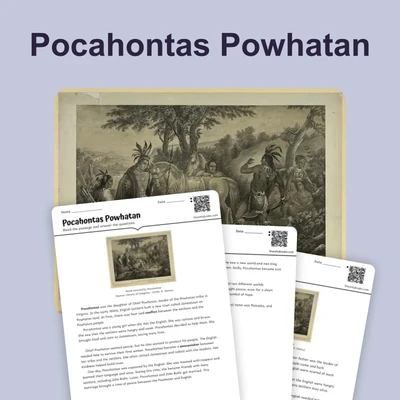
Pocahontas and the Powhatan People
This engaging reading passage explores the life of Pocahontas and the Powhatan people and their important role in early ...
D2.HIS.1.3-5D2.HIS.2.3-5RI.4.1RI.4.3
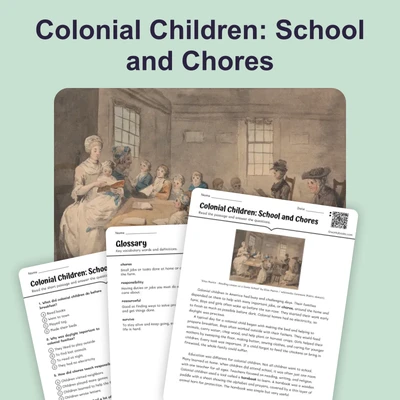
Colonial Children: School and Chores
This reading passage explores the daily lives of colonial children, focusing on their experiences at school and their ma...
D2.HIS.2.3-5D2.HIS.3.3-5RI.4.1RI.4.2RI.4.4
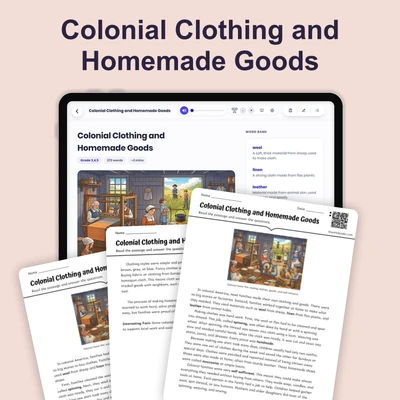
Colonial Clothing and Homemade Goods
This engaging U.S. history passage explores the daily life of early American colonists with a focus on colonial clothing...
D2.HIS.2.3-5RI.4.3RI.4.4
Colonial Jobs: Blacksmiths, Bakers, and Craftsmen
This engaging history reading passage explores the vital roles of blacksmiths, bakers, and craftsmen in colonial America...
D2.HIS.2.3-5D2.HIS.3.3-5RI.4.3RI.4.4
Colonial Towns and Village Life
This engaging history reading passage explores the daily life, work, and unity found in colonial towns and villages. Ali...
D2.HIS.1.3-5D2.HIS.2.3-5RI.4.3RI.4.4
Colonial Trade with England and Africa
This history reading passage explores colonial trade between the American colonies, England, and Africa, focusing on the...
D2.HIS.2.3-5D2.HIS.14.3-5RI.4.3RI.4.4
Benjamin Franklin: Printer, Inventor, and Leader
This history reading passage explores the life and achievements of Benjamin Franklin, one of America's most important ea...
D2.HIS.2.3-5D2.HIS.3.3-5RI.4.1RI.4.3
George Washington Leads the Army
This engaging history reading passage explores how George Washington bravely led the Continental Army during the America...
D2.HIS.1.3-5D2.HIS.2.3-5RI.4.3RI.4.4
Women and Children During the Revolutionary War
This reading passage explores the important roles women and children played during the Revolutionary War. Students will ...
D2.HIS.2.3-5RI.4.3RI.5.3
African Americans Fight for Freedom
This educational passage explores the brave and inspiring story of how African Americans fought for freedom in the Unite...
D2.HIS.2.3-5D2.HIS.3.3-5RI.4.3RI.4.4
The Battle of Yorktown Ends War
This engaging U.S. history reading passage explores the Battle of Yorktown, a key event that ended the American Revoluti...
D2.HIS.1.3-5D2.HIS.2.3-5RI.4.1RI.4.3
Loyalists vs. Patriots: Divided Families
This engaging U.S. history reading passage explores the division between Loyalists and Patriots during the American Revo...