Comparing Roman and American Slavery
Interactive passage with audio narration, comprehension questions, and printable PDF.
By completing this purchase you agree to our Terms of Use and Privacy Policy. Your subscription renews automatically until you cancel. You can cancel anytime from your account settings. All sales are final and non-refundable. Digital content is available for download in your account immediately upon purchase.
What's included
Comparing Roman and American Slavery preview and details
About this printable Comparing Roman and American Slavery reading passage (Grades 5-8)
Sample passage and quiz from Comparing Roman and American Slavery
Reading passage and comprehension quiz preview
Comparing Roman and American Slavery
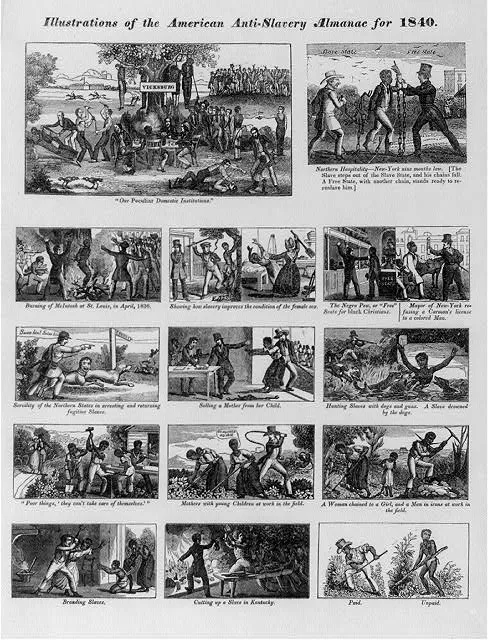
Source: Library of Congress - Printed Ephemera Collection DLC
Slavery existed as a major institution in both Ancient Rome and the Americas, but the systems were shaped by different historical and geographic contexts. In Ancient Rome, slavery was an essential part of daily life, the economy, and the social hierarchy. In contrast, slavery in the Americas became closely tied to race and was inherited from parents to children, which transformed the lives of millions.
In Ancient Rome, enslaved people made up as much as 20–30% of the population, especially in large cities like Rome and Carthage. Romans acquired slaves through conquest, buying from traders, or as punishment for crimes. Enslaved people in Rome performed many roles: they worked as farm laborers, household servants, teachers, miners, and even doctors. Some were highly skilled and could earn their freedom through a process called manumission. For example, the Roman writer Pliny the Younger described in a letter how his freedman Zosimus gained his liberty after years of service. Archaeological evidence from sites like Pompeii reveals that slaves lived in cramped quarters near their masters, showing the harsh conditions many experienced.
Slavery in the Americas, especially in the British colonies, began in the early 1600s and rapidly expanded. Unlike Rome, American slavery was based on hereditary status and race: people of African descent were enslaved for life, and their children were also enslaved. This system became the backbone of economic production, especially on tobacco, rice, and cotton plantations. Primary sources like advertisements for runaway slaves, court records, and plantation ledgers document how enslaved people were treated as property. Unlike Roman slavery, manumission was rare, and laws made it almost impossible for enslaved people to gain freedom. The Middle Passage, the forced journey across the Atlantic, brought millions of Africans to the Americas, often in brutal conditions described in ship logs and survivors’ narratives.
Both systems had severe impacts on individuals and societies, but American slavery introduced a rigid racial divide and lasting inequalities. Over time, the system in the Americas became more violent and restrictive, leading to resistance, rebellions, and eventually the movement for abolition. In both regions, geography shaped the nature of slavery: Roman slaves worked in urban homes, mines, and farms across the Mediterranean, while American slaves labored mainly on plantations in the southern colonies. Despite some similarities, the differences in laws, daily life, and the possibility of freedom set these systems apart.
Studying slavery in Rome and the Americas reveals how forced labor shaped societies, economies, and human relationships across time and place. Understanding these histories helps us see how the past influences present ideas about rights and justice.
Interesting Fact: Some enslaved people in Ancient Rome could buy their freedom, but in the Americas, this was extremely rare and often illegal for people of African descent. This topic connects to how civilizations develop laws and social systems that impact people's rights and freedoms throughout history.
Comprehension quiz (8 questions)
1. What was manumission in Ancient Rome?
2. Which crop was grown by slaves in the Americas?
3. Who was Zosimus?
4. Why did slavery in the Americas differ from Rome?
5. What was a common effect of hereditary slavery?
6. What evidence shows slave conditions in Pompeii?
7. Roman slaves always stayed slaves. True or false?
8. What does 'primary sources' mean?
Perfect for the way you teach
- Build comprehension skills
- Auto-graded quiz
- Differentiated reading
- Read together at home
- Improve fluency
- Quiet reading time
- Reading curriculum support
- Independent practice
- Track Lexile growth