Constitutional Slavery Debate
Interactive passage with audio narration, comprehension questions, and printable PDF.
What's included
Constitutional Slavery Debate preview and details
About this printable Constitutional Slavery Debate reading passage (Grades 6-8)
Sample passage and quiz from Constitutional Slavery Debate
Reading passage and comprehension quiz preview
Constitutional Slavery Debate
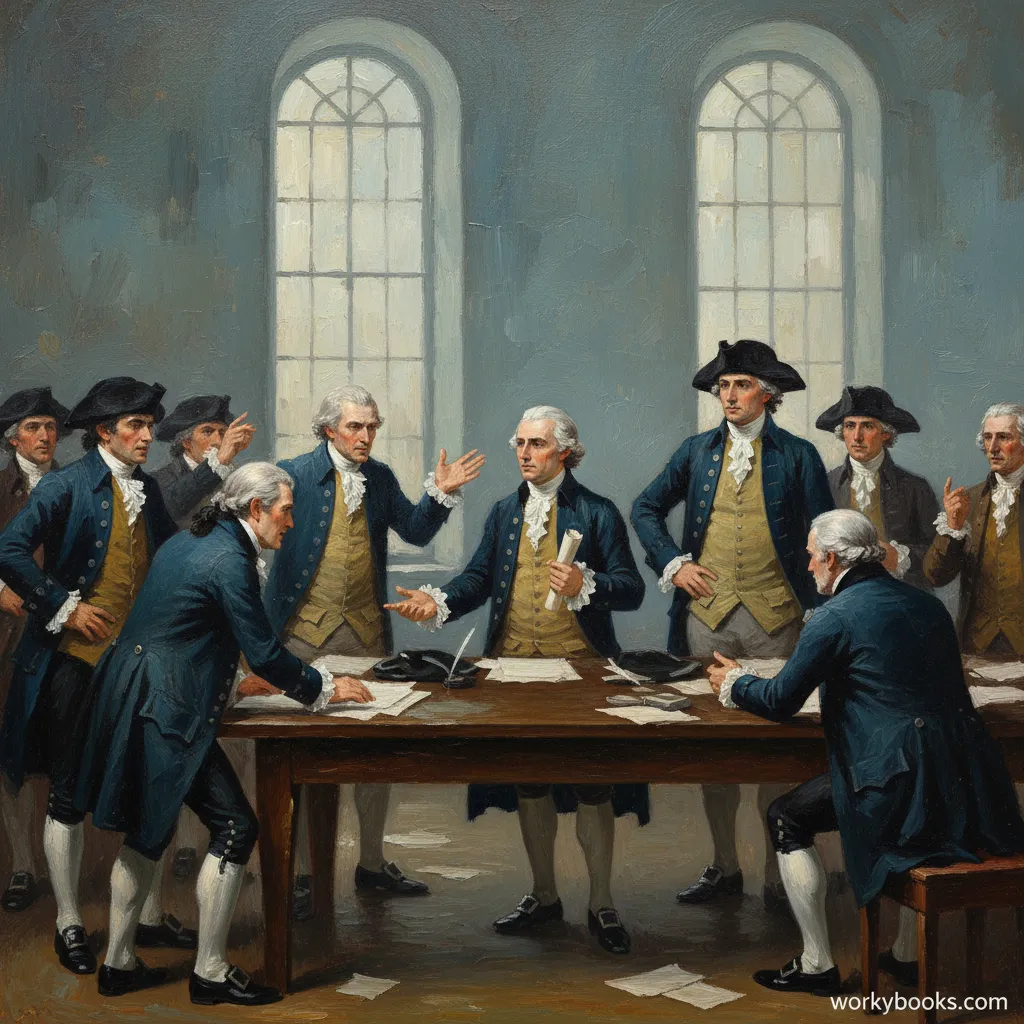
The Constitutional Convention of 1787 was a meeting in Philadelphia where delegates from twelve of the thirteen states gathered to create a new government for the United States. One of the most challenging issues they faced was the question of slavery. The delegates came from states with very different economies and beliefs. Some states, especially in the South, relied heavily on enslaved labor for their plantations. Others, mostly in the North, had begun to limit or even abolish slavery. These differences created fierce debate and conflict during the Convention.
The first major issue was representation in Congress. Southern delegates wanted enslaved people to count as part of the population when determining how many representatives each state would have. This would give slaveholding states more power in the new government. Northern delegates argued that since enslaved people had no rights as citizens, they should not be counted for representation. This disagreement led to the Three-Fifths Compromise. Under this compromise, each enslaved person would be counted as three-fifths of a person for both representation and taxation. While this solution allowed the Convention to move forward, it also showed how the new government depended on uneasy compromise rather than true equality.
Another heated topic was the future of the slave trade. Some delegates wanted to end the importation of enslaved Africans immediately. Others insisted that the slave trade was vital for their state's economy. After much argument, the delegates reached another compromise: Congress could not ban the slave trade before 1808. This decision allowed the practice to continue for at least twenty more years, with the hope that the issue could be revisited in the future.
The debates over slavery were deeply connected to questions about the structure of government and the meaning of freedom. Delegates like Gouverneur Morris and James Madison argued over whether the new Constitution should protect the rights of enslaved people or the rights of property owners. Their discussions showed how the ideals of liberty and justice were often in conflict with economic interests. The final document did not mention the words "slave" or "slavery," but its provisions clearly affected the lives of millions.
These compromises helped convince enough states to approve, or ratify, the Constitution. However, the decisions made at the Convention left the question of slavery unresolved. Over time, these unresolved issues would lead to greater division, especially as new states joined the Union and the country expanded westward. The debates and compromises of 1787 showed both the strengths and the limits of negotiation in forming a new nation.
Interesting Fact: Although the Constitution never used the word "slavery," it included several clauses that protected the institution, such as the Fugitive Slave Clause and the Three-Fifths Compromise.
Comprehension quiz (8 questions)
1. Where was the Constitutional Convention held?
2. What year was the Convention?
3. What did the Three-Fifths Compromise decide?
4. Why did Southern states want enslaved people counted?
5. What was delayed until 1808?
6. How did compromises at the Convention affect slavery?
7. The Constitution used the word 'slavery'. True or false?
8. What does 'compromise' mean?
Common Core standards for Constitutional Slavery Debate
Explain events, procedures, ideas, or concepts in a historical, scientific, or technical text, including what happened and why, based on specific information in the text.
Determine the meaning of general academic and domain-specific words or phrases in a text relevant to a grade 4 topic or subject area.
Write informative/explanatory texts to examine a topic and convey ideas and information clearly.
Perfect for the way you teach
- Build comprehension skills
- Auto-graded quiz
- Differentiated reading
- Read together at home
- Improve fluency
- Quiet reading time
- Reading curriculum support
- Independent practice
- Track Lexile growth