This learning resource is available in interactive and printable formats. The interactive worksheet can be played online and assigned to students. The Printable PDF version can be downloaded and printed for completion by hand.
This engaging U.S. history reading passage examines the complex and diverse history of cowboys in the American West. Students will analyze the causes and consequences of the rise of the cowboy, compare perspectives from different cultural groups, and explore the contradictions and realities behind the cowboy legend. With a focus on evidence and historical reasoning, the passage highlights the role of Mexican vaqueros, Black cowboys, and women, as well as the economic and cultural impact of cattle drives. The passage integrates a primary source quote and models sophisticated ELA skills, including the use of academic vocabulary and compare/contrast structure. Activities include a multiple-choice quiz, writing prompts, a T-Chart graphic organizer, and a timeline of key events. The resource aligns with standards D2.His.2.3-5, D2.His.3.3-5, RI.4.3, RI.4.4, W.4.2 and includes a Spanish translation and read aloud audio.
CONTENT PREVIEW
Expand content preview
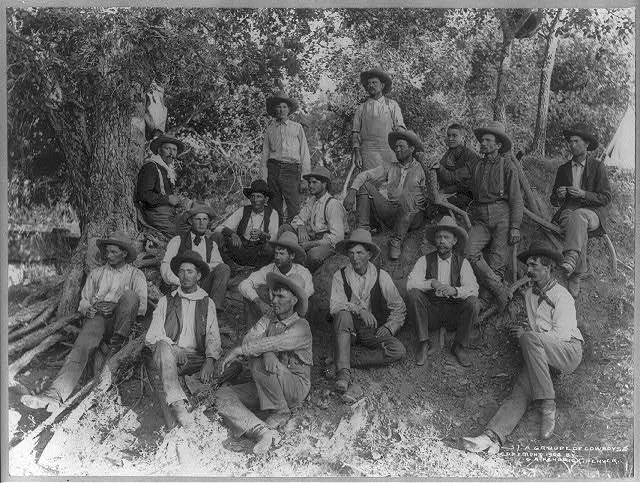
A group of cowboys. Source: Library of Congress
The era of the cowboy in the American West began after the Civil War, when the demand for beef increased across the country. Cattle ranchers in Texas needed to move thousands of cattle to railroad towns in Kansas, where the animals could be shipped to markets in the East. This job became known as the cattle drive. The process required hard work, courage, and skill as cowboys guided herds for hundreds of miles across difficult terrain.
Being a cowboy was not easy. Cowboys faced many challenges, such as unpredictable weather, dangerous rivers, and conflicts with rustlers who tried to steal cattle. The work was physically demanding, often involving long days in the saddle. Yet, for many workers—including Mexican vaqueros, Black cowboys, and white Americans—the job provided rare opportunities for independence and steady pay. Despite popular images in movies and books, most cowboys were teenagers or young men, and more than a third were people of color.
The trails used for cattle drives, like the Chisholm Trail and the Goodnight-Loving Trail, stretched from Texas north to Kansas. Cowboys had to plan their routes carefully to find water, grass for the cattle, and safe crossings. They worked as a team, with each cowboy assigned specific duties, such as leading the herd, keeping animals from straying, or guarding the group at night. The trail boss managed the drive and made important decisions to keep the cattle and crew safe.
Life on the trail was harsh but brought together people from many backgrounds. Mexican vaqueros introduced essential techniques and equipment, such as the lasso, saddle, and chaps. African American cowboys made up a significant part of the workforce, though their stories were often left out of popular accounts. Each group contributed unique skills, and cowboys learned from one another to adapt to the environment. These shared challenges created a new kind of community on the open range.
The era of the cattle drive lasted only about twenty years, from the late 1860s to the late 1880s. The expansion of railroads into Texas and the invention of barbed wire changed the industry. Ranchers could now ship cattle directly by train and fence off their land, ending the need for long drives. However, the legend of the cowboy continued to shape American culture, symbolizing independence, teamwork, and the spirit of the West.
Today, historians use primary sources like diaries, photographs, and maps to understand what life was really like for cowboys. These sources provide evidence that challenges myths and reveals the diversity of people who worked on the range. By analyzing these materials, we gain a deeper appreciation for the complex history of the American West.
Interesting Fact: Some cattle drives covered over 1,000 miles and could take up to three months to complete!
What was a cattle drive?
Moving cattle to railroad townsRaising sheep on farmsBuilding railroad tracksMining for gold
Where did most cattle drives start?
TexasCaliforniaKansasFlorida
Which invention ended long cattle drives?
Barbed wireSteam engineElectric lightTelegraph
Why did cowboys plan routes carefully?
To find water and grassTo avoid bad weatherTo meet other cowboysTo rest more often
What did Mexican vaqueros contribute?
Techniques and equipmentRailroad buildingMining skillsGold coins
Why was the trail boss important?
Made key decisionsWrote songsFed the cattlePlanted crops
Cattle drives lasted about twenty years. True or false?
TrueFalse
What is a primary source?
Diary from a cowboyA recent novelA movieA painting from 2020
Perfect For:
👩🏫 Teachers
• Reading comprehension practice
• Auto-graded assessments
• Literacy skill development
👨👩👧👦 Parents
• Reading practice at home
• Comprehension improvement
• Educational reading time
🏠 Homeschoolers
• Reading curriculum support
• Independent reading practice
• Progress monitoring
Reading Features:
📖
Reading Passage
Engaging fiction or nonfiction text
❓
Comprehension Quiz
Auto-graded questions
📊
Instant Feedback
Immediate results and scoring
📄
Printable Version
Download for offline reading
🔊
Read Aloud
Voice-over with word highlighting
Reviews & Ratings
No reviews yet. Be the first to share your experience!
Related Content
Native American Tribes Across America
This engaging history reading passage introduces students to Native American tribes across America, focusing on their da...
D2.HIS.1.3-5D2.HIS.2.3-5RI.4.1RI.4.2
Teepees: Homes on the Great Plains
This engaging history reading passage introduces students to teepees, the unique homes of Native American tribes on the ...
D2.HIS.2.3-5D2.HIS.14.3-5RI.4.1RI.4.2RI.4.4
Traditional Native American Clothing
This engaging history passage explores traditional Native American clothing and how it reflected the environment, values...
D2.HIS.2.3-5D2.HIS.3.3-5RI.4.3RI.4.4
The Iroquois Confederacy: A System of Peace
This engaging U.S. History reading passage introduces students to the Iroquois Confederacy, a powerful alliance of Nativ...
D2.HIS.2.3-5D2.HIS.3.3-5RI.4.3RI.4.4
The Cherokee Nation: History and Culture
This reading passage explores the rich history and culture of the Cherokee Nation, one of the largest Native American tr...
D2.HIS.2.3-5D2.HIS.14.3-5RI.4.3RI.4.4RI.4.10
The Sioux: Warriors and Tribal Leaders
This history reading passage explores the Sioux Nation, focusing on their roles as warriors and tribal leaders. Students...
D2.HIS.1.3-5D2.HIS.2.3-5RI.4.1RI.4.3
Native American Respect for Nature
This engaging history reading passage explores Native American respect for nature, emphasizing the close relationship be...
D2.HIS.2.3-5D2.HIS.3.3-5RI.4.3RI.4.4
Jamestown: The First Permanent English Colony
This engaging history passage explores the founding of Jamestown, the first permanent English colony in America. Aligned...
D2.HIS.1.3-5D2.HIS.2.3-5RI.4.3RI.4.4
Pocahontas and the Powhatan People
This engaging reading passage explores the life of Pocahontas and the Powhatan people and their important role in early ...
D2.HIS.1.3-5D2.HIS.2.3-5RI.4.1RI.4.3
Colonial Children: School and Chores
This reading passage explores the daily lives of colonial children, focusing on their experiences at school and their ma...
D2.HIS.2.3-5D2.HIS.3.3-5RI.4.1RI.4.2RI.4.4
Colonial Clothing and Homemade Goods
This engaging U.S. history passage explores the daily life of early American colonists with a focus on colonial clothing...
D2.HIS.2.3-5RI.4.3RI.4.4
Colonial Jobs: Blacksmiths, Bakers, and Craftsmen
This engaging history reading passage explores the vital roles of blacksmiths, bakers, and craftsmen in colonial America...
D2.HIS.2.3-5D2.HIS.3.3-5RI.4.3RI.4.4
Colonial Towns and Village Life
This engaging history reading passage explores the daily life, work, and unity found in colonial towns and villages. Ali...
D2.HIS.1.3-5D2.HIS.2.3-5RI.4.3RI.4.4
Colonial Trade with England and Africa
This history reading passage explores colonial trade between the American colonies, England, and Africa, focusing on the...
D2.HIS.2.3-5D2.HIS.14.3-5RI.4.3RI.4.4
Benjamin Franklin: Printer, Inventor, and Leader
This history reading passage explores the life and achievements of Benjamin Franklin, one of America's most important ea...
D2.HIS.2.3-5D2.HIS.3.3-5RI.4.1RI.4.3
George Washington Leads the Army
This engaging history reading passage explores how George Washington bravely led the Continental Army during the America...
D2.HIS.1.3-5D2.HIS.2.3-5RI.4.3RI.4.4
Women and Children During the Revolutionary War
This reading passage explores the important roles women and children played during the Revolutionary War. Students will ...
D2.HIS.2.3-5RI.4.3RI.5.3
African Americans Fight for Freedom
This educational passage explores the brave and inspiring story of how African Americans fought for freedom in the Unite...
D2.HIS.2.3-5D2.HIS.3.3-5RI.4.3RI.4.4
The Battle of Yorktown Ends War
This engaging U.S. history reading passage explores the Battle of Yorktown, a key event that ended the American Revoluti...
D2.HIS.1.3-5D2.HIS.2.3-5RI.4.1RI.4.3
Loyalists vs. Patriots: Divided Families
This engaging U.S. history reading passage explores the division between Loyalists and Patriots during the American Revo...