Crowded Tenements in Big Cities
Interactive passage with audio narration, comprehension questions, and printable PDF.
By completing this purchase you agree to our Terms of Use and Privacy Policy. Your subscription renews automatically until you cancel. You can cancel anytime from your account settings. All sales are final and non-refundable. Digital content is available for download in your account immediately upon purchase.
What's included
Part of this bundle

Crowded Tenements in Big Cities preview and details
About this printable Crowded Tenements in Big Cities reading passage (Grades 3-5)
Sample passage and quiz from Crowded Tenements in Big Cities
Reading passage and comprehension quiz preview
Immigrant Tenements
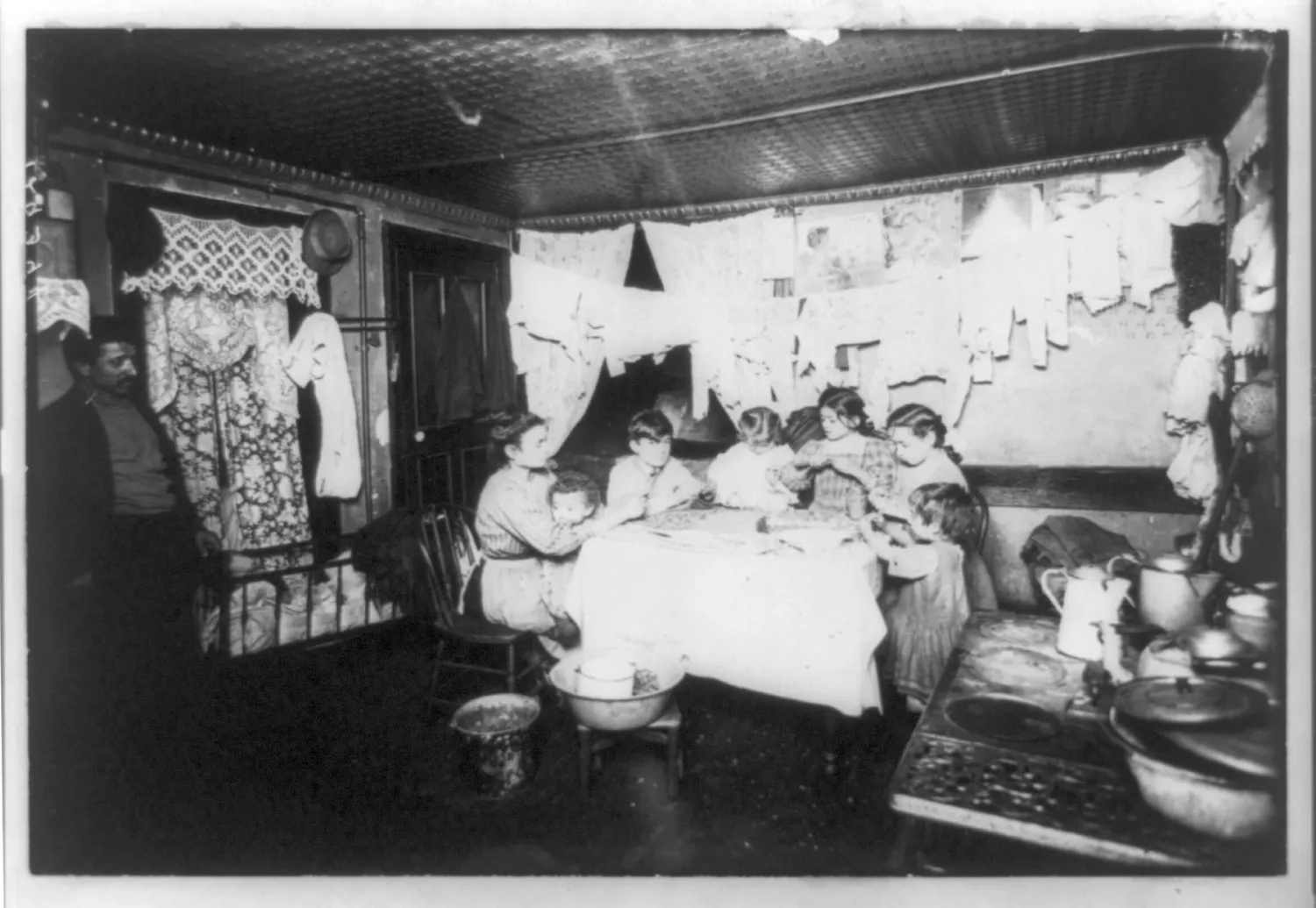
Source: Wikimedia Commons - Miscellaneous Items in High Demand, PPOC, Library of Congress
Immigrant tenements were crowded apartment buildings found in big cities like New York and Chicago during the Progressive Era. Many families from other countries moved to the United States hoping for a better life. They found jobs in busy factories, but often could not afford nice homes. Instead, they lived in small, dark rooms in old buildings called tenements.
Tenements were built close together. The rooms were tiny and often had no windows. There was little fresh air or sunlight. Sometimes, one room had to be used for cooking, eating, working, and sleeping. Entire families, and sometimes even two families, shared one small space. There was little privacy or comfort.
These buildings were often not safe. Many did not have indoor plumbing, so people had to share bathrooms in the hallway. Water was not always clean. Tenements usually had only one exit or staircase. This made it hard to escape in an emergency, like a fire. Living in these conditions was very hard for families. Children often had to work in factories or help at home because their parents needed money to pay rent.
Life in tenements was difficult, but people showed great bravery. Neighbors formed close communities and helped each other. Many immigrants worked hard, hoping their children would have better chances in the future.
In the late 1800s and early 1900s, some people noticed how unsafe and unhealthy tenements were. Reformers like Jacob Riis wrote books and took photos to show the public the truth. They wanted new laws to make housing safer. Over time, cities passed rules so tenements had to have windows, fire escapes, and indoor toilets. These changes helped many families live healthier lives.
Even though life in tenements was tough, immigrants showed unity and hope. Their hard work helped build American cities and made the country more diverse and strong.
Interesting Fact: Some tenement apartments were as small as one classroom, but more than ten people might live there at once!
Comprehension quiz (8 questions)
1. Where were tenements found?
2. Who lived in tenements?
3. What did tenement rooms often lack?
4. Why were tenements unsafe?
5. How did reformers help?
6. What change made tenements safer?
7. Tenements had indoor plumbing. True or false?
8. What does 'reformers' mean?
Common Core standards for Crowded Tenements in Big Cities
Refer to details and examples in a text when explaining what the text says explicitly and when drawing inferences from the text.
Explain events, procedures, ideas, or concepts in a historical, scientific, or technical text, including what happened and why, based on specific information in the text.
Determine the meaning of general academic and domain-specific words or phrases in a text relevant to a grade 4 topic or subject area.
Perfect for the way you teach
- Build comprehension skills
- Auto-graded quiz
- Differentiated reading
- Read together at home
- Improve fluency
- Quiet reading time
- Reading curriculum support
- Independent practice
- Track Lexile growth