This learning resource is available in interactive and printable formats. The interactive worksheet can be played online and assigned to students. The Printable PDF version can be downloaded and printed for completion by hand.
This engaging passage explores the remarkable story of Deborah Sampson, one of the few documented women to serve as a soldier during the American Revolutionary War. Students will analyze Sampson's motivations, the challenges she faced, and the larger historical context of gender roles and expectations. The passage uses a compare/contrast structure, incorporates a primary source quote, and models the use of academic vocabulary. Multiple perspectives—including Sampson's, her fellow soldiers', and society's—are addressed to help students develop a nuanced understanding of her impact and the era's complexities. The resource aligns with C3 Framework (D2.His.2.3-5, D2.His.3.3-5) and Common Core Standards (RI.4.3, RI.4.4, W.4.2), and includes reading comprehension questions, a writing activity, a graphic organizer, a glossary, and a timeline. Read aloud audio and a complete Spanish translation are provided for accessibility. This is an ideal resource for developing critical thinking and historical literacy skills in the classroom.
CONTENT PREVIEW
Expand content preview
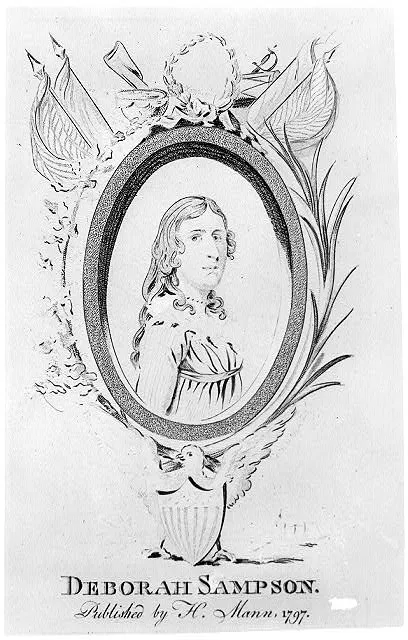
Deborah Sampson. Source: Library of Congress
During the American Revolution, Deborah Sampson made history by disguising herself as a man in order to join the Continental Army. At a time when women were not allowed to fight as soldiers, Sampson took an extraordinary risk. Her actions challenged social expectations and inspired later generations to reconsider the roles women could play in the military.
Born in Massachusetts in 1760, Deborah Sampson grew up in a society that expected women to remain at home. However, Sampson had a strong desire to serve her country. In 1782, she decided to disguise herself as a man, using the name "Robert Shurtleff." She successfully enlisted in the Continental Army, where she became part of the 4th Massachusetts Regiment. Sampson managed to keep her true identity secret, even while performing the physically demanding duties of a soldier.
Sampson faced numerous challenges. She had to act, speak, and dress like a man at all times, which required constant vigilance. She participated in several battles and was even wounded in combat. Fearing that doctors would discover her secret, she treated some of her injuries herself—a dangerous but necessary choice. Sampson’s successful deception demonstrated both her courage and her resourcefulness.
Eventually, Sampson fell seriously ill and her identity was discovered by a doctor. Rather than punish her harshly, her commanding officers recognized her bravery and allowed her to receive an honorable discharge. After the war, Deborah Sampson returned to civilian life and became a veteran—a rare status for a woman at that time.
Despite her service, Sampson faced difficulties gaining recognition and support as a veteran. For years, she petitioned the government for a pension—a payment given to those who have served in the military. With the help of prominent supporters, she finally received a pension in 1805. This acknowledgment set an important precedent for recognizing women’s contributions to the nation’s defense.
Deborah Sampson’s story reveals the complexities of gender roles during the American Revolution. Her decision to serve disguised as a man was both a response to the limitations placed on women and a challenge to those restrictions. By succeeding as a soldier, she provided historical evidence that women could perform the same duties as men when given the opportunity. Sampson’s life invites us to consider how individuals can create change by questioning established norms and using persistence to overcome obstacles.
The legacy of Deborah Sampson continues to influence discussions about gender equality in the military today. Her story is not just about breaking barriers, but also about the ongoing struggle for justice and recognition for those who have been left out of official histories. Understanding Sampson’s journey encourages us to reflect on the unfinished work of achieving equality in all aspects of society.
Interesting Fact: After the war, Deborah Sampson traveled around the country giving lectures about her experiences—she was one of the first American women to do so.
What did Deborah Sampson do to join the army?
She disguised herself as a manShe wrote a letter to CongressShe became a nurseShe taught other women
What name did Deborah use in the army?
Robert ShurtleffPaul RevereGeorge WashingtonSamuel Adams
In what year did Sampson enlist?
1782177618051760
Why did Sampson treat her own injuries?
She feared being discoveredShe was a doctorNo doctors were availableIt was army rules
How did her story show social challenges?
Women could not serve as soldiersSoldiers had poor foodMen wore wigsBattles were short
What effect did Sampson's actions have?
Showed women could serve in militaryEnded the warChanged army uniformsCreated new laws
Deborah Sampson received a pension. True or false?
TrueFalse
What does 'veteran' mean in the passage?
Person who served in the armyA doctorA generalA government worker
Perfect For:
👩🏫 Teachers
• Reading comprehension practice
• Auto-graded assessments
• Literacy skill development
👨👩👧👦 Parents
• Reading practice at home
• Comprehension improvement
• Educational reading time
🏠 Homeschoolers
• Reading curriculum support
• Independent reading practice
• Progress monitoring
Reading Features:
📖
Reading Passage
Engaging fiction or nonfiction text
❓
Comprehension Quiz
Auto-graded questions
📊
Instant Feedback
Immediate results and scoring
📄
Printable Version
Download for offline reading
🔊
Read Aloud
Voice-over with word highlighting
Reviews & Ratings
No reviews yet. Be the first to share your experience!
Related Content
Native American Tribes Across America
This engaging history reading passage introduces students to Native American tribes across America, focusing on their da...
D2.HIS.1.3-5D2.HIS.2.3-5RI.4.1RI.4.2
Teepees: Homes on the Great Plains
This engaging history reading passage introduces students to teepees, the unique homes of Native American tribes on the ...
D2.HIS.2.3-5D2.HIS.14.3-5RI.4.1RI.4.2RI.4.4
Traditional Native American Clothing
This engaging history passage explores traditional Native American clothing and how it reflected the environment, values...
D2.HIS.2.3-5D2.HIS.3.3-5RI.4.3RI.4.4
The Iroquois Confederacy: A System of Peace
This engaging U.S. History reading passage introduces students to the Iroquois Confederacy, a powerful alliance of Nativ...
D2.HIS.2.3-5D2.HIS.3.3-5RI.4.3RI.4.4
The Cherokee Nation: History and Culture
This reading passage explores the rich history and culture of the Cherokee Nation, one of the largest Native American tr...
D2.HIS.2.3-5D2.HIS.14.3-5RI.4.3RI.4.4RI.4.10
The Sioux: Warriors and Tribal Leaders
This history reading passage explores the Sioux Nation, focusing on their roles as warriors and tribal leaders. Students...
D2.HIS.1.3-5D2.HIS.2.3-5RI.4.1RI.4.3
Native American Respect for Nature
This engaging history reading passage explores Native American respect for nature, emphasizing the close relationship be...
D2.HIS.2.3-5D2.HIS.3.3-5RI.4.3RI.4.4
Jamestown: The First Permanent English Colony
This engaging history passage explores the founding of Jamestown, the first permanent English colony in America. Aligned...
D2.HIS.1.3-5D2.HIS.2.3-5RI.4.3RI.4.4
Pocahontas and the Powhatan People
This engaging reading passage explores the life of Pocahontas and the Powhatan people and their important role in early ...
D2.HIS.1.3-5D2.HIS.2.3-5RI.4.1RI.4.3
Colonial Children: School and Chores
This reading passage explores the daily lives of colonial children, focusing on their experiences at school and their ma...
D2.HIS.2.3-5D2.HIS.3.3-5RI.4.1RI.4.2RI.4.4
Colonial Clothing and Homemade Goods
This engaging U.S. history passage explores the daily life of early American colonists with a focus on colonial clothing...
D2.HIS.2.3-5RI.4.3RI.4.4
Colonial Jobs: Blacksmiths, Bakers, and Craftsmen
This engaging history reading passage explores the vital roles of blacksmiths, bakers, and craftsmen in colonial America...
D2.HIS.2.3-5D2.HIS.3.3-5RI.4.3RI.4.4
Colonial Towns and Village Life
This engaging history reading passage explores the daily life, work, and unity found in colonial towns and villages. Ali...
D2.HIS.1.3-5D2.HIS.2.3-5RI.4.3RI.4.4
Colonial Trade with England and Africa
This history reading passage explores colonial trade between the American colonies, England, and Africa, focusing on the...
D2.HIS.2.3-5D2.HIS.14.3-5RI.4.3RI.4.4
Benjamin Franklin: Printer, Inventor, and Leader
This history reading passage explores the life and achievements of Benjamin Franklin, one of America's most important ea...
D2.HIS.2.3-5D2.HIS.3.3-5RI.4.1RI.4.3
George Washington Leads the Army
This engaging history reading passage explores how George Washington bravely led the Continental Army during the America...
D2.HIS.1.3-5D2.HIS.2.3-5RI.4.3RI.4.4
Women and Children During the Revolutionary War
This reading passage explores the important roles women and children played during the Revolutionary War. Students will ...
D2.HIS.2.3-5RI.4.3RI.5.3
African Americans Fight for Freedom
This educational passage explores the brave and inspiring story of how African Americans fought for freedom in the Unite...
D2.HIS.2.3-5D2.HIS.3.3-5RI.4.3RI.4.4
The Battle of Yorktown Ends War
This engaging U.S. history reading passage explores the Battle of Yorktown, a key event that ended the American Revoluti...
D2.HIS.1.3-5D2.HIS.2.3-5RI.4.1RI.4.3
Loyalists vs. Patriots: Divided Families
This engaging U.S. history reading passage explores the division between Loyalists and Patriots during the American Revo...