Asexual vs Sexual Reproduction — Reading Comprehension
Rate this
Premium Resource
Present
Present in classroom. No work saved
Assign
Classroom with student accounts, Track progress
Quick Play
No student accounts, assign with a link
Grades
5
6
7
8
Standards
MS-LS1-4
MS-LS3-2
PRINT+DIGITAL RESOURCE
This learning resource is available in interactive and printable formats. The interactive worksheet can be played online and assigned to students. The Printable PDF version can be downloaded and printed for completion by hand.
This NGSS-aligned passage for grades 6-8 explores sexual and asexual reproduction, comparing their underlying mechanisms and biological significance. Students will learn how sexual reproduction involves two parents and the combination of gametes, resulting in genetically unique offspring through meiosis, while asexual reproduction requires only one parent and produces genetically identical clones through processes like binary fission, budding, and fragmentation. The passage highlights examples from bacteria, plants, and animals, and discusses the advantages and disadvantages of each strategy, including the importance of genetic diversity in adaptation and evolution. Activities include a glossary, comprehension quiz, writing prompts, and graphic organizers to deepen understanding. This resource is ideal for lessons aligned with MS-LS1-4 and MS-LS3-2, and is audio integrated for accessibility. Key vocabulary is explained in-context, making this a comprehensive and engaging science resource.
CONTENT PREVIEW
Expand content preview
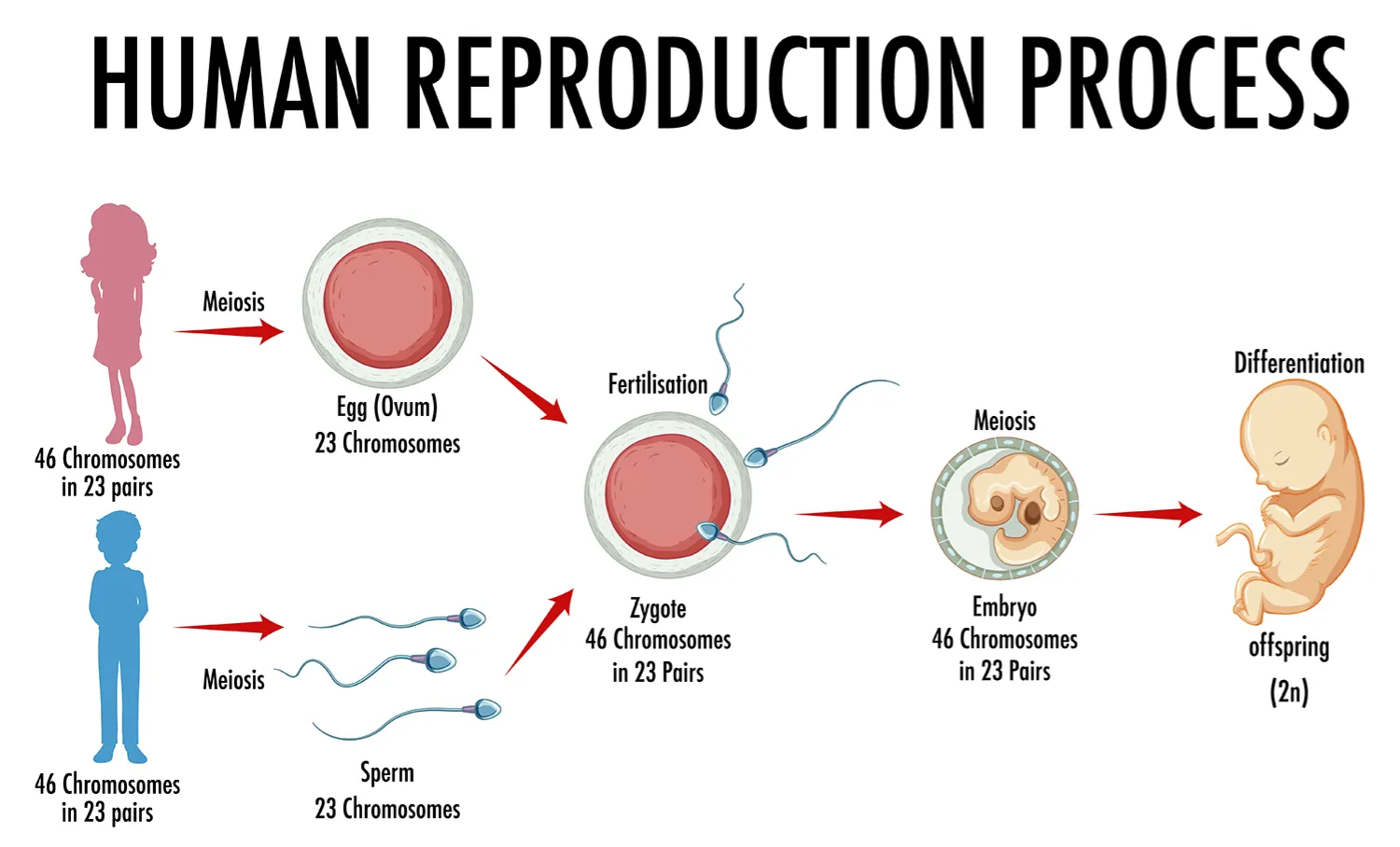
Diagram showing human reproduction process
Reproduction is the biological process that allows living things to produce new individuals, ensuring the continuation of a species. Scientists observe that in nature, organisms use two main strategies to create offspring: sexual reproduction and asexual reproduction. Understanding how these two processes work helps explain the diversity of life on Earth, as well as how species adapt to changing environments.
Mechanisms of Reproduction
In sexual reproduction, two parents contribute genetic material. Specialized cells called gametes—egg and sperm—combine during fertilization to form a new organism. This process requires meiosis, a type of cell division that produces gametes with half the usual number of chromosomes. When the gametes unite, the resulting offspring has a unique combination of genes from both parents. For example, humans and most animals use sexual reproduction. This mixing of genetic material increases genetic diversity, which is crucial for adaptation and survival in changing environments.
In contrast, asexual reproduction involves only one parent and does not require gametes. The offspring are clones, meaning they are genetically identical to the parent. Several methods exist, such as binary fission (used by bacteria), budding (seen in yeast and hydra), and fragmentation (observed in starfish). Plants often reproduce asexually through vegetative propagation, where parts like stems or roots grow into new plants. Asexual reproduction is usually faster and does not require finding a mate.
Advantages and Disadvantages
Each reproduction strategy has its strengths and weaknesses. Asexual reproduction allows for rapid population growth, especially in stable environments where change is minimal. For instance, bacteria can double their numbers in as little as 20 minutes through binary fission. However, since all offspring are clones, a disease or environmental change could wipe out the entire population. Sexual reproduction is slower and requires more energy and time since finding a mate can be challenging. Nonetheless, the genetic variation produced helps populations survive new diseases, predators, or climate changes.
Most complex organisms, such as mammals, birds, and flowering plants, rely on sexual reproduction because it provides the genetic diversity needed for evolution. Some organisms, like certain plants and animals, can switch between sexual and asexual reproduction depending on environmental conditions, which increases their chances of survival.
Broader Implications and Connections
The choice between sexual and asexual reproduction affects not only species survival but also biodiversity and ecosystem health. Scientists use knowledge of these processes in fields like agriculture, where cloning plants can rapidly produce food crops, or in medicine, where understanding reproduction helps fight genetic diseases. The study of reproduction continues to reveal how life adapts, survives, and evolves over time, demonstrating the intricate connections between genetics, environment, and survival.
Interesting Fact: Some animals, like the Komodo dragon, can reproduce both sexually and asexually, depending on whether mates are available.
What is the main difference between sexual and asexual reproduction?
Sexual reproduction involves two parents; asexual reproduction involves one parent.Asexual reproduction uses gametes; sexual reproduction does not.Only animals use asexual reproduction.Sexual reproduction always produces clones.
Which process increases genetic diversity in a population?
An offspring with a mix of genes from two parentsAn organism that is genetically identical to its parentA type of gameteA fertilized egg
Which of the following is an example of asexual reproduction?
Humans having babiesBacteria dividing by binary fissionA frog laying eggsA dog mating with another dog
What does the word 'meiosis' mean in the passage?
A type of cell division that produces gametesA way plants grow from rootsThe joining of egg and spermA method of asexual reproduction
What are gametes?
Specialized sex cells used in sexual reproductionCells used in binary fissionClones produced by plantsChromosomes that make genes
Why is genetic diversity important for complex organisms?
It allows species to adapt to changing environments.It makes all organisms look the same.It slows down evolution.It helps organisms reproduce asexually.
If a disease wipes out a clone population, what type of reproduction was likely used?
Sexual reproductionAsexual reproduction
True or False: Budding is an example of sexual reproduction.
TrueFalse
True or False: Some organisms can switch between sexual and asexual reproduction.
TrueFalse
Perfect For:
👩🏫 Teachers
• Reading comprehension practice
• Auto-graded assessments
• Literacy skill development
👨👩👧👦 Parents
• Reading practice at home
• Comprehension improvement
• Educational reading time
🏠 Homeschoolers
• Reading curriculum support
• Independent reading practice
• Progress monitoring
Reading Features:
📖
Reading Passage
Engaging fiction or nonfiction text
❓
Comprehension Quiz
Auto-graded questions
📊
Instant Feedback
Immediate results and scoring
📄
Printable Version
Download for offline reading
🔊
Read Aloud
Voice-over with word highlighting
Reviews & Ratings
No reviews yet. Be the first to share your experience!
Related Content
Venus Flytrap Facts
This passage explains where Venus flytraps live in North Carolina bogs, how their snap traps work, and their unique way ...
MS-LS1-4RI.6.3RI.7.3RI.8.8
Pitcher Plants: Reproduction Facts
This passage describes tropical and North American pitcher plants, their liquid-filled traps, and how they get nutrients...
MS-LS1-4RI.6.3RI.7.3RI.8.8
What Is the Floor of an Aquatic Biome Called?
This NGSS-aligned science reading passage explains the benthic zone, which is the floor of an aquatic biome such as ocea...
MS-LS1-4
Echidna Puggle
This interactive science reading passage, titled "Echidna Life: From Egg to Puggle," delves into the fascinating reprodu...
MS-LS1-4
Seed Dispersal
This middle school science passage examines the fascinating process of seed dispersal and the diverse strategies plants ...
MS-LS1-4
Cell Division: Mitosis
This comprehensive science passage for middle school students explores the key concept of mitosis, the division of the n...
MS-LS1-4
Desert Birds
This informational passage for grades 6-8 examines how desert birds survive and thrive in some of the harshest environme...
MS-LS2-1MS-LS2-2MS-LS1-4
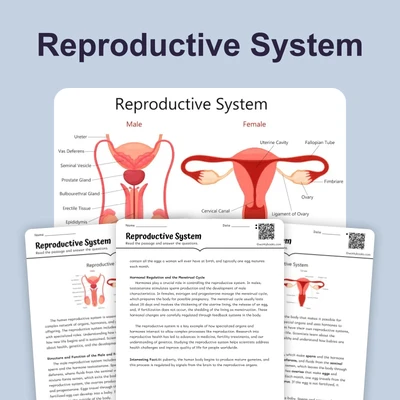
Reproductive System
This passage provides a comprehensive overview of the human reproductive system for middle school students, aligning wit...
MS-LS1-3MS-LS1-4
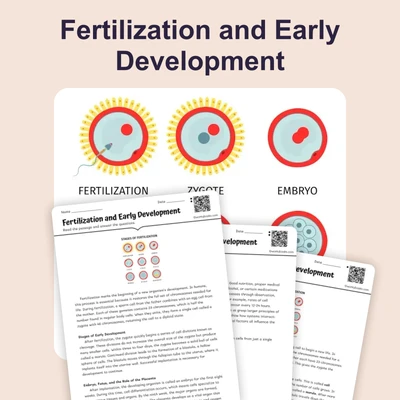
Fertilization and Early Development
This passage explores the scientific process of fertilization and early human development, aligning with NGSS standards ...
MS-LS1-4MS-LS3-2
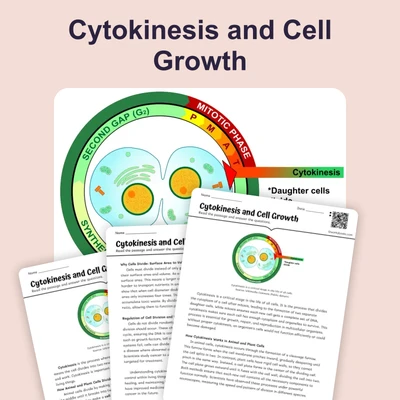
Cytokinesis and Cell Growth
This middle school science reading passage explores the essential biological process of cytokinesis, the division of a c...
MS-LS1-4
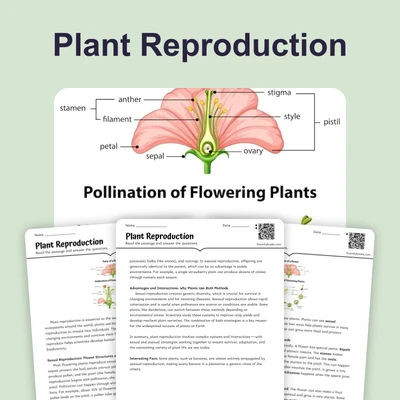
Plant Reproduction
This comprehensive passage for grades 6-8 explores the fascinating world of plant reproduction, aligning with NGSS stand...
MS-LS1-4MS-LS3-2
Mammal Migration
This comprehensive passage on mammal migration, designed for grades 6-8 and aligned with NGSS standards MS-LS2-2 and MS-...
MS-LS2-2MS-LS1-4
How Animals Navigate
This engaging science passage for grades 6-8 examines the fascinating world of navigation strategies. Aligned with NGSS ...
MS-LS1-4MS-ESS3-3MS-ETS1-1
Growth and Development of Organisms
This middle school science passage, aligned with NGSS standards MS-LS1-4 and MS-LS1-5, provides an in-depth look at the ...
MS-LS1-4MS-LS1-5
What Is a Tropical Savanna?
This NGSS-aligned science passage for grades 6-8 explores the rich animal diversity of the savanna ecosystem. Students w...
MS-LS2-1MS-LS2-2MS-LS2-4MS-LS1-4
The Cell Cycle
This middle school science reading passage introduces the cell cycle as the life of a cell from formation to division. A...
MS-LS1-4
Animal Survival Behaviors
This passage, aligned with NGSS standards MS-LS1-4 and MS-LS1-5, explores the complex and fascinating world of animal be...
MS-LS1-4MS-LS1-5
Reproductive Success
This middle school science passage explores the essential concepts of reproductive success and adaptation in plants and ...
MS-LS1-4MS-LS4-4
Gregor Mendel: The Father of Genetics
This informational reading passage introduces students to Gregor Mendel, the Austrian monk whose pea plant experiments l...