Fertilization and Early Development
Interactive passage with audio narration, comprehension questions, and printable PDF.
By completing this purchase you agree to our Terms of Use and Privacy Policy. Your subscription renews automatically until you cancel. You can cancel anytime from your account settings. All sales are final and non-refundable. Digital content is available for download in your account immediately upon purchase.
What's included
Fertilization and Early Development preview and details
About this printable Fertilization and Early Development science reading passage, NGSS-aligned (Grades 5-8)
Sample passage and quiz from Fertilization and Early Development
Reading passage and comprehension quiz preview
Fertilization and Early Development
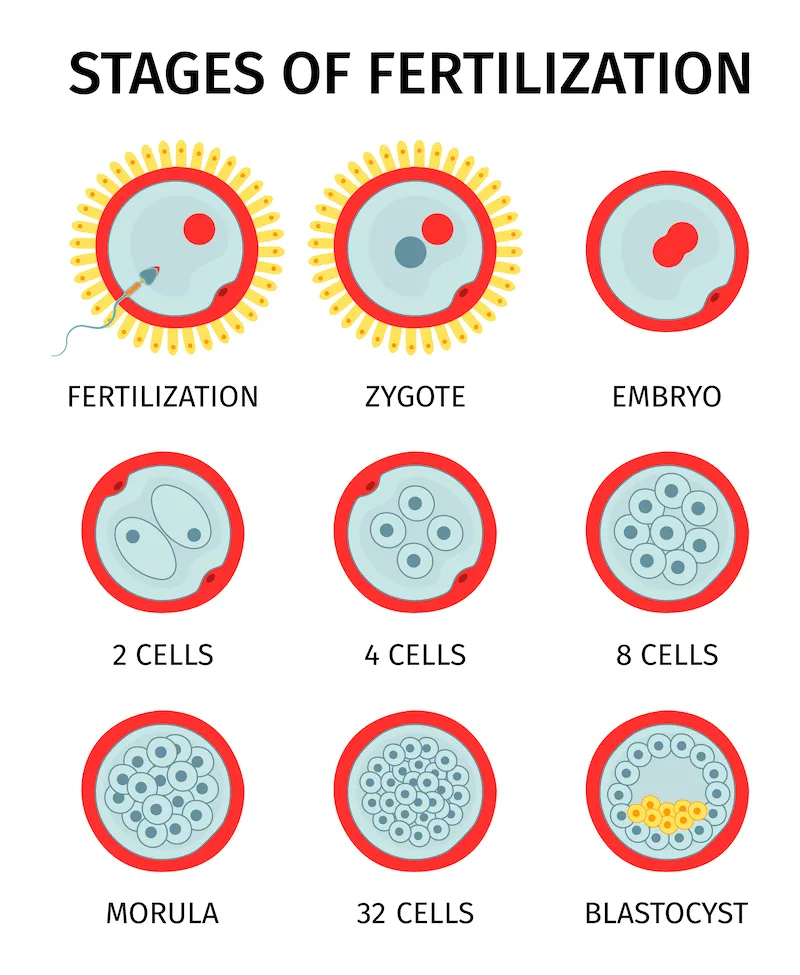
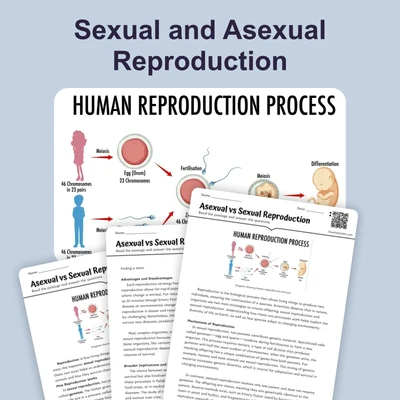
Fertilization marks the beginning of a new organism's development. In humans, this process is essential because it restores the full set of chromosomes needed for life. During fertilization, a sperm cell from the father combines with an egg cell from the mother. Each of these gametes contains 23 chromosomes, which is half the number found in regular body cells. When they unite, they form a single cell called a zygote with 46 chromosomes, returning the cell to a diploid state.
Stages of Early Development
After fertilization, the zygote quickly begins a series of cell divisions known as cleavage. These divisions do not increase the overall size of the zygote but produce many smaller cells. Within three to four days, the zygote becomes a solid ball of cells called a morula. Continued division leads to the formation of a blastula, a hollow sphere of cells. The blastula moves through the fallopian tube to the uterus, where it implants itself into the uterine wall. Successful implantation is necessary for development to continue.
Embryo, Fetus, and the Role of the Placenta
After implantation, the developing organism is called an embryo for the first eight weeks. During this time, cell differentiation occurs, which means cells specialize to form various tissues and organs. By the ninth week, the major organs are formed, and the organism is now called a fetus. The placenta develops as a vital organ that connects the fetus to the mother. It allows for the transfer of nutrients and oxygen from mother's blood to the fetus and removes waste products, protecting the growing baby from many harmful substances.
Prenatal Health and Scientific Understanding
Prenatal health is crucial for normal development. Good nutrition, proper medical care, and avoiding harmful substances like tobacco, alcohol, or certain medications are essential. Scientists have learned about these processes through observation, microscopic imaging, and studying genetic material. For example, rates of cell division can be measured—early cleavage stages may occur every 12-24 hours. Understanding fertilization and early development helps us grasp larger principles of heredity and the continuity of life. These concepts also show how systems interact: genetic information, cellular processes, and environmental factors all influence the outcome.
Interesting Fact:
Most humans will develop about 37 trillion cells from just a single fertilized zygote!
Comprehension quiz (10 questions)
1. What happens during fertilization?
2. How many chromosomes does a human zygote have?
3. What is the role of the placenta?
4. What does cell differentiation mean?
5. What is the stage called when the developing organism is a hollow sphere of cells?
6. What does the word 'implantation' mean as used in the passage?
7. Why is prenatal health important for development?
8. How do scientists study early development?
9. True or False: The blastula forms after the morula stage.
10. True or False: The zygote contains only half the normal number of chromosomes.
Perfect for the way you teach
- Build comprehension skills
- Auto-graded quiz
- Differentiated reading
- Read together at home
- Improve fluency
- Quiet reading time
- Reading curriculum support
- Independent practice
- Track Lexile growth