Plant Reproduction
Interactive passage with audio narration, comprehension questions, and printable PDF.
By completing this purchase you agree to our Terms of Use and Privacy Policy. Your subscription renews automatically until you cancel. You can cancel anytime from your account settings. All sales are final and non-refundable. Digital content is available for download in your account immediately upon purchase.
What's included
Plant Reproduction preview and details
About this printable Plant Reproduction science reading passage, NGSS-aligned (Grades 5-8)
Sample passage and quiz from Plant Reproduction
Reading passage and comprehension quiz preview
Plant Reproduction
Plant reproduction is essential to the survival and diversity of plant species. In ecosystems around the world, plants use both sexual reproduction and asexual reproduction to create new individuals. These processes ensure plants can adapt to changing environments and continue their life cycles. Understanding how plants reproduce helps scientists develop better agricultural techniques and conserve biodiversity.
Sexual Reproduction: Flower Structures and Pollination
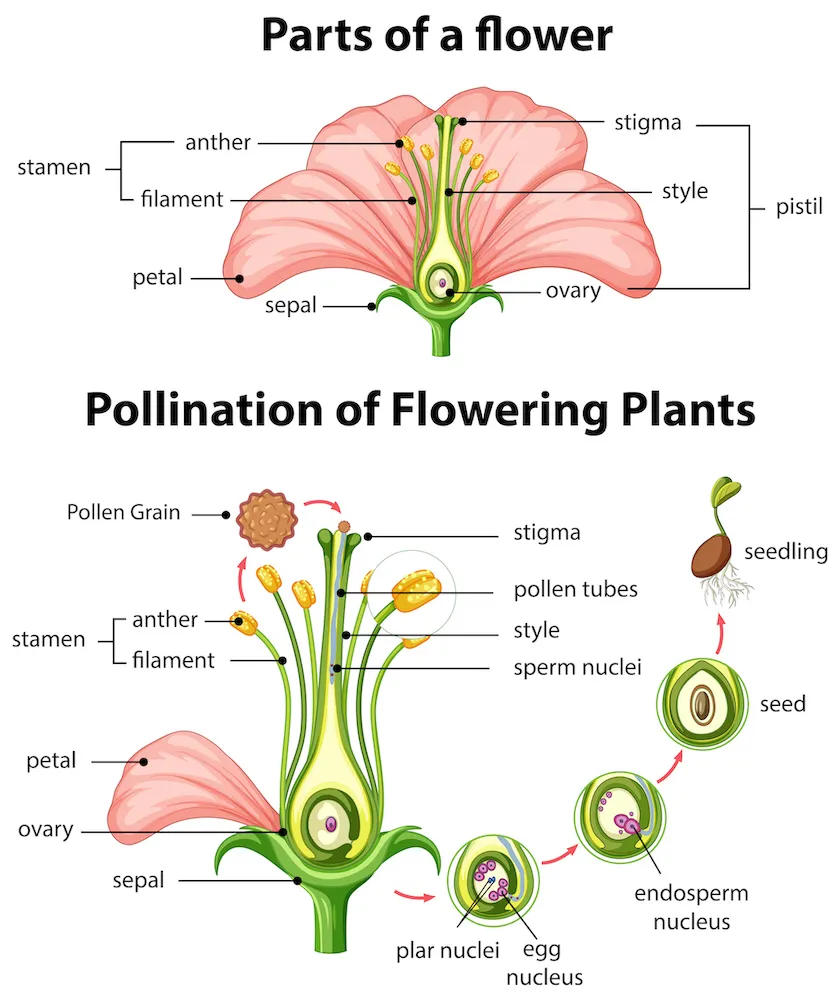
Most flowering plants reproduce sexually. Each flower contains specialized parts: sepals protect the bud, petals attract pollinators, stamens (the male organs) produce pollen, and the pistil (the female organ) contains the ovule. Sexual reproduction begins with pollination, the transfer of pollen from the stamen to the pistil. Pollination can happen through wind, water, or animals such as bees, birds, and bats. For example, about 75% of flowering plants rely on animal pollinators. When pollen lands on the pistil, a pollen tube grows downward, delivering sperm cells to the ovule for fertilization.
From Fertilization to Seed Formation and Asexual Reproduction
After fertilization, the ovule develops into a seed, and the surrounding ovary may become a fruit, which protects the seed and helps with dispersal. This process produces genetically varied offspring, increasing a plant species’ ability to adapt. However, many plants also use asexual reproduction, creating new plants without seeds or fertilization. Methods include runners (like strawberries), tubers (such as potatoes), bulbs (like onions), and cuttings. In asexual reproduction, offspring are genetically identical to the parent, which can be an advantage in stable environments. For example, a single strawberry plant can produce dozens of clones through runners each season.
Advantages and Interactions: Why Plants Use Both Methods
Sexual reproduction creates genetic diversity, which is crucial for survival in changing environments and for resisting diseases. Asexual reproduction allows rapid colonization and is useful when pollinators are scarce or conditions are stable. Some plants, like dandelions, can switch between these methods depending on environmental stress. Scientists study these systems to improve crop yields and develop resilient plant varieties. The combination of both strategies is a key reason for the widespread success of plants on Earth.
In summary, plant reproduction involves complex systems and interactions—with sexual and asexual strategies working together to ensure survival, adaptation, and the astonishing variety of plant life we see today.
Interesting Fact: Some plants, such as bananas, are almost entirely propagated by asexual reproduction, making every banana in a plantation a genetic clone of the others.
Comprehension quiz (10 questions)
1. What is the main purpose of plant reproduction?
2. Which part of the flower contains the ovule?
3. What percentage of flowering plants depend on animal pollinators?
4. What is one advantage of asexual reproduction for plants?
5. What happens during fertilization in plants?
6. What does 'pollen' mean as used in the passage?
7. What does 'genetic diversity' mean in this context?
8. Why might a plant use both sexual and asexual reproduction?
9. True or False: All asexual offspring are genetically identical to the parent plant.
10. True or False: Pollination must always involve animals.
Perfect for the way you teach
- Build comprehension skills
- Auto-graded quiz
- Differentiated reading
- Read together at home
- Improve fluency
- Quiet reading time
- Reading curriculum support
- Independent practice
- Track Lexile growth