Premium
DNA Methylation: The Epigenetic Control System
Interactive passage with audio narration, comprehension questions, and printable PDF.
Just this resource
$1.50
One-time purchase
Best value
Unlock everything
$49.99$29.99/yr
40% off until Aug 1 — 6,000+ resources
Unlock above to use these actions
- Format
- Interactive (Online), Printable (PDF)
- Grades
- 5678
- Subjects
- elareadingscience
- Standards
- MS-LS3-1
- Languages
- English, Spanish
What's included
Reading passage
Reading comprehension
Audio narration
With word word highlighting
Comprehension quiz
Auto-graded
Writing activity
Open-ended response
Glossary & flashcards
Vocabulary practice
Differentiated version
Adapted for varied levels
Spanish translation
Bilingual support
About this reader
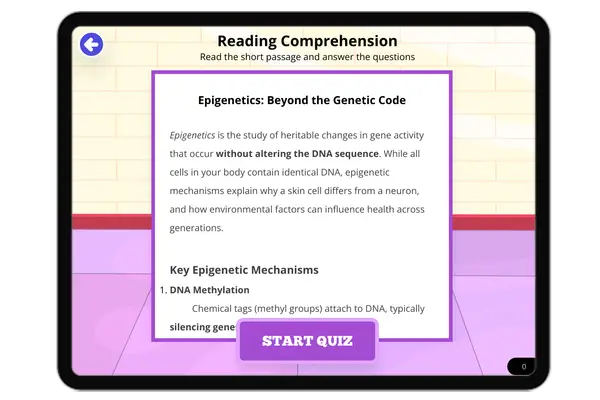
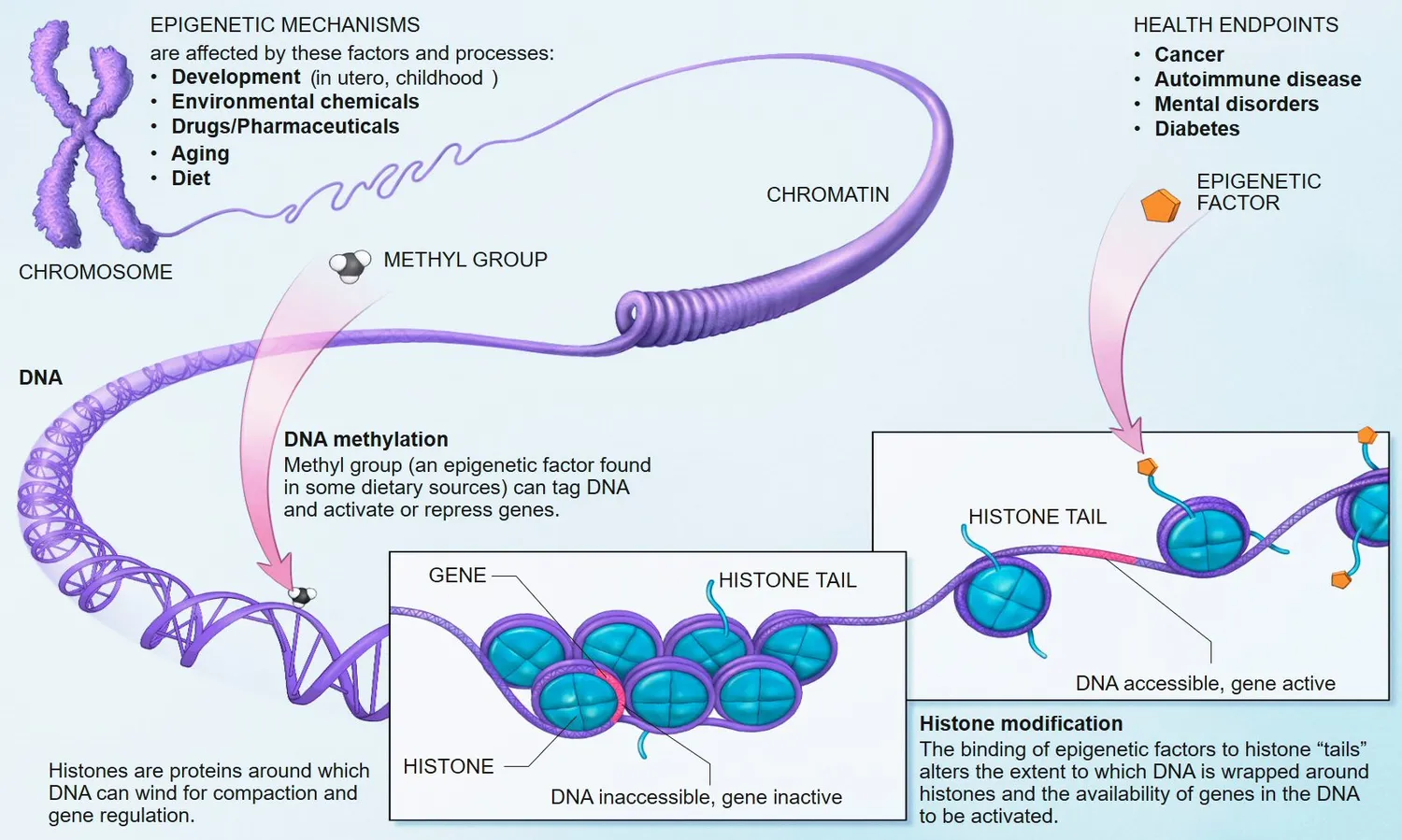
This passage explores DNA methylation as an epigenetic mechanism that silences genes via methyl group tags. Covering roles in development (X-inactivation), disease (cancer), and environmental responses (diet/stress), it aligns with NGSS MS-LS3-1. Real-world examples include honeybee caste determination and human health impacts. Written for middle school life science, it simplifies complex concepts using analogies (molecular switches) and clear biological examples.
Written by Workybooks TeamPublished by Workybooks
Preview
Sample passage and quiz content
Who it's for
Perfect for the way you teach
Teachers
- Build comprehension skills
- Auto-graded quiz
- Differentiated reading
Parents
- Read together at home
- Improve fluency
- Quiet reading time
Homeschoolers
- Reading curriculum support
- Independent practice
- Track Lexile growth
Topics
DNA methylationepigeneticsgene regulationCpG sitesNGSS MS-LS3-1