This learning resource is available in interactive and printable formats. The interactive worksheet can be played online and assigned to students. The Printable PDF version can be downloaded and printed for completion by hand.
This rigorous U.S. history reading passage explores the tragic journey of the Donner Party in 1846 along the Oregon Trail. Students analyze the causes, motivations, and consequences of one of America's most infamous pioneer disasters. The text incorporates multiple perspectives, primary source evidence, and nuanced analysis to help learners understand the complexity of westward migration, decision-making, and survival under extreme conditions. The passage is designed for grades 6-8 and aligns with C3 Framework and Common Core RI and W standards. Included are a timeline, glossary, comprehension quiz, explanatory writing prompts, and graphic organizers to reinforce historical thinking skills. Spanish translation and read aloud audio support diverse learners. Key vocabulary is highlighted and defined to build academic language. This resource is ideal for teaching about the challenges and ethical dilemmas faced by pioneers, and for developing skills in analyzing cause and effect in history.
CONTENT PREVIEW
Expand content preview
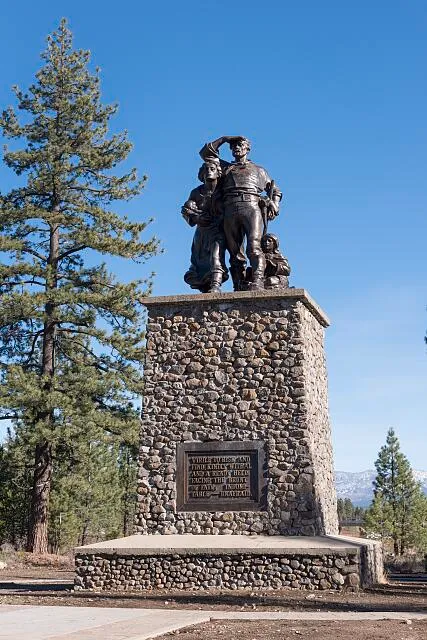
The Donner Party memorial in Truckee, an unincorporated town in Nevada County, California, a few miles north of Lake Tahoe Source: Library of Congress - Highsmith, Carol M., 1946-
In 1846, the Donner Party set out for California as part of the westward expansion of the United States. They were one of many groups of pioneers hoping to start new lives in the West. The party consisted of several families and individuals, totaling around 87 people. Their journey was long and dangerous, and it tragically became one of the most famous disasters in American history.
The Donner Party decided to follow a new route called the Hastings Cutoff, which promised to be a shortcut across the mountains and desert. This decision, however, proved to be disastrous. The shortcut was not well-mapped, which created many unexpected obstacles. The party had to cross difficult terrain and faced delays that put them far behind schedule. As a result, by late October, they reached the Sierra Nevada mountains much later in the season than was safe for travel.
Heavy snow began to fall earlier than usual, trapping the Donner Party in the mountains near what is now called Donner Lake. Their wagons became stuck, and they could not move forward or backward. With supplies running low and the weather growing colder, the group faced extreme hardship. Food became scarce, and families had to make difficult decisions to survive the winter.
As the situation became desperate, small groups of the strongest members attempted to cross the mountains on foot to find help. These attempts are known as the "Forlorn Hope" expeditions. Many of these rescuers suffered from frostbite, exhaustion, and starvation. Despite the risks, a few managed to reach settlements and alert others about the stranded party. Several rescue missions were launched, but deep snow and dangerous conditions slowed their progress.
The tragedy of the Donner Party is not just about physical suffering. It is also a story about the difficult choices people must sometimes make under extreme circumstances. Some members of the group were forced to make decisions that would haunt them for the rest of their lives. The survival strategies they used have been debated by historians, and the story continues to serve as a powerful example of human endurance and the dangers of westward migration.
In the end, only about half of the Donner Party survived until spring, when rescuers finally reached them. The event shocked the nation and led to increased caution among those planning to cross the continent. The disaster also influenced future pioneers to prepare better, travel earlier in the year, and avoid untested shortcuts. The Donner Party’s ordeal reminds us of the extreme risks people faced while seeking new opportunities in the West.
Interesting Fact: The site near Donner Lake where the party was stranded is now a California State Park, and a monument stands there to honor their struggle and perseverance.
When did the Donner Party leave for California?
Spring 1846Winter 1847Fall 1845Summer 1850
What was the Hastings Cutoff?
A new shortcut routeA supply stationA river crossingA rescue mission
Where did the Donner Party become trapped?
Sierra Nevada mountainsRocky MountainsCalifornia coastGreat Plains
Why did the Donner Party face hardship?
Lack of food and suppliesToo much rainA desert fireToo many wagons
What was the effect of the Forlorn Hope expedition?
Some reached helpNo one survivedThey found goldThey built new wagons
Why did future pioneers avoid shortcuts?
To avoid unknown dangersTo travel fasterTo find more foodTo meet more people
Half of the Donner Party survived until spring. True or false?
TrueFalse
What does 'expedition' mean?
A special journeyA type of foodA weather eventA kind of shelter
Perfect For:
👩🏫 Teachers
• Reading comprehension practice
• Auto-graded assessments
• Literacy skill development
👨👩👧👦 Parents
• Reading practice at home
• Comprehension improvement
• Educational reading time
🏠 Homeschoolers
• Reading curriculum support
• Independent reading practice
• Progress monitoring
Reading Features:
📖
Reading Passage
Engaging fiction or nonfiction text
❓
Comprehension Quiz
Auto-graded questions
📊
Instant Feedback
Immediate results and scoring
📄
Printable Version
Download for offline reading
🔊
Read Aloud
Voice-over with word highlighting
Reviews & Ratings
No reviews yet. Be the first to share your experience!
Related Content
Native American Tribes Across America
This engaging history reading passage introduces students to Native American tribes across America, focusing on their da...
D2.HIS.1.3-5D2.HIS.2.3-5RI.4.1RI.4.2
Teepees: Homes on the Great Plains
This engaging history reading passage introduces students to teepees, the unique homes of Native American tribes on the ...
D2.HIS.2.3-5D2.HIS.14.3-5RI.4.1RI.4.2RI.4.4
Traditional Native American Clothing
This engaging history passage explores traditional Native American clothing and how it reflected the environment, values...
D2.HIS.2.3-5D2.HIS.3.3-5RI.4.3RI.4.4
The Iroquois Confederacy: A System of Peace
This engaging U.S. History reading passage introduces students to the Iroquois Confederacy, a powerful alliance of Nativ...
D2.HIS.2.3-5D2.HIS.3.3-5RI.4.3RI.4.4
The Cherokee Nation: History and Culture
This reading passage explores the rich history and culture of the Cherokee Nation, one of the largest Native American tr...
D2.HIS.2.3-5D2.HIS.14.3-5RI.4.3RI.4.4RI.4.10
The Sioux: Warriors and Tribal Leaders
This history reading passage explores the Sioux Nation, focusing on their roles as warriors and tribal leaders. Students...
D2.HIS.1.3-5D2.HIS.2.3-5RI.4.1RI.4.3
Native American Respect for Nature
This engaging history reading passage explores Native American respect for nature, emphasizing the close relationship be...
D2.HIS.2.3-5D2.HIS.3.3-5RI.4.3RI.4.4
Jamestown: The First Permanent English Colony
This engaging history passage explores the founding of Jamestown, the first permanent English colony in America. Aligned...
D2.HIS.1.3-5D2.HIS.2.3-5RI.4.3RI.4.4
Pocahontas and the Powhatan People
This engaging reading passage explores the life of Pocahontas and the Powhatan people and their important role in early ...
D2.HIS.1.3-5D2.HIS.2.3-5RI.4.1RI.4.3
Colonial Children: School and Chores
This reading passage explores the daily lives of colonial children, focusing on their experiences at school and their ma...
D2.HIS.2.3-5D2.HIS.3.3-5RI.4.1RI.4.2RI.4.4
Colonial Clothing and Homemade Goods
This engaging U.S. history passage explores the daily life of early American colonists with a focus on colonial clothing...
D2.HIS.2.3-5RI.4.3RI.4.4
Colonial Jobs: Blacksmiths, Bakers, and Craftsmen
This engaging history reading passage explores the vital roles of blacksmiths, bakers, and craftsmen in colonial America...
D2.HIS.2.3-5D2.HIS.3.3-5RI.4.3RI.4.4
Colonial Towns and Village Life
This engaging history reading passage explores the daily life, work, and unity found in colonial towns and villages. Ali...
D2.HIS.1.3-5D2.HIS.2.3-5RI.4.3RI.4.4
Colonial Trade with England and Africa
This history reading passage explores colonial trade between the American colonies, England, and Africa, focusing on the...
D2.HIS.2.3-5D2.HIS.14.3-5RI.4.3RI.4.4
Benjamin Franklin: Printer, Inventor, and Leader
This history reading passage explores the life and achievements of Benjamin Franklin, one of America's most important ea...
D2.HIS.2.3-5D2.HIS.3.3-5RI.4.1RI.4.3
George Washington Leads the Army
This engaging history reading passage explores how George Washington bravely led the Continental Army during the America...
D2.HIS.1.3-5D2.HIS.2.3-5RI.4.3RI.4.4
Women and Children During the Revolutionary War
This reading passage explores the important roles women and children played during the Revolutionary War. Students will ...
D2.HIS.2.3-5RI.4.3RI.5.3
African Americans Fight for Freedom
This educational passage explores the brave and inspiring story of how African Americans fought for freedom in the Unite...
D2.HIS.2.3-5D2.HIS.3.3-5RI.4.3RI.4.4
The Battle of Yorktown Ends War
This engaging U.S. history reading passage explores the Battle of Yorktown, a key event that ended the American Revoluti...
D2.HIS.1.3-5D2.HIS.2.3-5RI.4.1RI.4.3
Loyalists vs. Patriots: Divided Families
This engaging U.S. history reading passage explores the division between Loyalists and Patriots during the American Revo...