Dorothea Lange: Photos of the Dust Bowl
Interactive passage with audio narration, comprehension questions, and printable PDF.
By completing this purchase you agree to our Terms of Use and Privacy Policy. Your subscription renews automatically until you cancel. You can cancel anytime from your account settings. All sales are final and non-refundable. Digital content is available for download in your account immediately upon purchase.
What's included
Dorothea Lange: Photos of the Dust Bowl preview and details
About this printable Dorothea Lange: Photos of the Dust Bowl reading passage (Grades 3-5)
Sample passage and quiz from Dorothea Lange: Photos of the Dust Bowl
Reading passage and comprehension quiz preview
Dorothea Lange Dust Bowl Photos
Dorothea Lange was a photographer during the Great Depression in the United States. She used her camera to tell true stories about the lives of people who were suffering during hard times. One of the hardest times was called the Dust Bowl. This was when huge dust storms destroyed farms in the Midwest. Crops died, and many families lost their homes and jobs.
Lange traveled to areas hit by the Dust Bowl. She saw people struggling to survive. Many families became migrant workers. They had to move from place to place to find work picking fruits and vegetables. These families lived in poor camps and had little food. Their faces showed sadness and strength.
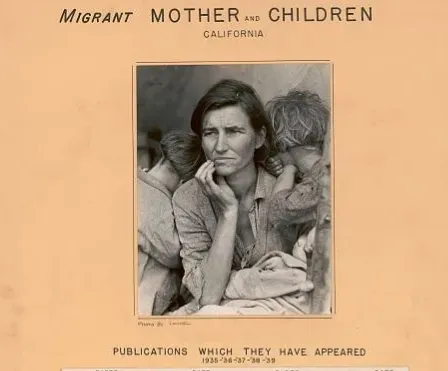
Using her camera, Dorothea Lange took powerful photos of these families. Her photos did not just show what people looked like. They also showed their feelings and struggles. One of her most famous pictures is of a worried mother with her children. The photo made many Americans feel sad for the family and want to help.
Lange’s work is called documentary photography. This kind of photography shows real events and real people. It helps others understand problems by letting them see what is happening. Through her pictures, Lange was able to tell stories without using words.
Her photos were published in newspapers and magazines. People across the country saw them. The government also saw them, and leaders realized that something needed to be done to help these families. In this way, Lange’s photos led to more support and aid for migrant workers and their children.
Lange showed that pictures are a powerful way to share history. She helped the country see the truth about poverty and hardship. Her work inspired other photographers to use cameras to help people understand important issues.
Interesting Fact: Dorothea Lange’s “Migrant Mother” photo is one of the most famous images in American history, and it still helps people learn about the Dust Bowl today.
Comprehension quiz (8 questions)
1. Who was Dorothea Lange?
2. What was the Dust Bowl?
3. What did migrant workers do?
4. Why did Lange take photos of families?
5. How did Lange’s photos help?
6. What did the government do after the photos?
7. Dorothea Lange’s photos showed real events. True or false?
8. What is 'documentary photography'?
Common Core standards for Dorothea Lange: Photos of the Dust Bowl
Explain events, procedures, ideas, or concepts in a historical, scientific, or technical text, including what happened and why, based on specific information in the text.
Determine the meaning of general academic and domain-specific words or phrases in a text relevant to a grade 4 topic or subject area.
Write informative/explanatory texts to examine a topic and convey ideas and information clearly.
Perfect for the way you teach
- Build comprehension skills
- Auto-graded quiz
- Differentiated reading
- Read together at home
- Improve fluency
- Quiet reading time
- Reading curriculum support
- Independent practice
- Track Lexile growth