Arctic Fox and Climate Change
Interactive passage with audio narration, comprehension questions, and printable PDF.
By completing this purchase you agree to our Terms of Use and Privacy Policy. Your subscription renews automatically until you cancel. You can cancel anytime from your account settings. All sales are final and non-refundable. Digital content is available for download in your account immediately upon purchase.
What's included
Arctic Fox and Climate Change preview and details
About this printable Arctic Fox and Climate Change science reading passage, NGSS-aligned (Grades 5-8)
Sample passage and quiz from Arctic Fox and Climate Change
Reading passage and comprehension quiz preview
Arctic Fox and Climate Change
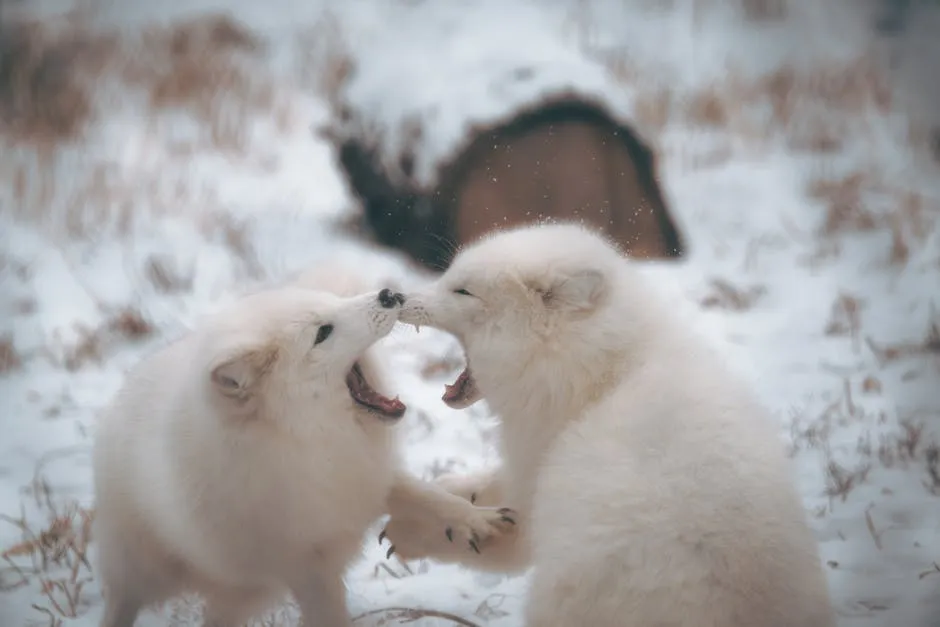
"Two arctic foxes playfully interacting in a snowy winter scene." by Caleb Falkenhagen / Pexels.
The Arctic fox survives some of Earth's coldest conditions through remarkable adaptations. Its thick fur provides insulation against brutal temperatures that can drop below negative 50 degrees Celsius. During winter months, the fox's coat turns snowy white, creating perfect camouflage against frozen landscapes. This color change helps the fox hide from predators and sneak up on prey. However, climate change now threatens this master of cold survival in connected ways that scientists are working to understand.
Evidence shows that warming temperatures are reshaping Arctic ecosystems and creating new challenges for Arctic foxes. As the region heats up faster than most other places on Earth, larger red foxes are expanding their range northward into Arctic fox territory. Red foxes compete with Arctic foxes for food resources such as small rodents and birds. In some cases, red foxes may even prey directly on Arctic foxes. This competition puts pressure on Arctic fox populations that were previously isolated from these larger relatives.
Climate change also disrupts the Arctic fox's survival strategy in another way. With less snow covering the ground during warmer winters, the fox's white winter coat can make it stand out against bare soil and rock instead of hiding it. Scientists call this a camouflage mismatch. The fox's coat color no longer matches its surroundings, making it easier for predators to spot and harder for the fox to hunt successfully. Meanwhile, warming conditions affect lemming populations and other small prey that Arctic foxes depend on for food. Changes in snow cover and vegetation can disrupt lemming breeding cycles and reduce their numbers.
In northern Canada and Scandinavia, researchers observe these connected effects playing out across Arctic regions. The changes demonstrate how warming temperatures do not just make places hotter—they can reshuffle which species live where and how they interact. The Arctic fox's struggle connects to a broader pattern scientists document worldwide, where climate change pushes species to move into new areas or face survival challenges in their traditional homes.
Understanding what happens to Arctic foxes matters because it reveals how climate change affects entire ecosystems through interconnected relationships. When one species faces pressure, the effects can ripple through food webs and alter community structures. The Arctic fox serves as an indicator of how rapidly changing conditions can challenge even the most well-adapted survivors.
Interesting Fact: An Arctic fox's fur is so effective at insulation that the animal does not start to shiver until temperatures drop below negative 70 degrees Celsius, making it one of the best-insulated mammals on Earth.
Comprehension quiz (10 questions)
1. What happens to the Arctic fox's coat during winter months?
2. How are red foxes affecting Arctic fox populations?
3. What is a camouflage mismatch?
4. In the passage, the word 'territory' most closely means:
5. Based on the passage, what does 'competition' mean in an ecosystem?
6. Why does warming weather affect lemming populations?
7. What can scientists learn from studying Arctic foxes and climate change?
8. According to the passage, where are researchers observing these climate effects on Arctic foxes?
9. True or False: The Arctic fox does not start to shiver until temperatures drop below negative 70 degrees Celsius.
10. True or False: Climate change only makes places hotter without affecting which species live where.
Perfect for the way you teach
- Build comprehension skills
- Auto-graded quiz
- Differentiated reading
- Read together at home
- Improve fluency
- Quiet reading time
- Reading curriculum support
- Independent practice
- Track Lexile growth