Impact of Climate Change on Water Resources — Reading Comprehension
Rate this
Premium Resource
Present
Present in classroom. No work saved
Assign
Classroom with student accounts, Track progress
Quick Play
No student accounts, assign with a link
Grades
6
7
8
PRINT+DIGITAL RESOURCE
This learning resource is available in interactive and printable formats. The interactive worksheet can be played online and assigned to students. The Printable PDF version can be downloaded and printed for completion by hand.
This engaging science passage for grades 6-8 explores the impact of climate change on water resources, aligning with NGSS standards. Students learn how rising temperatures and changing precipitation patterns affect the availability and quality of freshwater. Key terms such as drought, evaporation, precipitation, and groundwater are explained, making complex scientific concepts accessible. Real-world examples highlight drought in California and melting glaciers affecting river flows. Activities include a multiple-choice quiz, glossary, and writing prompts that encourage critical thinking, real-life connections, and scientific investigations. The passage is audio integrated, supporting diverse learning needs. This resource is perfect for classrooms focusing on environmental science, water cycles, and climate change, helping students connect science with everyday life and global challenges.
CONTENT PREVIEW
Expand content preview
Climate change is causing major changes to our planet. One of the most important areas affected is our water resources. Water resources include all the water we use, such as rivers, lakes, groundwater, and rain.
As the Earth's temperature rises, more water evaporates from land and water surfaces. Evaporation is when water changes from a liquid to a gas, moving into the air. Warmer temperatures speed up this process, which can cause lakes and rivers to shrink, especially during hot summers.
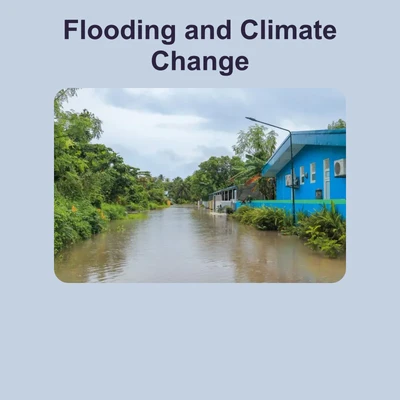
Precipitation is water that falls to the Earth as rain, snow, or hail. Climate change can make precipitation more unpredictable. Some places may get heavier rain and more flooding, while others may get less rain and face drought. A drought is a long period with very little rainfall, which can dry up rivers and soil.
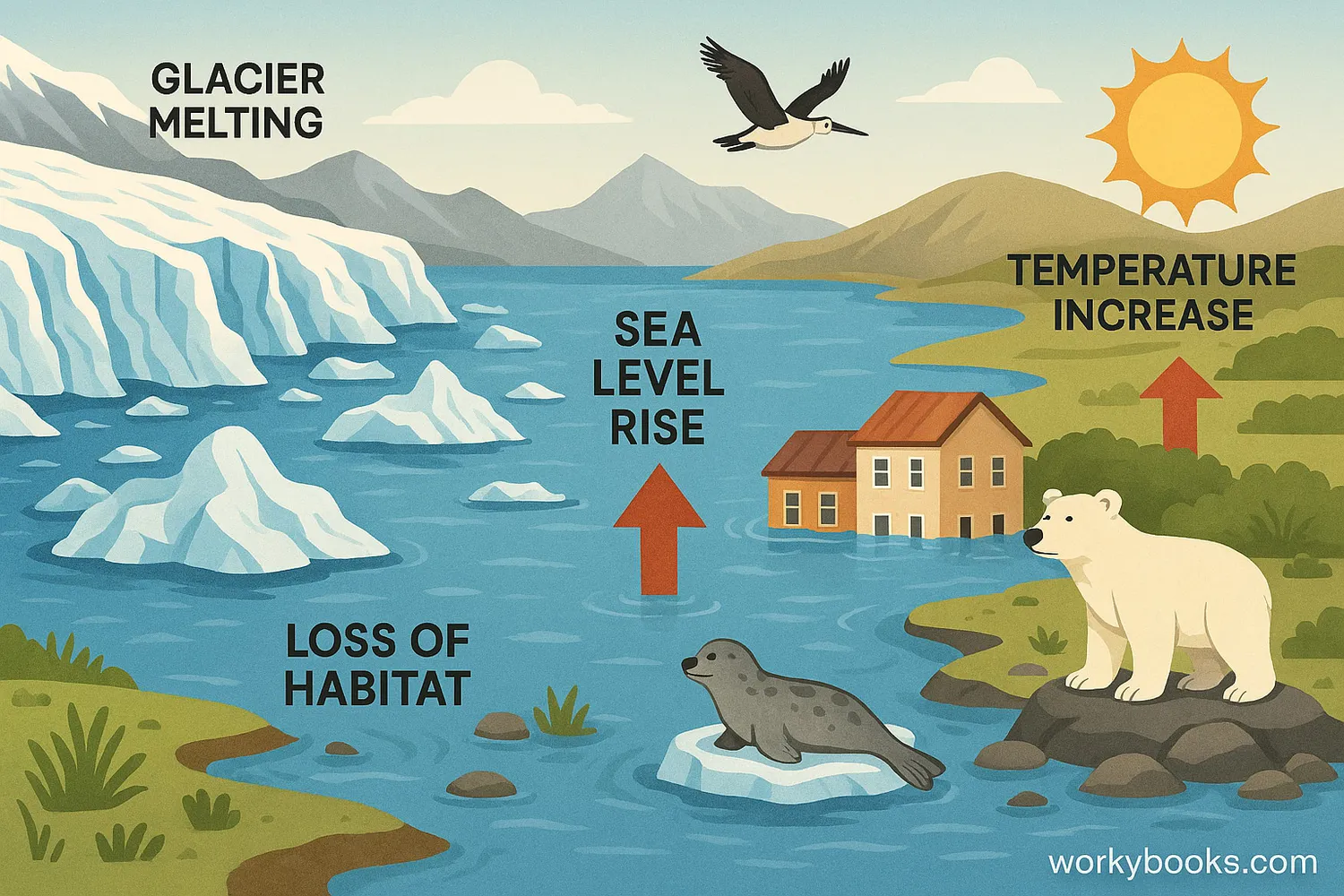
Melting glaciers is another effect of climate change. Glaciers are huge masses of ice found in mountains and polar regions. As the Earth warms, glaciers melt faster than they can grow. This extra melted water at first increases river flows, but over time, as glaciers become smaller, less water will be available for rivers and people who depend on them.
Climate change also affects groundwater, which is the water stored underground in rocks and soil. If there is less rainfall, groundwater is not replaced as quickly, making wells and springs dry up. People, animals, and plants all depend on groundwater when surface water is low.
For example, in California, long droughts have made it difficult for farmers to water their crops. In other places, like Bangladesh, heavier rains and floods have damaged homes and polluted drinking water. These real-world examples show how climate change can cause both too little and too much water.
Scientists and communities are working to find solutions, such as saving water, using new technology to clean water, and protecting natural areas like wetlands. Understanding how climate change impacts water helps us make better decisions to protect our future.
Interesting Fact: The amount of fresh water on Earth is less than 3% of all the water, and most of it is locked in glaciers and ice caps!
What is evaporation?
Water changes from liquid to gasWater falls as rainWater freezes into iceWater flows underground
What is a drought?
Heavy rainfall eventLong period with little rainMelting of glaciersOverflowing rivers
Which is a water resource?
MountainsGroundwaterDesertsVolcanoes
Why do rivers shrink during hot summers?
More evaporationLess sunlightMore precipitationMore glaciers
How does climate change affect precipitation?
Makes it more predictableMakes it more unpredictableStops all rainfallCauses only snow
What happens when glaciers melt faster?
Less water for rivers laterMore rain fallsMore groundwater formsFewer floods occur
Climate change has no effect on water. True or false?
TrueFalse
What does 'groundwater' mean?
Water found in glaciersRainwater on leavesWater beneath Earth's surfaceWater in clouds
Perfect For:
👩🏫 Teachers
• Reading comprehension practice
• Auto-graded assessments
• Literacy skill development
👨👩👧👦 Parents
• Reading practice at home
• Comprehension improvement
• Educational reading time
🏠 Homeschoolers
• Reading curriculum support
• Independent reading practice
• Progress monitoring
Reading Features:
📖
Reading Passage
Engaging fiction or nonfiction text
❓
Comprehension Quiz
Auto-graded questions
📊
Instant Feedback
Immediate results and scoring
📄
Printable Version
Download for offline reading
🔊
Read Aloud
Voice-over with word highlighting
Reviews & Ratings
No reviews yet. Be the first to share your experience!
Related Content
What Is Earth Science?
This engaging middle school science passage introduces students to the field of Earth science, aligning with NGSS standa...
MS-ESS1MS-ESS2MS-ESS3SEP
Transportation and Climate Change
This engaging science passage for grades 6-8 explores the vital role that transportation plays in climate change. Studen...
Tools and Technology in Earth Science
This middle school science reading passage explores the wide range of tools and technologies used in Earth science, from...
MS-ESS2-2MS-ESS3-2MS-ETS1-1MS-PS4-3
Climate Change: Solutions and Mitigation
This passage explores scientific solutions and mitigation strategies for climate change, designed for middle school scie...
MS-ESS3-4MS-ESS3-5
Extreme Weather and Climate Change
This Grade 6-8 science passage, aligned to NGSS standards, explores the impact of climate change on extreme weather even...
Climate Change: Causes
This comprehensive middle school science passage explores the causes of climate change by examining both natural and hum...
MS-ESS3-5MS-LS2-4
Effects of Climate Change
This comprehensive middle school science passage explores the effects of climate change on Earth's systems and life, ali...
MS-ESS3-5MS-LS4-4
Climate Through Earth's History
This engaging passage for grades 6-8 explores how Earth's climate has naturally changed over millions of years, highligh...
MS-ESS1-4MS-ESS2-6
Climate Change Bird Migration
This educational passage, audio integrated, explores how climate change affects bird migration patterns. Students will l...
MS-LS2-4: CONSTRUCT AN ARGUMENT SUPPORTED BY EMPIRICAL EVIDENCE THAT CHANGES TO PHYSICAL OR BIOLOGICAL COMPONENTS OF AN ECOSYSTEM AFFECT POPULATIONS.
How Deforestation Contributes to Climate Change
This engaging science passage, aligned with NGSS standards, explains how deforestation contributes to climate change for...
Climate Change: Vulnerable Ecosystems
This middle school science passage, aligned with NGSS standards MS-ESS3-5 and MS-LS2-4, helps students understand how cl...
MS-ESS3-5MS-LS2-4
Scientific Inquiry in Earth Science
This passage explores scientific inquiry in Earth science for grades 6-8, aligned with NGSS standards MS-ESS1-4, MS-ESS2...
MS-ESS1-4MS-ESS2-1MS-ESS3-5SEP
Permafrost and Climate Change
This engaging, NGSS-aligned science passage for grades 6-8 explores how melting permafrost releases greenhouse gases, im...
Heatwaves and Climate Change
This educational resource features an engaging, audio-integrated reading passage titled 'Heatwaves and Climate Change,' ...
Addressing Climate Change
This middle school science passage, aligned with NGSS standards MS-ESS3-4 and MS-ESS3-5, explores the mechanisms and sol...
MS-ESS3-4MS-ESS3-5
How Climate Change Affects Food Security
This grade 6-8 science passage, aligned with the NGSS standards, explores how climate change affects food security aroun...
What Is The Difference Between Global Warming And Climate Change?
This educational content, audio integrated, explores the crucial differences between global warming and climate change. ...
Climate Change: Species Responses
This middle school science passage explores how species respond to climate change, aligning with NGSS standards MS-LS4-4...
MS-LS4-4MS-LS4-6
Climate Refugees
This engaging science passage for grades 6-8 introduces students to the topic of climate refugees and human migration. A...