Flooding and Climate Change
Interactive passage with audio narration, comprehension questions, and printable PDF.
By completing this purchase you agree to our Terms of Use and Privacy Policy. Your subscription renews automatically until you cancel. You can cancel anytime from your account settings. All sales are final and non-refundable. Digital content is available for download in your account immediately upon purchase.
What's included
Flooding and Climate Change preview and details
About this printable Flooding and Climate Change science reading passage, NGSS-aligned (Grades 5-8)
Sample passage and quiz from Flooding and Climate Change
Reading passage and comprehension quiz preview
Flooding and Climate Change
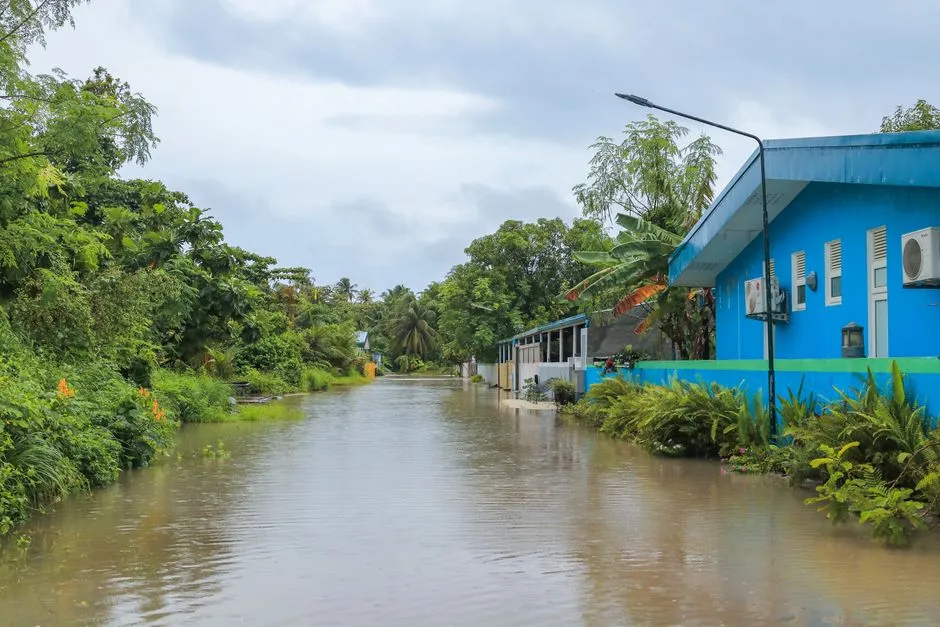
"A tropical street in Nolhivaranfaru, Maldives, submerged due to flooding." by Hussain Naushad / Pexels.
While droughts dry out some regions, flooding devastates others as Earth's climate warms. The connection between climate change and flooding centers on one key principle: warmer air holds more moisture. Evidence shows that for every degree Celsius the atmosphere warms, it can hold about seven percent more water vapor. When this moisture-rich air releases rain, it can dump far more water at once than cooler air could. This process turns ordinary rainstorms into dangerous flash floods.
Scientists explain that flooding occurs in three main ways. First, intense downpours can overwhelm rivers and storm drains in just hours. The ground and drainage systems cannot absorb water fast enough when heavy rain falls rapidly. Second, rapid snowmelt swells rivers during spring warming periods. When winter snowpack melts too quickly, rivers rise beyond their banks. Third, coastal flooding worsens as sea levels rise. Higher baseline ocean levels mean that storm surges push water farther inland than before. Each type of flooding links directly to warming temperatures.
Cities face particular vulnerability to sudden flooding events. Impermeable surfaces like pavement and concrete prevent water from soaking into the ground. Instead, rainfall runs off quickly into storm drains and sewers. When intense storms drop several inches of rain in minutes, these drainage systems cannot handle the volume. Streets become rivers and basements fill with water. In August 2021, New York City experienced this firsthand when remnants of Hurricane Ida dumped over three inches of rain in one hour. The precipitation rate broke records and turned subway stations into waterfalls.
The same atmospheric warming that deepens droughts in some locations delivers heavier, more damaging rain in others. This represents a critical systems connection in Earth's changing climate. Warmer air picks up more moisture from oceans and lakes through increased evaporation. That moisture eventually falls as rain or snow somewhere else. The water cycle continues, but climate change intensifies its extremes. Dry areas may receive less frequent rain, while wet areas experience more intense storms.
Understanding flood risks matters for communities worldwide. Scientists observe that extreme weather events, including both floods and droughts, are becoming more common. Cities must improve drainage infrastructure and create green spaces that absorb water. Coastal communities need better protection against storm surges and rising seas. Recognizing how climate change amplifies flooding helps people prepare for and respond to these dangerous events more effectively.
Interesting Fact: The costliest flood in U.S. history occurred when Hurricane Harvey stalled over Houston in 2017, dropping more than 60 inches of rain in some areas and causing over $125 billion in damage.
Comprehension quiz (10 questions)
1. According to the passage, how much more water vapor can the atmosphere hold for every degree Celsius it warms?
2. What are the three main types of flooding described in the passage?
3. What does the term 'impermeable' mean in the context of city flooding?
4. Why are cities particularly vulnerable to flash flooding?
5. What happened in New York City in August 2021?
6. How does climate change create both droughts and floods?
7. Based on the passage, what process moves moisture from oceans and lakes into the atmosphere?
8. What does the passage suggest cities should do to reduce flood risks?
9. True or False: Warmer temperatures can cause rapid snowmelt that leads to river flooding.
10. True or False: Coastal flooding is getting better because sea levels are dropping.
Perfect for the way you teach
- Build comprehension skills
- Auto-graded quiz
- Differentiated reading
- Read together at home
- Improve fluency
- Quiet reading time
- Reading curriculum support
- Independent practice
- Track Lexile growth