Edison and the Electric Light
Interactive passage with audio narration, comprehension questions, and printable PDF.
By completing this purchase you agree to our Terms of Use and Privacy Policy. Your subscription renews automatically until you cancel. You can cancel anytime from your account settings. All sales are final and non-refundable. Digital content is available for download in your account immediately upon purchase.
What's included
Edison and the Electric Light preview and details
About this printable Edison and the Electric Light reading passage (Grades 6-8)
Sample passage and quiz from Edison and the Electric Light
Reading passage and comprehension quiz preview
Edison and the Electric Light
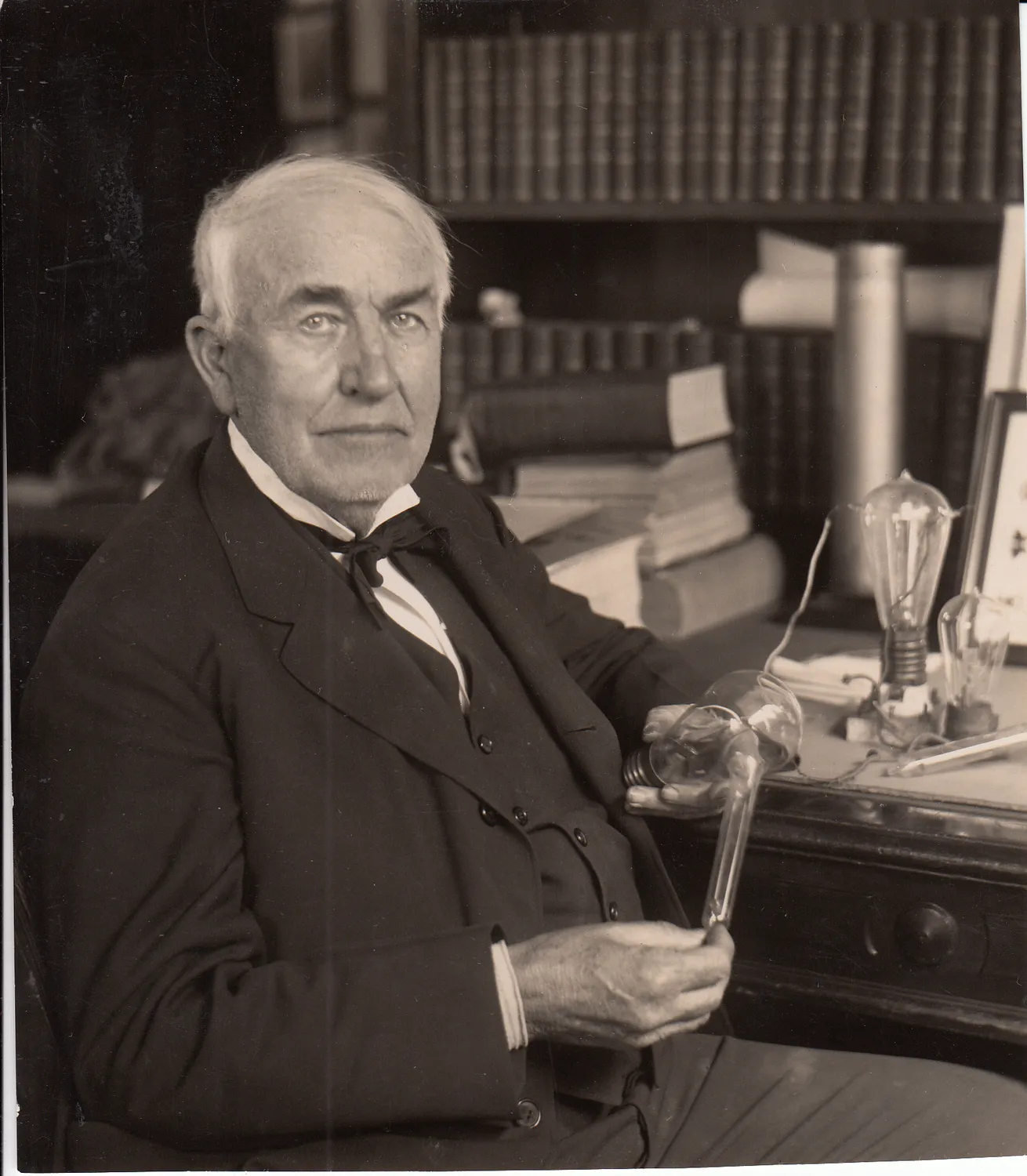
"Thomas Edison with Edison Effect bulbs. (668af4a1f3f241e3b199ba132ef1c7b3)"
Source: Wikimedia Commons (Public domain).
In 1879, Thomas Edison introduced the world to a bright new era with the invention of the electric light bulb. Before this breakthrough, most Americans relied on candles, oil lamps, or gaslights for illumination. These sources were expensive, dangerous, and often unreliable. The lack of safe, steady light limited work and activities after sunset, creating obstacles for industry and learning.
Edison's journey to invent the electric light was not straightforward. Many inventors before him had tried, but their bulbs burned out quickly or required too much power. Edison and his team experimented with different materials for the filament—the thin wire inside the bulb that glows when heated by electricity. After hundreds of tests, they discovered that carbonized bamboo made a filament that lasted for hours. This innovation was a turning point in the history of artificial light.
However, inventing a reliable light bulb was only part of the challenge. Edison realized that to make electric lighting practical for everyone, entire electrical systems would need to be built. This involved designing generators to produce electricity, wires to carry it, and safety devices to prevent fires. Edison’s company opened the first power station in New York City in 1882, bringing electric light to homes and businesses in a crowded urban environment. This achievement required careful collaboration among engineers, workers, and city officials.
The impact of Edison's invention was profound. Electric light made factories safer and allowed them to operate longer hours. It improved public safety by lighting streets and reduced the risk of fires in homes. The availability of affordable lighting also changed family life, making it possible to read, study, and gather after dark. Yet, not everyone immediately welcomed the change. Some people feared the dangers of electricity, while others worried about losing jobs related to gaslighting. Over time, however, the benefits became clear, and electric light spread across the nation.
Historians see Edison's work as a symbol of the Progressive Era, a time when Americans sought practical solutions to improve everyday life. Edison's success was not just about inventing a product, but about creating a system and inspiring further advancements. Other inventors built on his ideas, leading to new technologies that shaped the modern world. Electric lighting became an essential part of cities, industries, and homes, influencing how people worked, learned, and connected with each other.
Edison's electric light bulb reminds us that innovation often requires problem-solving, experimentation, and teamwork. It also shows how scientific advances can transform society, bringing both challenges and opportunities. The story of electric light is more than the tale of one man; it is a chapter in the larger history of human achievement.
Interesting Fact: When Edison's first public demonstration of the electric light bulb took place in Menlo Park, New Jersey, in 1879, people traveled from miles around just to see the new technology in action.
Comprehension quiz (8 questions)
1. Who invented the electric light bulb?
2. In what year did Edison invent the light bulb?
3. What did people use for light before bulbs?
4. Why was Edison's filament important?
5. What did Edison build after inventing the bulb?
6. How did electric light help factories?
7. Electric light made homes safer. True or false?
8. What does 'innovation' mean?
Perfect for the way you teach
- Build comprehension skills
- Auto-graded quiz
- Differentiated reading
- Read together at home
- Improve fluency
- Quiet reading time
- Reading curriculum support
- Independent practice
- Track Lexile growth