This learning resource is available in interactive and printable formats. The interactive worksheet can be played online and assigned to students. The Printable PDF version can be downloaded and printed for completion by hand.
This rigorous history reading passage explores the origins, structure, and ongoing debates surrounding the Electoral College system in United States presidential elections. Students will analyze the causes, motivations, and consequences of the Electoral College, examining both its historical context and its relevance today. The passage incorporates a primary source quote, compares different perspectives, and introduces key academic vocabulary to support critical thinking and ELA skills. Activities include a multiple-choice quiz, explanatory writing prompts, a graphic organizer, and a timeline of major events. Spanish translation and read aloud audio are available. This resource aligns with C3 Framework D2.His.2.3-5, D2.His.3.3-5 and Common Core RI.4.3, RI.4.4, W.4.2, supporting students in developing historical reasoning and literacy in social studies.
CONTENT PREVIEW
Expand content preview
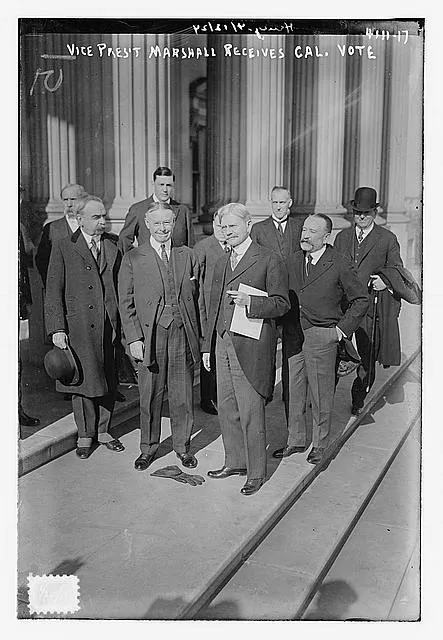
"Vice Pres't Marshall receives Cal. Vote" by Bain News Service / Library of Congress.
The Electoral College is the system the United States uses to select its president, instead of choosing the leader by direct popular vote. This system was established in 1787 at the Constitutional Convention, where delegates debated the best method for electing the nation's executive. The Founders faced a significant problem: they wanted a system that would prevent tyranny, but also ensure that the president had real support from across the country.
Many delegates distrusted pure popular voting. At the time, information traveled slowly, and many people had limited knowledge about candidates outside their own states. Some feared that larger states would dominate the process, while others worried about uninformed decisions by the general public. As a compromise, the Electoral College was created as an indirect election system. Instead of voting directly for a president, citizens vote for electors who then cast the official votes for president and vice president.
Each state receives a number of electoral votes equal to its total number of representatives and senators in Congress. This means larger states have more votes, but every state has at least three. The framers of the Constitution hoped this system would balance the interests of both big and small states. In most states, the winner of the popular vote receives all that state's electoral votes, a process known as "winner-take-all."
Over time, the system has led to both praise and criticism. Supporters argue that the Electoral College protects the voices of smaller states and encourages candidates to campaign in a variety of regions. Critics, however, point out that a candidate can win the presidency without winning the national popular vote. This occurs because the focus often shifts to so-called swing states—states where the outcome is uncertain and both major parties have strong support. These states receive much attention, while others are often ignored.
The Electoral College process continues to shape presidential campaigns and elections today. Candidates develop strategies to win enough electoral votes, rather than only seeking the most total votes nationwide. Debates about reforming or abolishing the system still occur, as Americans consider the best way to balance democracy, fairness, and tradition.
Ultimately, the Electoral College reflects both the strengths and challenges of American democracy. It is a reminder of the nation's founding compromises and the ongoing conversation about how leaders should be chosen.
Interesting Fact: In four U.S. presidential elections, the candidate who won the popular vote did not become president due to the Electoral College system.
When was the Electoral College created?
1787180017761865
Who do citizens actually vote for?
ElectorsPresidentSenatorsCongress
How are electoral votes decided?
By state population and Congress membersOnly by state populationBy popular vote onlyAll states get same number
Why did the Founders distrust popular voting?
Limited information and big state controlThey disliked votingToo expensiveNo reason given
What is a swing state?
State with uncertain election outcomeLargest stateState that never votesState with no electors
How does winner-take-all affect elections?
All votes go to winnerVotes split among partiesNo effectWinner gets only one vote
The Electoral College is still used today.
TrueFalse
What does 'indirect election' mean?
People vote for electorsPeople vote directly for presidentCongress chooses presidentStates decide winner
Perfect For:
👩🏫 Teachers
• Reading comprehension practice
• Auto-graded assessments
• Literacy skill development
👨👩👧👦 Parents
• Reading practice at home
• Comprehension improvement
• Educational reading time
🏠 Homeschoolers
• Reading curriculum support
• Independent reading practice
• Progress monitoring
Reading Features:
📖
Reading Passage
Engaging fiction or nonfiction text
❓
Comprehension Quiz
Auto-graded questions
📊
Instant Feedback
Immediate results and scoring
📄
Printable Version
Download for offline reading
🔊
Read Aloud
Voice-over with word highlighting
Reviews & Ratings
No reviews yet. Be the first to share your experience!
Related Content
Native American Tribes Across America
This engaging history reading passage introduces students to Native American tribes across America, focusing on their da...
D2.HIS.1.3-5D2.HIS.2.3-5RI.4.1RI.4.2
Teepees: Homes on the Great Plains
This engaging history reading passage introduces students to teepees, the unique homes of Native American tribes on the ...
D2.HIS.2.3-5D2.HIS.14.3-5RI.4.1RI.4.2RI.4.4
Traditional Native American Clothing
This engaging history passage explores traditional Native American clothing and how it reflected the environment, values...
D2.HIS.2.3-5D2.HIS.3.3-5RI.4.3RI.4.4
The Iroquois Confederacy: A System of Peace
This engaging U.S. History reading passage introduces students to the Iroquois Confederacy, a powerful alliance of Nativ...
D2.HIS.2.3-5D2.HIS.3.3-5RI.4.3RI.4.4
The Cherokee Nation: History and Culture
This reading passage explores the rich history and culture of the Cherokee Nation, one of the largest Native American tr...
D2.HIS.2.3-5D2.HIS.14.3-5RI.4.3RI.4.4RI.4.10
The Sioux: Warriors and Tribal Leaders
This history reading passage explores the Sioux Nation, focusing on their roles as warriors and tribal leaders. Students...
D2.HIS.1.3-5D2.HIS.2.3-5RI.4.1RI.4.3
Native American Respect for Nature
This engaging history reading passage explores Native American respect for nature, emphasizing the close relationship be...
D2.HIS.2.3-5D2.HIS.3.3-5RI.4.3RI.4.4
Jamestown: The First Permanent English Colony
This engaging history passage explores the founding of Jamestown, the first permanent English colony in America. Aligned...
D2.HIS.1.3-5D2.HIS.2.3-5RI.4.3RI.4.4
Pocahontas and the Powhatan People
This engaging reading passage explores the life of Pocahontas and the Powhatan people and their important role in early ...
D2.HIS.1.3-5D2.HIS.2.3-5RI.4.1RI.4.3
Colonial Children: School and Chores
This reading passage explores the daily lives of colonial children, focusing on their experiences at school and their ma...
D2.HIS.2.3-5D2.HIS.3.3-5RI.4.1RI.4.2RI.4.4
Colonial Clothing and Homemade Goods
This engaging U.S. history passage explores the daily life of early American colonists with a focus on colonial clothing...
D2.HIS.2.3-5RI.4.3RI.4.4
Colonial Jobs: Blacksmiths, Bakers, and Craftsmen
This engaging history reading passage explores the vital roles of blacksmiths, bakers, and craftsmen in colonial America...
D2.HIS.2.3-5D2.HIS.3.3-5RI.4.3RI.4.4
Colonial Towns and Village Life
This engaging history reading passage explores the daily life, work, and unity found in colonial towns and villages. Ali...
D2.HIS.1.3-5D2.HIS.2.3-5RI.4.3RI.4.4
Colonial Trade with England and Africa
This history reading passage explores colonial trade between the American colonies, England, and Africa, focusing on the...
D2.HIS.2.3-5D2.HIS.14.3-5RI.4.3RI.4.4
Benjamin Franklin: Printer, Inventor, and Leader
This history reading passage explores the life and achievements of Benjamin Franklin, one of America's most important ea...
D2.HIS.2.3-5D2.HIS.3.3-5RI.4.1RI.4.3
George Washington Leads the Army
This engaging history reading passage explores how George Washington bravely led the Continental Army during the America...
D2.HIS.1.3-5D2.HIS.2.3-5RI.4.3RI.4.4
Women and Children During the Revolutionary War
This reading passage explores the important roles women and children played during the Revolutionary War. Students will ...
D2.HIS.2.3-5RI.4.3RI.5.3
African Americans Fight for Freedom
This educational passage explores the brave and inspiring story of how African Americans fought for freedom in the Unite...
D2.HIS.2.3-5D2.HIS.3.3-5RI.4.3RI.4.4
The Battle of Yorktown Ends War
This engaging U.S. history reading passage explores the Battle of Yorktown, a key event that ended the American Revoluti...
D2.HIS.1.3-5D2.HIS.2.3-5RI.4.1RI.4.3
Loyalists vs. Patriots: Divided Families
This engaging U.S. history reading passage explores the division between Loyalists and Patriots during the American Revo...