This learning resource is available in interactive and printable formats. The interactive worksheet can be played online and assigned to students. The Printable PDF version can be downloaded and printed for completion by hand.
This passage explores the critical role Ellis Island played as the primary gateway for European immigrants arriving in the United States between 1892 and 1954. Students will analyze the causes and motivations behind mass migration, understand the challenges faced by newcomers, and examine the complex consequences of immigration for American society. The passage offers multiple perspectives, integrates a primary source quote, and models historical reasoning using evidence and academic vocabulary. Activities include a multiple-choice quiz, writing prompts, a T-chart graphic organizer, and a timeline of key events. This resource is aligned with D2.His.2.3-5, D2.His.3.3-5, RI.4.3, RI.4.4, and W.4.2 standards. Students can access read aloud audio and a Spanish translation to support understanding. Key vocabulary is highlighted and explained. This engaging lesson helps students practice critical ELA skills while deepening their understanding of U.S. immigration history, making it ideal for classroom or independent study.
CONTENT PREVIEW
Expand content preview
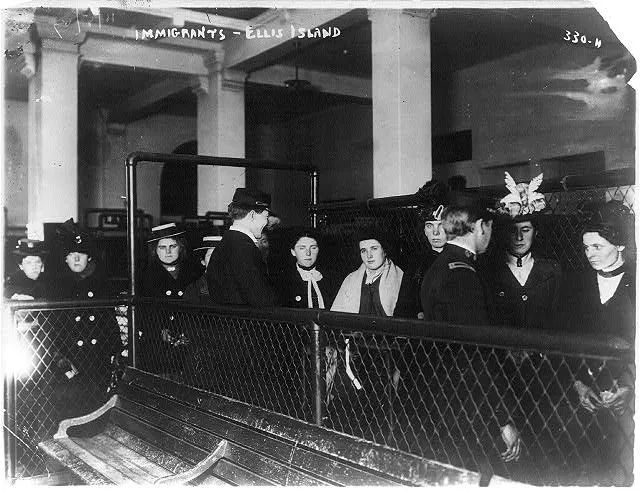
Immigrants - Ellis Island Source: Library of Congress
Between 1892 and 1954, Ellis Island served as the gateway for more than 12 million immigrants entering the United States through New York Harbor. During the Progressive Era, a period of major reform and social change, Ellis Island became a symbol of hope and challenge. For many, the journey to America was driven by the dream of opportunity, safety, and freedom. However, the arrival at Ellis Island was only the beginning of a complex and sometimes difficult process.
Upon docking, newcomers faced a series of processing steps designed to control who could enter the country. The first stage was a medical inspection. Doctors quickly checked each person for signs of illness, sometimes marking their clothing with chalk to indicate possible health problems. Those who passed moved on to the next step, while others were separated from their families for further examination. This system aimed to prevent the spread of contagious diseases and protect public health in American cities.
After the medical exam, immigrants waited for legal interviews. Officials asked questions about names, occupations, destinations, and whether the entrants had enough money to support themselves. This interview process was often stressful, especially for those who did not speak English. Translators assisted, but misunderstandings were common. Some families were split up if one member failed the requirements, causing fear and uncertainty.
The experience at Ellis Island was shaped by both opportunity and hardship. People from different backgrounds—Italians, Jews, Irish, Poles, and others—brought unique traditions, languages, and skills. While the inspection system was strict, most immigrants were eventually allowed to enter and start new lives. Yet, for about 2% each year, exclusion meant being sent back to their country of origin. These rejections were often based on medical or legal grounds, demonstrating the complex balance between welcoming newcomers and enforcing national policies.
Ellis Island’s role was not only about admission. It also represented the challenges of American society during the Progressive Era. Debates about assimilation—how newcomers should adapt to American culture—were common. Supporters of immigration saw newcomers as a source of economic growth and cultural diversity. Critics worried about overcrowding, jobs, and preserving traditional American values. The policies and discussions at Ellis Island reflected these broader conflicts, shaping the nation’s identity.
Today, Ellis Island stands as a powerful reminder of the immigrant experience. Its museum honors the stories of those who passed through its halls and highlights the ongoing impact of immigration on U.S. history. The legacy of Ellis Island encourages us to understand both the promise and the complexity of becoming American.
Interesting Fact: At its busiest, Ellis Island processed over 11,000 immigrants in a single day—April 17, 1907.
When did Ellis Island operate as a gateway?
1892 to 19541800 to 19001907 to 19541880 to 1920
What was the first step for new arrivals?
Medical inspectionLegal interviewJob searchLearning English
Which city did Ellis Island serve?
New YorkBostonSan FranciscoPhiladelphia
Why were some immigrants excluded?
Failed medical or legal checksNo familyToo youngNo passport
Why did officials inspect immigrants?
To protect public healthTo teach EnglishTo find jobsTo collect taxes
How did immigrants feel during processing?
Hopeful and anxiousAngry onlyBored onlyExcited only
Ellis Island closed in 1954. True or false?
TrueFalse
What does 'assimilation' mean?
Adopting a new cultureBuying a ticketLearning English onlyReturning home
Perfect For:
👩🏫 Teachers
• Reading comprehension practice
• Auto-graded assessments
• Literacy skill development
👨👩👧👦 Parents
• Reading practice at home
• Comprehension improvement
• Educational reading time
🏠 Homeschoolers
• Reading curriculum support
• Independent reading practice
• Progress monitoring
Reading Features:
📖
Reading Passage
Engaging fiction or nonfiction text
❓
Comprehension Quiz
Auto-graded questions
📊
Instant Feedback
Immediate results and scoring
📄
Printable Version
Download for offline reading
🔊
Read Aloud
Voice-over with word highlighting
Reviews & Ratings
No reviews yet. Be the first to share your experience!
Related Content
Native American Tribes Across America
This engaging history reading passage introduces students to Native American tribes across America, focusing on their da...
D2.HIS.1.3-5D2.HIS.2.3-5RI.4.1RI.4.2
Teepees: Homes on the Great Plains
This engaging history reading passage introduces students to teepees, the unique homes of Native American tribes on the ...
D2.HIS.2.3-5D2.HIS.14.3-5RI.4.1RI.4.2RI.4.4
Traditional Native American Clothing
This engaging history passage explores traditional Native American clothing and how it reflected the environment, values...
D2.HIS.2.3-5D2.HIS.3.3-5RI.4.3RI.4.4
The Iroquois Confederacy: A System of Peace
This engaging U.S. History reading passage introduces students to the Iroquois Confederacy, a powerful alliance of Nativ...
D2.HIS.2.3-5D2.HIS.3.3-5RI.4.3RI.4.4
The Cherokee Nation: History and Culture
This reading passage explores the rich history and culture of the Cherokee Nation, one of the largest Native American tr...
D2.HIS.2.3-5D2.HIS.14.3-5RI.4.3RI.4.4RI.4.10
The Sioux: Warriors and Tribal Leaders
This history reading passage explores the Sioux Nation, focusing on their roles as warriors and tribal leaders. Students...
D2.HIS.1.3-5D2.HIS.2.3-5RI.4.1RI.4.3
Native American Respect for Nature
This engaging history reading passage explores Native American respect for nature, emphasizing the close relationship be...
D2.HIS.2.3-5D2.HIS.3.3-5RI.4.3RI.4.4
Jamestown: The First Permanent English Colony
This engaging history passage explores the founding of Jamestown, the first permanent English colony in America. Aligned...
D2.HIS.1.3-5D2.HIS.2.3-5RI.4.3RI.4.4
Pocahontas and the Powhatan People
This engaging reading passage explores the life of Pocahontas and the Powhatan people and their important role in early ...
D2.HIS.1.3-5D2.HIS.2.3-5RI.4.1RI.4.3
Colonial Children: School and Chores
This reading passage explores the daily lives of colonial children, focusing on their experiences at school and their ma...
D2.HIS.2.3-5D2.HIS.3.3-5RI.4.1RI.4.2RI.4.4
Colonial Clothing and Homemade Goods
This engaging U.S. history passage explores the daily life of early American colonists with a focus on colonial clothing...
D2.HIS.2.3-5RI.4.3RI.4.4
Colonial Jobs: Blacksmiths, Bakers, and Craftsmen
This engaging history reading passage explores the vital roles of blacksmiths, bakers, and craftsmen in colonial America...
D2.HIS.2.3-5D2.HIS.3.3-5RI.4.3RI.4.4
Colonial Towns and Village Life
This engaging history reading passage explores the daily life, work, and unity found in colonial towns and villages. Ali...
D2.HIS.1.3-5D2.HIS.2.3-5RI.4.3RI.4.4
Colonial Trade with England and Africa
This history reading passage explores colonial trade between the American colonies, England, and Africa, focusing on the...
D2.HIS.2.3-5D2.HIS.14.3-5RI.4.3RI.4.4
Benjamin Franklin: Printer, Inventor, and Leader
This history reading passage explores the life and achievements of Benjamin Franklin, one of America's most important ea...
D2.HIS.2.3-5D2.HIS.3.3-5RI.4.1RI.4.3
George Washington Leads the Army
This engaging history reading passage explores how George Washington bravely led the Continental Army during the America...
D2.HIS.1.3-5D2.HIS.2.3-5RI.4.3RI.4.4
Women and Children During the Revolutionary War
This reading passage explores the important roles women and children played during the Revolutionary War. Students will ...
D2.HIS.2.3-5RI.4.3RI.5.3
African Americans Fight for Freedom
This educational passage explores the brave and inspiring story of how African Americans fought for freedom in the Unite...
D2.HIS.2.3-5D2.HIS.3.3-5RI.4.3RI.4.4
The Battle of Yorktown Ends War
This engaging U.S. history reading passage explores the Battle of Yorktown, a key event that ended the American Revoluti...
D2.HIS.1.3-5D2.HIS.2.3-5RI.4.1RI.4.3
Loyalists vs. Patriots: Divided Families
This engaging U.S. history reading passage explores the division between Loyalists and Patriots during the American Revo...