Embargo Act 1807: Jefferson's Failed Policy
Interactive passage with audio narration, comprehension questions, and printable PDF.
By completing this purchase you agree to our Terms of Use and Privacy Policy. Your subscription renews automatically until you cancel. You can cancel anytime from your account settings. All sales are final and non-refundable. Digital content is available for download in your account immediately upon purchase.
What's included
Embargo Act 1807: Jefferson's Failed Policy preview and details
About this printable Embargo Act 1807: Jefferson's Failed Policy reading passage (Grades 6-8)
Sample passage and quiz from Embargo Act 1807: Jefferson's Failed Policy
Reading passage and comprehension quiz preview
Embargo Act of 1807
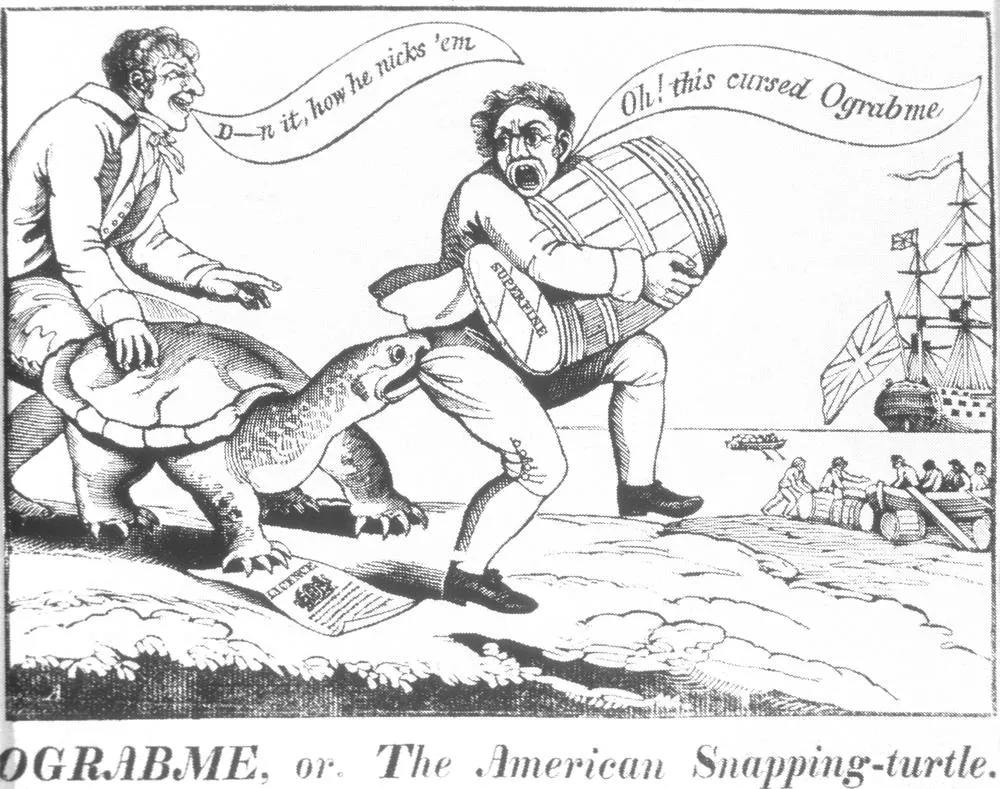
Source: Wikimedia Commons
The Embargo Act of 1807 was a major law passed by the United States Congress and signed by President Thomas Jefferson. The law was created because American ships were being attacked and seized by Great Britain and France, two powerful nations that were at war with each other. Both countries wanted to prevent the United States from trading with their enemies. As a result, American sailors and merchants faced increasing dangers on the high seas. President Jefferson believed that a new policy was necessary to protect American interests and national honor without going to war.
Instead of choosing military action, Jefferson and Congress decided to use an embargo. An embargo is a government order that stops trade with other countries. The Embargo Act was intended as a peaceful solution to avoid conflict and force the European powers to respect American rights. Jefferson hoped that by stopping all American trade with foreign nations, Britain and France would experience economic consequences and be pressured to change their actions. This strategy was based on the idea that the United States' resources and products were valuable enough to influence global events.
However, the effects of the Embargo Act were much different from what Jefferson expected. While the law aimed to punish Britain and France, it ended up hurting American merchants, shipbuilders, and farmers the most. American ports became empty, ships sat unused in harbors, and the economy struggled. Many people lost their jobs, and goods piled up with no buyers. The economic consequences were severe, especially in New England, where businesses depended on international commerce.
As the months passed, it became clear that the embargo was not working as planned. Britain and France found other sources for goods, so their economies were not seriously damaged. Meanwhile, American citizens grew frustrated. Some even began to smuggle goods across the border to avoid the law. Political opposition to Jefferson’s policy increased, and debates over the balance between national security and personal economic freedom intensified.
Due to these failures, Congress repealed the Embargo Act in 1809, only two years after it was enacted. The law was replaced with a new policy that allowed trade with countries other than Britain and France. Historians often view the Embargo Act as one of Jefferson's biggest mistakes. It demonstrates the challenges leaders face when trying to solve international problems without violence and the unintended effects that government actions can have on ordinary people.
Interesting Fact: One nickname for the Embargo Act was "O Grab Me," which is "embargo" spelled backward, showing how unpopular the law had become among Americans.
Comprehension quiz (8 questions)
1. What year was the Embargo Act passed?
2. Who was president during the Embargo Act?
3. What was the main goal of the Embargo Act?
4. Why did the embargo hurt Americans?
5. What did Britain and France do after the embargo?
6. What was one unintended effect of the embargo?
7. The Embargo Act was repealed in 1809. True or false?
8. What is an embargo?
Common Core standards for Embargo Act 1807: Jefferson's Failed Policy
Explain events, procedures, ideas, or concepts in a historical, scientific, or technical text, including what happened and why, based on specific information in the text.
Determine the meaning of general academic and domain-specific words or phrases in a text relevant to a grade 4 topic or subject area.
Write informative/explanatory texts to examine a topic and convey ideas and information clearly.
Perfect for the way you teach
- Build comprehension skills
- Auto-graded quiz
- Differentiated reading
- Read together at home
- Improve fluency
- Quiet reading time
- Reading curriculum support
- Independent practice
- Track Lexile growth