Europe Divided by the Iron Curtain — Reading Comprehension
Rate this
Premium Resource
Present
Present in classroom. No work saved
Assign
Classroom with student accounts, Track progress
Quick Play
No student accounts, assign with a link
Grades
5
6
7
8
PRINT+DIGITAL RESOURCE
This learning resource is available in interactive and printable formats. The interactive worksheet can be played online and assigned to students. The Printable PDF version can be downloaded and printed for completion by hand.
This rigorous history reading passage explores the division of Europe by the Iron Curtain during the Cold War, a key turning point in world history. Students will examine how the Iron Curtain symbolized the political, economic, and ideological separation between the Soviet-controlled East and the democratic West from 1945 to 1991. The passage analyzes primary source evidence, such as Winston Churchill’s 1946 speech and the construction of the Berlin Wall, and explains how geography and human decisions shaped daily life and social structure on both sides. Activities include a glossary, timeline, multiple-choice and writing questions, and Spanish translation. Designed for world history classrooms, this resource aligns with California HSS 10.9 and Common Core RH.6-8.2, RH.6-8.3. Students will strengthen content knowledge and critical reading skills as they learn about the causes, consequences, and significance of the Iron Curtain. Includes read aloud audio and Spanish translation for accessibility.
CONTENT PREVIEW
Expand content preview
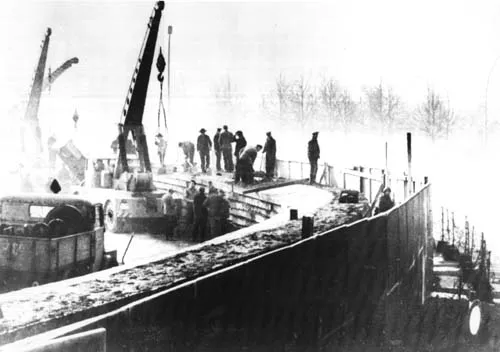
"Iron Curtain-Berlin Wall" by National Archives / Wikimedia Commons (Public domain).
After World War II ended in 1945, Europe was divided into two main spheres of influence. The western side, led by the United States and its allies, supported democracy and capitalism. The eastern side, under the control of the Soviet Union, promoted communism. This division is known as the Iron Curtain. The term was made famous by British Prime Minister Winston Churchill during a speech he gave in Fulton, Missouri, in March 1946. Churchill warned, "an iron curtain has descended across the Continent," describing how Europe was split both physically and ideologically.
The Iron Curtain was not an actual curtain, but a metaphor for the barrier separating Eastern and Western Europe. In the east, countries like Poland, Czechoslovakia, Hungary, and East Germany became satellite states of the Soviet Union. These countries had strict government control and limited personal freedoms. In contrast, Western European countries rebuilt with the help of the U.S. Marshall Plan and enjoyed more political and economic freedoms. The most visible symbol of the Iron Curtain was the Berlin Wall, constructed by East Germany in August 1961. The Wall physically divided the city of Berlin and prevented people from fleeing East Germany to the West.
Life on each side of the Iron Curtain was very different. In the East, the government controlled most aspects of daily life, including jobs, news, and travel. People could not speak out against the government without fear of punishment. In the West, citizens had more opportunities to express their opinions, travel freely, and choose their leaders. The Berlin Wall became a powerful symbol of oppression for people living under communism. Primary sources, such as letters from East Berliners and news reports from 1961, reveal how families were separated and daily routines were changed overnight.
The Iron Curtain also affected the global balance of power. Tensions between the Soviet Union and the United States led to the Cold War, a period of political and military rivalry without direct fighting. This conflict shaped international relations and caused several crises, such as the Berlin Airlift (1948-1949) and the Hungarian Uprising (1956). Over time, resistance to Soviet control grew in Eastern Europe. In 1989, a series of peaceful protests led to the fall of the Berlin Wall, and soon after, the Iron Curtain faded as countries gained independence and democracy returned to the region.
The division of Europe by the Iron Curtain changed millions of lives and influenced world affairs for nearly half a century. It serves as a reminder of how geography, ideology, and political decisions can shape history. Understanding the Iron Curtain helps explain the roots of modern Europe and connects to broader themes of conflict, freedom, and human rights.
Interesting Fact: Did You Know? The Berlin Wall was over 140 kilometers long and included guard towers, barbed wire, and a "death strip" to prevent escapes from East Berlin.
Who gave the 'Iron Curtain' speech?
Winston ChurchillJoseph StalinJohn F. KennedyHarry Truman
Which city was divided by a wall?
ParisBerlinMoscowLondon
When did the Berlin Wall fall?
1946195619611989
Why was the Iron Curtain significant?
It divided EuropeIt was a real curtainIt ended World War IIIt united the world
What was a main effect of the Iron Curtain?
Unified governmentsSeparated familiesNo world tensionsComplete freedom
How did people in the East live?
With strict controlWith total freedomWithout leadersUnder capitalism
The Cold War was a direct military conflict. True or false?
TrueFalse
What does 'democracy' mean?
People vote for leadersNo government existsGovernment owns everythingOne person rules forever
Perfect For:
👩🏫 Teachers
• Reading comprehension practice
• Auto-graded assessments
• Literacy skill development
👨👩👧👦 Parents
• Reading practice at home
• Comprehension improvement
• Educational reading time
🏠 Homeschoolers
• Reading curriculum support
• Independent reading practice
• Progress monitoring
Reading Features:
📖
Reading Passage
Engaging fiction or nonfiction text
❓
Comprehension Quiz
Auto-graded questions
📊
Instant Feedback
Immediate results and scoring
📄
Printable Version
Download for offline reading
🔊
Read Aloud
Voice-over with word highlighting
Reviews & Ratings
No reviews yet. Be the first to share your experience!
Related Content
Life During the Cold War
This world history reading passage explores life during the Cold War, focusing on the daily experiences, fear, and use o...
How the Cold War Began
This passage explores how the alliance between the United States and the Soviet Union during World War II broke down, le...
Easing Cold War Tensions
This engaging history reading passage examines the transformation of the Cold War from a period of confrontation and ext...
The Korean War
This comprehensive history reading passage explores the causes, events, and impact of the Korean War, the first major co...
America Fights in the Vietnam War
This engaging world history reading passage explores the Vietnam War and the Domino Theory, a key idea that shaped U.S. ...
Cold War Origins
This engaging passage examines the origins of the Cold War, focusing on the rivalry between the United States and the So...
D2.HIS.2.3-5D2.HIS.3.3-5RI.4.3RI.4.4
The Soviet Union Collapses
This comprehensive reading passage explores the end of the Cold War and the collapse of the Soviet Union, aligning with ...
War Bonds: Financing World War II
This passage examines the critical role of war bonds in financing World War II, focusing on how the U.S. government enco...
D2.HIS.2.3-5D2.HIS.3.3-5RI.4.3RI.4.4
Causes of World War I
This comprehensive history reading passage explores the complex causes of World War I, focusing on alliances, nationalis...
Events Leading to World War II
This passage explores the complex causes of World War II, focusing on the interwar period, the Treaty of Versailles, the...
World War I Impact on America
This engaging history reading passage explores World War I's impact on society and culture, highlighting key changes in ...
Trench Warfare in World War I
This comprehensive history reading passage explores the realities of life in the trenches during World War I, aligned to...
The Space Race
This engaging reading passage explores the Space Race, a critical chapter of the Cold War when the United States and the...
Russia Exits World War I
This comprehensive world history reading passage explores the Russian Revolution and how Russia exited World War I. Stud...
Nuclear Arms Race
This history reading passage examines the Cold War arms race and the global nuclear threat between the United States and...
Leaders and Decisions in World War II
This passage explores the major leaders of World War II and the critical decisions they made that shaped the course of g...
America Enters the War: 1917
This comprehensive history reading passage explores America’s entry into World War I in 1917, examining the causes, even...
American Life During World War II
This history reading passage explores life on the home front during World War II, focusing on the experiences of ordinar...
The Western Front in World War I
This engaging history reading passage explores the major battles of the Western Front during World War I, focusing on th...