Reading PassagePremium

Exile and Diaspora

Interactive passage with audio narration, comprehension questions, and printable PDF.

No ratings yet
Grades 5–8ReadingElaSocial-studiesHistoryEnglish · SpanishInteractive · Printable
Aligned toCA HSS 6.3.3RH.6-8.1RH.6-8.2WHST.6-8.2
Just this resource
$1.50
One-time purchase
Best value
Unlock everything
$49.99$24.99/yr
50% off until Sept 15 — 10,000+ resources
Renews at $49.99/year.

By completing this purchase you agree to our Terms of Use and Privacy Policy. Your subscription renews automatically until you cancel. You can cancel anytime from your account settings. All sales are final and non-refundable. Digital content is available for download in your account immediately upon purchase.

Unlock above to use these actions

What's included

Reading passage
Audio narration
Comprehension quiz
Writing activity
Glossary & flashcards
Differentiated version
Spanish translation

Part of this bundle

Exile and Diaspora preview and details

About this printable Exile and Diaspora reading passage (Grades 5-8)

This engaging passage explores the exile and diaspora of the Jewish people from ancient Israel, focusing on key events such as the Babylonian Captivity and Roman dispersal. Students will examine how geography, conquest, and social structures shaped Jewish history and identity. Using evidence from archaeological finds and primary sources, the passage traces cause-and-effect relationships and change over time, while highlighting the significance of the diaspora on both Jewish and world history. Accompanying activities include a multiple-choice quiz, writing prompts, graphic organizers, glossary, and a Spanish translation. The passage and resources are aligned with California History-Social Science Standard 6.3.3 and Common Core ELA standards CCSS RH.6-8.1, RH.6-8.2, and WHST.6-8.2. A read aloud audio and a public domain historical image further support comprehension and engagement.
Written by Workybooks TeamPublished by Workybooks
Preview

Sample passage and quiz from Exile and Diaspora

Reading passage and comprehension quiz preview

Exile and Diaspora
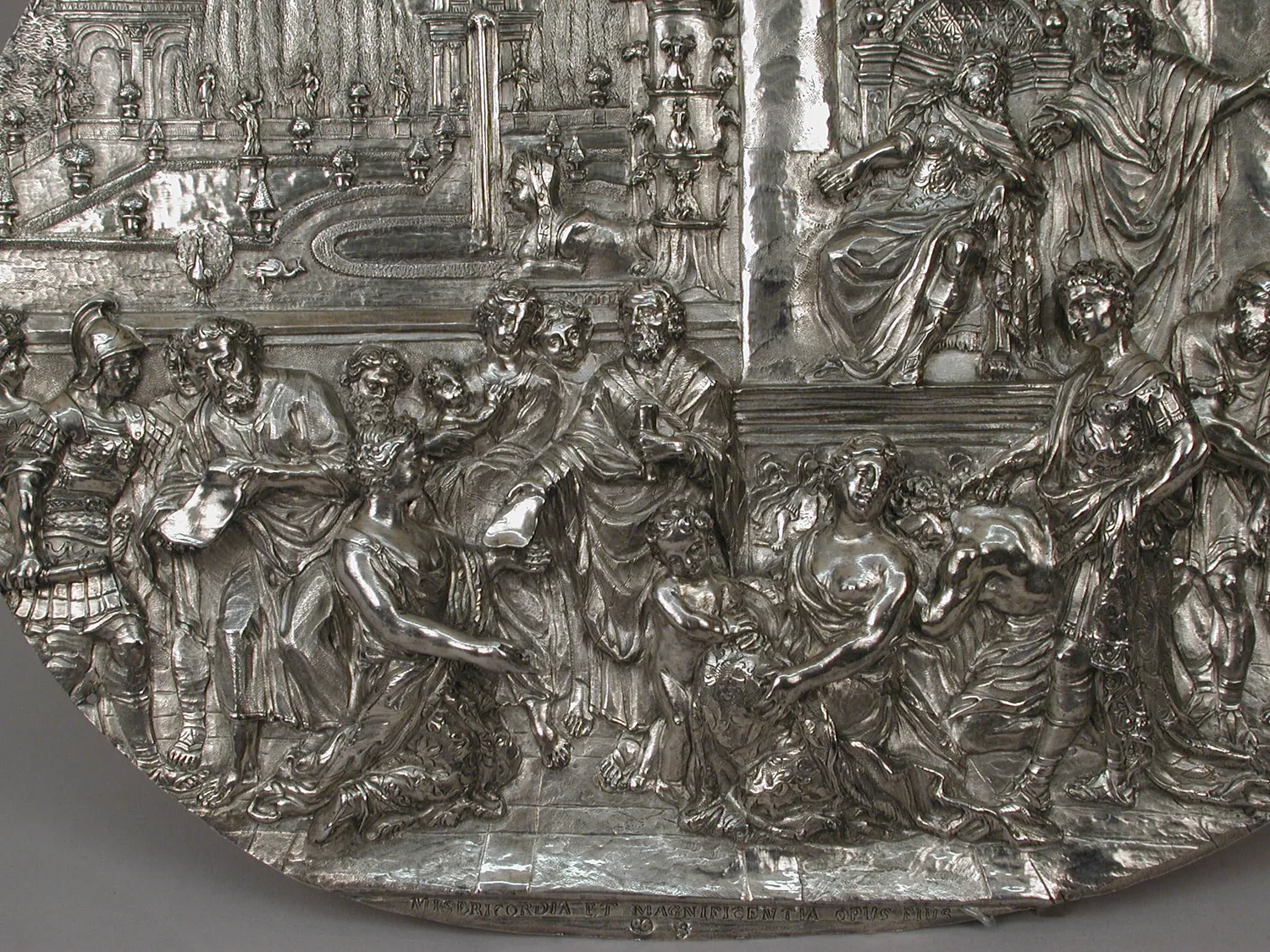
Cyrus Freeing the Jews from the Babylonian Captivity MET SF48 68 img2

Cyrus Freeing the Jews from the Babylonian Captivity MET by Johann Andreas Thelot / Wikimedia Commons

The diaspora refers to the dispersal of the Jewish people from their ancient homeland of Israel to many regions around the world. This process began over 2,500 years ago due to a series of conquests, forced migrations, and changing political powers in the ancient Middle East. The Jewish exile is a key example of how historical events and geography shaped the development of civilizations and cultures.

One major turning point was the Babylonian Captivity. In 586 BCE, the Babylonian king Nebuchadnezzar II conquered the Kingdom of Judah, destroyed Solomon’s Temple in Jerusalem, and forced thousands of Jews into exile in Babylon. Archaeological discoveries, such as clay tablets listing Jewish names in Babylon, provide evidence of this forced migration. During their years in Babylon, the Jewish people struggled to maintain their religious practices and community identity. Despite living far from Jerusalem, they continued to observe their traditions and laws, including the Sabbath and dietary customs.

The return from Babylonian exile occurred in 538 BCE, when the Persian king Cyrus the Great conquered Babylon and allowed the Jews to return to Jerusalem. Some Jews returned to rebuild the Temple and restore their homeland. However, many chose to remain in Babylon or migrate elsewhere, such as Egypt or Persia. This period marked the beginning of a wider Jewish diaspora. Over the next centuries, Jewish communities formed in cities across the Mediterranean, including Alexandria and Rome. Archaeological evidence reveals Jewish synagogues and inscriptions in these cities, highlighting their ongoing connection to their heritage while adapting to new cultures.

Another significant dispersal happened after the Roman conquest of Judea. In 70 CE, the Romans destroyed the Second Temple in Jerusalem and expelled many Jews from the region. The Jewish diaspora expanded as families settled across Europe, North Africa, and the Middle East. Despite loss and hardship, Jewish communities maintained religious traditions, developed new forms of worship such as the synagogue, and contributed to the societies where they lived. Their experiences show the resilience of a people facing repeated exile and adaptation to different environments.

The exile and diaspora of the Jewish people had a profound impact on world history. Jewish communities influenced the societies they joined, while preserving unique religious, cultural, and social practices. Their story illustrates how migration, conquest, and geography can shape the fate of a civilization over time.

This history connects to broader themes of ancient civilizations, showing how people respond to challenges and maintain identity across changing historical landscapes.

Interesting Fact: The world’s oldest known synagogue outside Israel, in Egypt’s city of Alexandria, dates back to around the 3rd century BCE.

Comprehension quiz (8 questions)

1. Who conquered Judah in 586 BCE?

Babylonian king Nebuchadnezzar II
Persian king Cyrus
Roman emperor Augustus
Greek king Alexander

2. Which event allowed Jews to return home?

Persian conquest of Babylon
Greek rule in Egypt
Roman destruction of the Temple
Founding of synagogues

3. Where is the oldest synagogue outside Israel?

Alexandria, Egypt
Babylon
Rome
Jerusalem

4. Why did the Jewish diaspora grow after 70 CE?

Romans expelled Jews
Jews wanted to travel
Babylonians invited them
Egyptians offered land

5. How did Jewish people keep their identity?

Kept religious traditions
Forgot their customs
Changed religions
Moved to one city

6. What is an example of archaeological evidence?

Clay tablets with Jewish names
Modern textbooks
Fiction stories
None found

7. Jewish people kept their traditions everywhere. True or False?

True
False

8. What does 'diaspora' mean?

Scattering of people
Building a temple
A war
A type of food
Who it's for

Perfect for the way you teach

Teachers
  • Build comprehension skills
  • Auto-graded quiz
  • Differentiated reading
Parents
  • Read together at home
  • Improve fluency
  • Quiet reading time
Homeschoolers
  • Reading curriculum support
  • Independent practice
  • Track Lexile growth
Topics

Reviews & Ratings

No reviews yet. Be the first to share your experience!

More reading you might love

19 more
Passage
Judaism and Monotheism - reading educational content
Grades 5–8

Judaism and Monotheism

ancient history · CA HSS 6.3.3+3

$1.50
Passage
Survival of Judaism - reading educational content
Grades 5–8

Survival of Judaism

ancient history · CA HSS 6.3.3+3

$1.50
Passage
United Kingdom of Israel  - reading educational content
Grades 5–8

United Kingdom of Israel

ancient history · CA HSS 6.3.3+2

$1.50
Passage
Africans and Filipinos in Early California - reading educational content
Grades 3–5

Africans and Filipinos in Early California

us history · HSS 4.2.1+1

$1.50
Passage
Bear Flag Revolt - reading educational content
Grades 3–5

Bear Flag Revolt

us history · HSS 4.3.5+1

$1.50
Passage
First California Constitution - reading educational content
Grades 3–5

First California Constitution

us history · HSS 4.3.5+1

$1.50
Passage
California Forty-Niners - reading educational content
Grades 3–5

California Forty-Niners

us history · HSS 4.4.2+1

$1.50
Passage
California Chinese Miners - reading educational content
Grades 3–5

California Chinese Miners

us history · HSS 4.4.3+1

$1.50
Passage
Effects of the Gold Rush - reading educational content
Grades 3–5

Effects of the Gold Rush

us history · HSS 4.4.4+1

$1.50
Passage
Golden Spike 1869 - reading educational content
Grades 3–5

Golden Spike 1869

us history · HSS 4.4.1+1

$1.50
Passage
Newcomers to California - reading educational content
Grades 3–5

Newcomers to California

us history · HSS 4.4.4+1

$1.50
Passage
1965 Immigration Act - reading educational content
Grades 3–5

1965 Immigration Act

us history · HSS 4.4.4+1

$1.50
Passage
California's Water Challenges - reading educational content
Grades 3–5

California's Water Challenges

us history · HSS 4.4.6+1

$1.50
Passage
Meroë Capital of Ancient Kush - reading educational content
Grades 5–8

Meroë Capital of Ancient Kush

ancient history · CA HSS 6.2.6+3

$1.50
Passage
Trade Between Egypt and Kush - reading educational content
Grades 5–8

Trade Between Egypt and Kush

ancient history · 6.2.3+3

$1.50
Passage
King Tut's Tomb Discovered - reading educational content
Grades 5–8

King Tut's Tomb Discovered

ancient history · CA HSS 6.2.9+2

$1.50
Passage
Farming in Ancient Mesopotamia - reading educational content
Grades 5–8

Farming in Ancient Mesopotamia

ancient history · CA HSS 6.2+4

$1.50
Passage
Mesopotamian Irrigation Systems - reading educational content
Grades 5–8

Mesopotamian Irrigation Systems

ancient history · CA HSS 6.2+4

$1.50
Passage
Sumerian City-States - reading educational content
Grades 5–8

Sumerian City-States

ancient history · CA HSS 6.2.1+3

$1.50
Copyright © 2026 Workybooks. Made with ♥ in California.