Reading PassagePremium

Survival of Judaism

Interactive passage with audio narration, comprehension questions, and printable PDF.

No ratings yet
Grades 5–8ReadingElaSocial-studiesHistoryEnglish · SpanishInteractive · Printable
Aligned toCA HSS 6.3.3RH.6-8.1RH.6-8.2RH.6-8.4
Just this resource
$1.50
One-time purchase
Best value
Unlock everything
$49.99$24.99/yr
50% off until Sept 15 — 10,000+ resources
Renews at $49.99/year.

By completing this purchase you agree to our Terms of Use and Privacy Policy. Your subscription renews automatically until you cancel. You can cancel anytime from your account settings. All sales are final and non-refundable. Digital content is available for download in your account immediately upon purchase.

Unlock above to use these actions

What's included

Reading passage
Audio narration
Comprehension quiz
Writing activity
Glossary & flashcards
Differentiated version
Spanish translation

Part of this bundle

Survival of Judaism preview and details

About this printable Survival of Judaism reading passage (Grades 5-8)

This rigorous history passage explores the development of Rabbinic Judaism in ancient Israel, focusing on the shift from Temple-based worship to the rise of rabbis and the creation of foundational texts such as the Mishnah and Talmud. Students will learn about the impact of the destruction of the Second Temple in 70 CE, how Jewish communities adapted, and how Rabbinic Judaism shaped Jewish daily life and religious thought. The passage is accompanied by a glossary, timeline, quiz, writing activities, graphic organizers, and read aloud audio. A Spanish translation is provided for accessibility. This resource aligns with CA HSS 6.3.3 and CCSS RH.6-8.2, supporting students to analyze historical cause and effect, use evidence, and understand continuity and change in world history.
Written by Workybooks TeamPublished by Workybooks
Preview

Sample passage and quiz from Survival of Judaism

Reading passage and comprehension quiz preview

Survival of Judaism
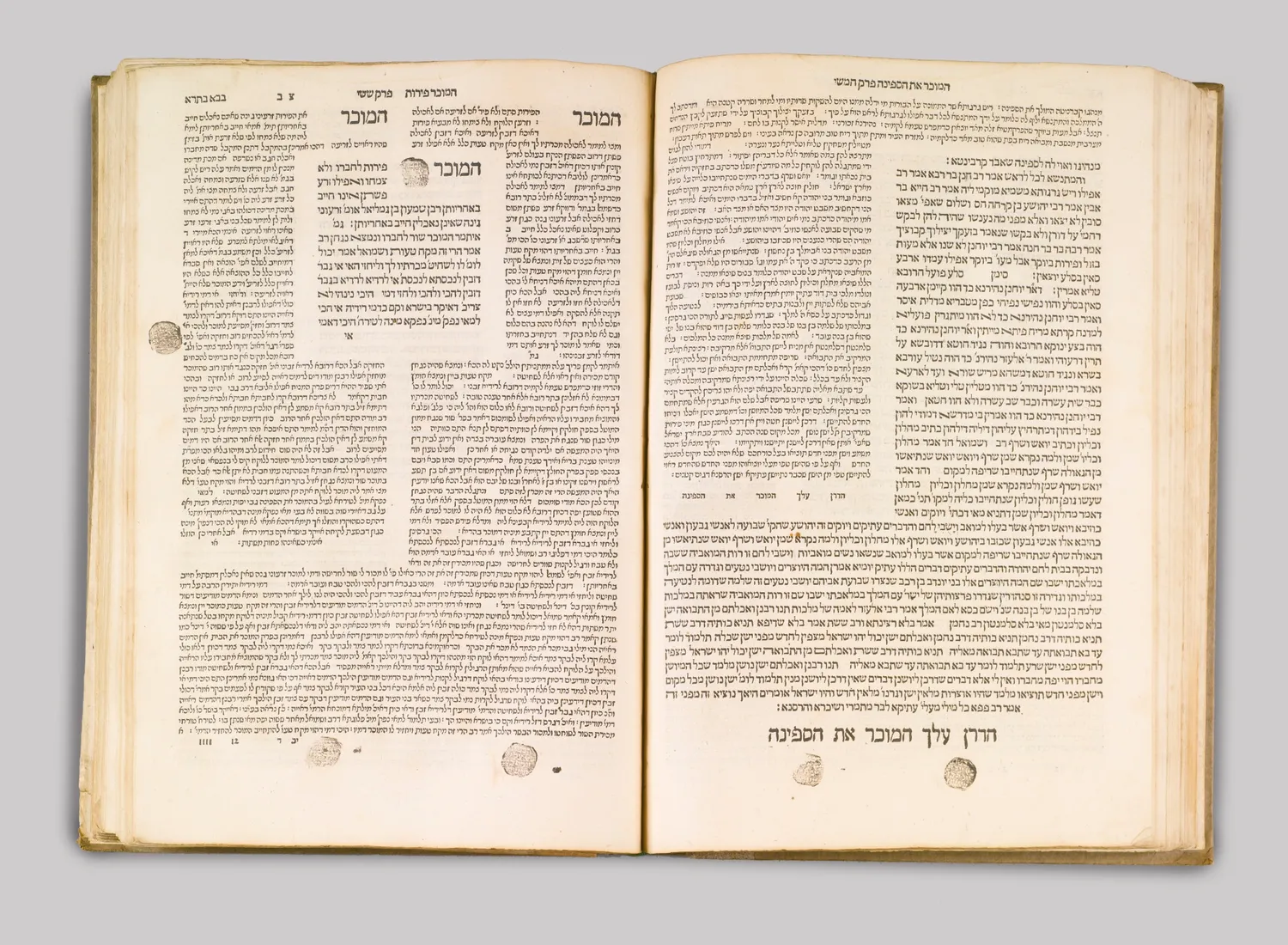
Babylonian Talmud, Tractate Bava Batra
"Babylonian Talmud" / Wikimedia Commons (Public domain). 

Rabbinic Judaism began to take shape in ancient Israel after the destruction of the Second Temple in Jerusalem in 70 CE. This period was marked by major changes in Jewish religious life, as the loss of the Temple forced Jewish communities to reimagine their traditions, leadership, and practices. The development of Rabbinic Judaism transformed the way Jews studied sacred texts, worshipped, and organized their communities.

Before 70 CE, Jewish religious life centered around the Temple in Jerusalem, where priests conducted sacrifices and major festivals. The Second Temple was not only a religious center but also a symbol of unity for Jews across the Mediterranean region. Archaeological evidence, such as the remains of the Temple walls and ancient coins, shows the Temple’s importance. When the Romans destroyed the Temple during the First Jewish-Roman War, Jews could no longer perform sacrifices as prescribed in the Torah. This crisis led to the rise of a new class of leaders: the rabbis.

Rabbis were scholars and teachers, not priests. They gathered in small study circles called yeshivot to interpret Jewish law and discuss the meaning of ancient texts. Their teachings were eventually written down in the Mishnah around 200 CE, a collection of legal rulings and traditions. Over the next centuries, rabbis in both Israel and Babylonia created detailed commentaries called the Talmud. These texts became the foundation for Jewish law and ethics. Archaeological finds, like ancient synagogue ruins and inscribed benches, show how community life shifted from the Temple to local gathering places.

The rise of Rabbinic Judaism brought significant changes to Jewish daily life. Instead of sacrifices, prayer and study became central. The synagogue replaced the Temple as the main meeting place for worship and learning. Social structures also changed: leadership shifted from hereditary priests to learned rabbis, making education and debate important sources of authority. Despite Roman rule, Jewish communities maintained their identity through laws, customs, and festivals, showing both continuity and adaptation over time. The debates among rabbis, recorded in the Talmud, reflect how Judaism responded to new challenges and preserved its traditions.

Rabbinic Judaism is significant because it enabled Jewish communities to survive and thrive without a central Temple. The teachings and laws of the rabbis have shaped Jewish identity and influenced religious thought for nearly two thousand years. Studying this period helps us understand how ancient peoples adapted to major changes and how religious traditions can evolve while preserving their core values.

This development connects to broader themes in world history, such as the adaptation of civilizations to loss and change, the role of religious leaders, and the importance of written traditions in maintaining cultural identity.

Interesting Fact: The oldest complete manuscript of the Babylonian Talmud, a central text of Rabbinic Judaism, dates to the 14th century, but some of its teachings are almost 1,500 years older.

Comprehension quiz (8 questions)

1. When was the Second Temple destroyed?

70 CE
200 CE
500 BCE
14th century

2. Who became leaders after the Temple fell?

Rabbis
Priests
Romans
Pharaohs

3. What text was finished around 200 CE?

Mishnah
Talmud
Torah
Bible

4. Why did synagogues become important?

Temple was destroyed
Rabbis banned the Temple
Romans built them
They replaced the Torah

5. What is a yeshiva?

Study group
Temple official
Roman law
Festival

6. How did Jewish leadership change?

Rabbis replaced priests
Romans led Jews
Kings led everyone
No leaders existed

7. The Talmud is a central text. True or false?

True
False

8. What does 'continuity' mean?

Staying the same
Making sacrifices
Writing new laws
Building temples
Who it's for

Perfect for the way you teach

Teachers
  • Build comprehension skills
  • Auto-graded quiz
  • Differentiated reading
Parents
  • Read together at home
  • Improve fluency
  • Quiet reading time
Homeschoolers
  • Reading curriculum support
  • Independent practice
  • Track Lexile growth
Topics

Reviews & Ratings

No reviews yet. Be the first to share your experience!

More reading you might love

19 more
Passage
Exile and Diaspora - reading educational content
Grades 5–8

Exile and Diaspora

ancient history · CA HSS 6.3.3+3

$1.50
Passage
Judaism and Monotheism - reading educational content
Grades 5–8

Judaism and Monotheism

ancient history · CA HSS 6.3.3+3

$1.50
Passage
United Kingdom of Israel  - reading educational content
Grades 5–8

United Kingdom of Israel

ancient history · CA HSS 6.3.3+2

$1.50
Passage
Africans and Filipinos in Early California - reading educational content
Grades 3–5

Africans and Filipinos in Early California

us history · HSS 4.2.1+1

$1.50
Passage
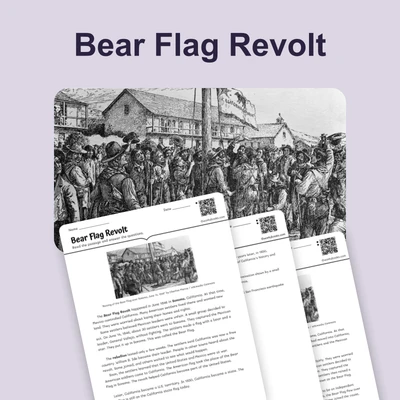
Bear Flag Revolt - reading educational content
Grades 3–5

Bear Flag Revolt

us history · HSS 4.3.5+1

$1.50
Passage
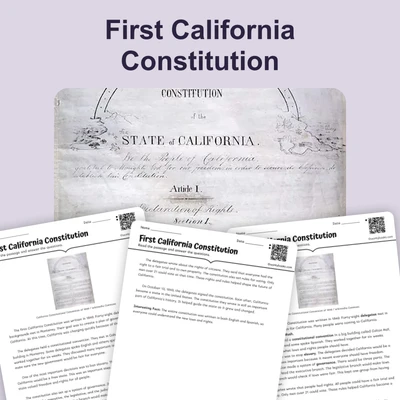
First California Constitution - reading educational content
Grades 3–5

First California Constitution

us history · HSS 4.3.5+1

$1.50
Passage
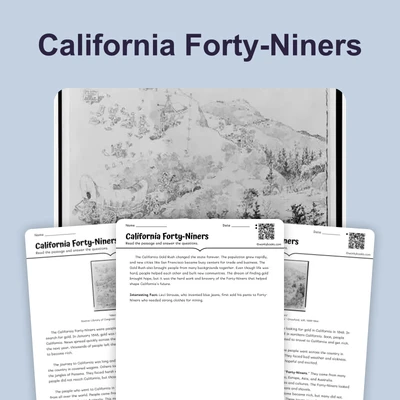
California Forty-Niners - reading educational content
Grades 3–5

California Forty-Niners

us history · HSS 4.4.2+1

$1.50
Passage
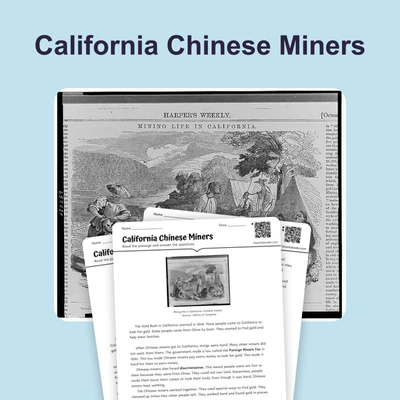
California Chinese Miners - reading educational content
Grades 3–5

California Chinese Miners

us history · HSS 4.4.3+1

$1.50
Passage
Effects of the Gold Rush - reading educational content
Grades 3–5

Effects of the Gold Rush

us history · HSS 4.4.4+1

$1.50
Passage
Golden Spike 1869 - reading educational content
Grades 3–5

Golden Spike 1869

us history · HSS 4.4.1+1

$1.50
Passage
Newcomers to California - reading educational content
Grades 3–5

Newcomers to California

us history · HSS 4.4.4+1

$1.50
Passage
1965 Immigration Act - reading educational content
Grades 3–5

1965 Immigration Act

us history · HSS 4.4.4+1

$1.50
Passage
California's Water Challenges - reading educational content
Grades 3–5

California's Water Challenges

us history · HSS 4.4.6+1

$1.50
Passage
Meroë Capital of Ancient Kush - reading educational content
Grades 5–8

Meroë Capital of Ancient Kush

ancient history · CA HSS 6.2.6+3

$1.50
Passage
Trade Between Egypt and Kush - reading educational content
Grades 5–8

Trade Between Egypt and Kush

ancient history · 6.2.3+3

$1.50
Passage
King Tut's Tomb Discovered - reading educational content
Grades 5–8

King Tut's Tomb Discovered

ancient history · CA HSS 6.2.9+2

$1.50
Passage
Farming in Ancient Mesopotamia - reading educational content
Grades 5–8

Farming in Ancient Mesopotamia

ancient history · CA HSS 6.2+4

$1.50
Passage
Mesopotamian Irrigation Systems - reading educational content
Grades 5–8

Mesopotamian Irrigation Systems

ancient history · CA HSS 6.2+4

$1.50
Passage
Sumerian City-States - reading educational content
Grades 5–8

Sumerian City-States

ancient history · CA HSS 6.2.1+3

$1.50
Copyright © 2026 Workybooks. Made with ♥ in California.