Judaism and Monotheism
Interactive passage with audio narration, comprehension questions, and printable PDF.
By completing this purchase you agree to our Terms of Use and Privacy Policy. Your subscription renews automatically until you cancel. You can cancel anytime from your account settings. All sales are final and non-refundable. Digital content is available for download in your account immediately upon purchase.
What's included
Part of this bundle

Judaism and Monotheism preview and details
About this printable Judaism and Monotheism reading passage (Grades 5-8)
Sample passage and quiz from Judaism and Monotheism
Reading passage and comprehension quiz preview
Judaism and Monotheism
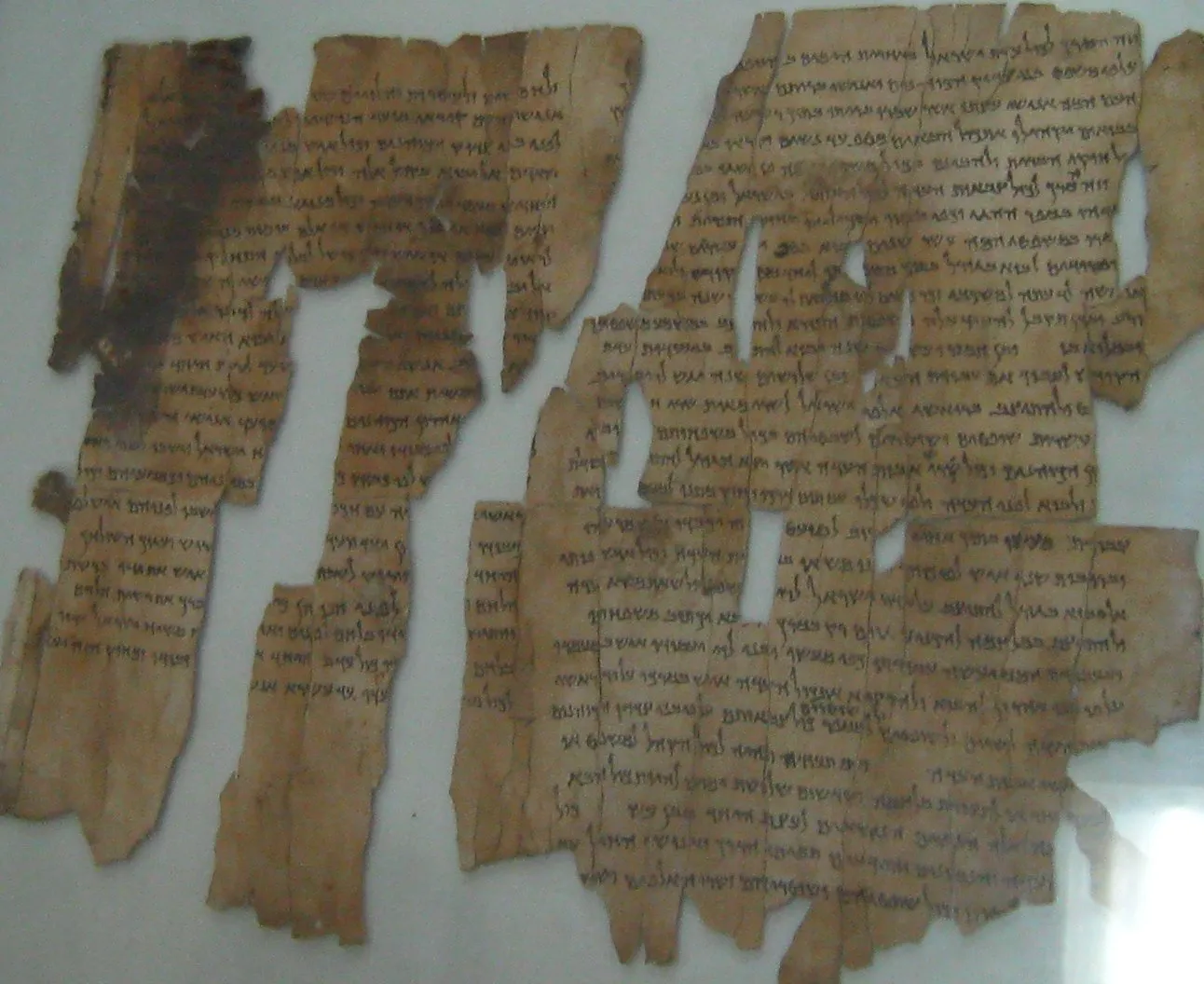
Dead Sea scrolls shown in Amman Archoelogy Museum by Pufacz / Wikimedia Commons
Judaism is one of the world’s oldest monotheistic religions, originating in the ancient land of Israel around 2000 BCE. The core beliefs of Judaism center on the ideas of law, justice, and ethics. These principles influenced not only the Hebrew people but also later civilizations across the world.
Judaism’s most important legal and ethical teachings are found in the Torah, the first five books of the Hebrew Bible. The Torah includes stories, laws, and commandments that were said to have been given to the prophet Moses on Mount Sinai around 1250 BCE. One of the most well-known examples is the Ten Commandments. According to tradition, these commandments provided rules for worshipping one God and for treating others with fairness and respect. Archaeological discoveries, such as ancient Hebrew inscriptions, support the presence of these beliefs in daily life. For instance, fragments of the Dead Sea Scrolls found near Qumran show how these laws were copied and studied by Jewish communities over 2,000 years ago.
The belief in justice was central to ancient Israelite society. The Hebrew prophets, such as Isaiah and Amos (active around 750–700 BCE), called on people and rulers to act fairly and protect the weak. They warned against corruption and demanded that all people—including kings—were subject to God’s laws. This idea marked a major difference from other ancient civilizations, where kings often claimed to be above the law. In Israel, the concept of a covenant between God and the people meant that everyone shared responsibility for creating a just society. For example, the prophet Amos declared, “Let justice roll down like waters and righteousness like an ever-flowing stream.”
Ethical behavior was also a key part of Judaism. The laws in the Torah required people to care for strangers, widows, and orphans, reflecting a concern for those at the bottom of society’s social hierarchy. Jewish law included rules about honesty in business, kindness to animals, and respecting parents. These teachings shaped daily life in ancient Israel, influencing everything from court decisions to family celebrations. Over time, Jewish beliefs about law, justice, and ethics influenced other religions, such as Christianity and Islam, and became a foundation for many legal systems in the modern world.
Judaism’s commitment to law, justice, and ethics created a strong sense of community and responsibility. These beliefs helped the ancient Israelites survive hardships such as exile and conquest. They also provided a model for later societies seeking fairness and moral guidance. The legacy of ancient Jewish law still shapes ideas about justice and human rights today.
Studying Judaism’s core beliefs helps us understand how ancient peoples built societies based on shared values, and links to broader themes of religion, government, and social order in world history.
Interesting Fact: The oldest known complete Torah scroll, found in Bologna, Italy, dates back over 800 years and is still used today.
Comprehension quiz (8 questions)
1. Where did Judaism originate?
2. Who received the Torah on Mount Sinai?
3. What are the Ten Commandments?
4. How did prophets differ from kings in Israel?
5. Why was justice important in Judaism?
6. What did Jewish laws require about strangers?
7. The Torah is the same as the Dead Sea Scrolls. True or false?
8. What does 'covenant' mean?
Perfect for the way you teach
- Build comprehension skills
- Auto-graded quiz
- Differentiated reading
- Read together at home
- Improve fluency
- Quiet reading time
- Reading curriculum support
- Independent practice
- Track Lexile growth