First Continental Congress 1774
Interactive passage with audio narration, comprehension questions, and printable PDF.
By completing this purchase you agree to our Terms of Use and Privacy Policy. Your subscription renews automatically until you cancel. You can cancel anytime from your account settings. All sales are final and non-refundable. Digital content is available for download in your account immediately upon purchase.
What's included
First Continental Congress 1774 preview and details
About this printable First Continental Congress 1774 reading passage (Grades 6-8)
Sample passage and quiz from First Continental Congress 1774
Reading passage and comprehension quiz preview
First Continental Congress 1774
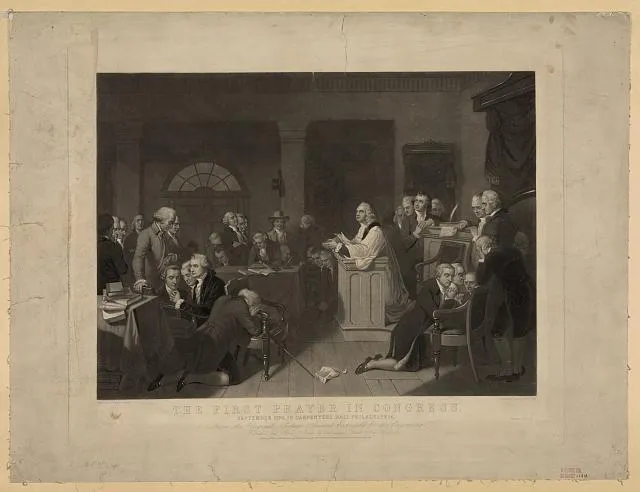
Source: Library of Congress - Sadd, Henry S.
The First Continental Congress of 1774 was a crucial meeting of colonial leaders in Philadelphia. Delegates from twelve of the thirteen American colonies gathered to address the growing crisis caused by British actions. The immediate cause was the British Parliament’s punishment of Massachusetts after the Boston Tea Party, known as the Intolerable Acts. These harsh laws closed Boston’s port and limited colonial self-government, threatening the rights and liberties of all colonies.
The colonies faced a significant problem: how to respond to British control without losing their identity or unity. Some delegates, like John Adams of Massachusetts and Patrick Henry of Virginia, argued for strong action and warned that British oppression could spread. Others, such as Joseph Galloway of Pennsylvania, hoped for reconciliation and believed that peaceful negotiation might restore their rights. This diversity of opinions led to heated debates and complex compromise within the Congress.
One major solution agreed upon was to organize a widespread boycott of British goods. This economic protest aimed to pressure Britain by refusing to import or purchase British products, showing colonial unity and resistance. The Congress also sent a formal petition to King George III, respectfully demanding the repeal of the Intolerable Acts and the restoration of colonial rights. By combining protest and diplomacy, the delegates balanced caution with determination.
Despite these efforts, the Congress recognized the possibility of armed conflict. They urged each colony to train its own militia and prepare for potential war, even as they continued to seek a peaceful settlement. This dual approach demonstrated both a desire for peace and a readiness to defend their liberties if necessary. The Congress pledged to reconvene in 1775 if their petitions were ignored, emphasizing the seriousness of their demands.
The First Continental Congress was a turning point because it encouraged cooperation among the colonies and established a model for future collective action. The delegates’ willingness to debate, compromise, and unite laid the groundwork for a shared American identity. Their actions reflected the tension between maintaining loyalty to Britain and pursuing self-government, a conflict at the heart of the coming Revolution.
Ultimately, while the Congress did not immediately resolve the conflict with Britain, it set important precedents for colonial unity and resistance. The decisions made in Philadelphia in 1774 shaped the path toward independence and the creation of a new nation.
Interesting Fact: The First Continental Congress included future leaders such as George Washington and Samuel Adams, who played key roles in the American Revolution.
Comprehension quiz (8 questions)
1. Where did the First Continental Congress meet?
2. Which colony did NOT send a delegate?
3. What law punished Massachusetts after the Tea Party?
4. Why did delegates organize a boycott?
5. How did the Congress seek peace?
6. What was a result of the Congress?
7. The Congress prepared for possible war. (True/False)
8. What is a boycott?
Common Core standards for First Continental Congress 1774
Explain events, procedures, ideas, or concepts in a historical, scientific, or technical text, including what happened and why, based on specific information in the text.
Determine the meaning of general academic and domain-specific words or phrases in a text relevant to a grade 4 topic or subject area.
Write informative/explanatory texts to examine a topic and convey ideas and information clearly.
Perfect for the way you teach
- Build comprehension skills
- Auto-graded quiz
- Differentiated reading
- Read together at home
- Improve fluency
- Quiet reading time
- Reading curriculum support
- Independent practice
- Track Lexile growth