First Political Parties in America
Interactive passage with audio narration, comprehension questions, and printable PDF.
By completing this purchase you agree to our Terms of Use and Privacy Policy. Your subscription renews automatically until you cancel. You can cancel anytime from your account settings. All sales are final and non-refundable. Digital content is available for download in your account immediately upon purchase.
What's included
First Political Parties in America preview and details
About this printable First Political Parties in America reading passage (Grades 6-8)
Sample passage and quiz from First Political Parties in America
Reading passage and comprehension quiz preview
First Political Parties in America
Source: Wikimedia Commons - Billy Hathorn
The birth of the United States brought not only independence but also new questions about how to govern the nation. As the country formed its first government under the Constitution, leaders disagreed about what direction America should take. These disagreements led to the creation of the first political parties in American history.
Two key figures, Alexander Hamilton and Thomas Jefferson, had sharply contrasting views. Hamilton was President George Washington’s Secretary of the Treasury. He believed in a strong national government. Hamilton argued that a powerful federal government could provide stability, pay off war debts, and support economic growth through a national bank. He and his followers became known as Federalists.
On the other side, Thomas Jefferson, who served as Secretary of State, distrusted concentrated power. Jefferson and his supporters, later called Democratic-Republicans, believed that most government authority should remain with the states. They favored an economy based on agriculture, feared government corruption, and opposed the creation of a national bank. This division represented a faction, or group united by shared beliefs, within the new government.
The debate between these groups was not just about money but about the very meaning of democracy. Federalists wanted to strengthen ties with Britain, seeing it as a model for economic success. Democratic-Republicans looked to France, supporting the ideals of the French Revolution and fearing that too much federal power would threaten individual freedoms.
As these differences deepened, each side began organizing supporters, publishing newspapers, and selecting candidates for office. The Federalists attracted merchants, bankers, and urban citizens, mainly in the North. The Democratic-Republicans appealed to farmers and rural communities, mostly in the South and West. These first parties shaped how Americans participated in government and influenced every election that followed.
Despite President Washington’s warning against the dangers of factions in his Farewell Address, political parties quickly became a central part of American democracy. They provided ways for people to organize, express ideas, and hold leaders accountable. However, fierce disagreement also led to political conflict and shaped debates about the Constitution’s interpretation—a struggle between those who wanted broad federal power and those who insisted on limited government.
Over time, these early conflicts set important precedents for future politics. The party system made it possible for peaceful changes in leadership and encouraged debate about the nation’s direction. The rivalry between Hamilton and Jefferson showed that dissent, when managed within the system, could strengthen democracy.
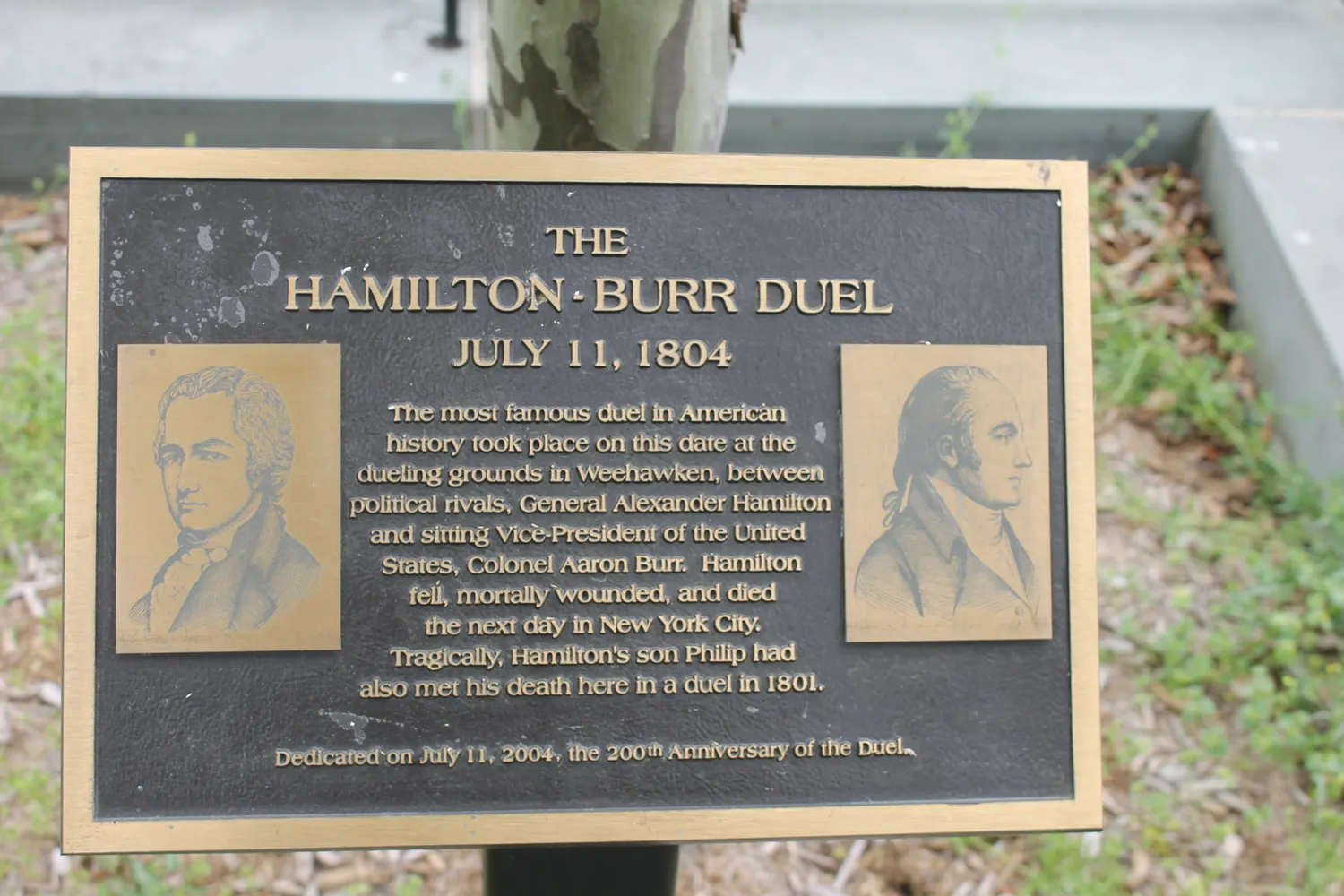
Interesting Fact: In the election of 1800, Thomas Jefferson and his running mate Aaron Burr tied in the electoral vote, leading the House of Representatives to decide the presidency—a direct result of the new party system.
Comprehension quiz (8 questions)
1. Who was a leader of the Federalists?
2. What did Democratic-Republicans support?
3. Which party was popular in the North?
4. Why did Hamilton want a national bank?
5. Why did Jefferson oppose the national bank?
6. How did political parties help democracy?
7. Political parties formed after 1792. True or false?
8. What is a 'faction'?
Common Core standards for First Political Parties in America
Explain events, procedures, ideas, or concepts in a historical, scientific, or technical text, including what happened and why, based on specific information in the text.
Determine the meaning of general academic and domain-specific words or phrases in a text relevant to a grade 4 topic or subject area.
Write informative/explanatory texts to examine a topic and convey ideas and information clearly.
Perfect for the way you teach
- Build comprehension skills
- Auto-graded quiz
- Differentiated reading
- Read together at home
- Improve fluency
- Quiet reading time
- Reading curriculum support
- Independent practice
- Track Lexile growth