Reading PassagePremium

General Robert E. Lee and Grant

Interactive passage with audio narration, comprehension questions, and printable PDF.

No ratings yet
Grades 3–5ReadingElaSocial-studiesHistoryEnglish · SpanishInteractive · Printable
Aligned toD2.HIS.2.3-5D2.HIS.3.3-5RI.4.3RI.4.4RI.5.3RI.5.4
Just this resource
$1.50
One-time purchase
Best value
Unlock everything
$49.99$29.99/yr
40% off until Aug 1 — 10,000+ resources
Renews at $49.99/year.
Unlock above to use these actions

What's included

Reading passage
Audio narration
Comprehension quiz
Writing activity
Glossary & flashcards
Differentiated version
Spanish translation

Part of this bundle

General Robert E. Lee and Grant preview and details

About this printable General Robert E. Lee and Grant reading passage (Grades 3-5)

This reading passage introduces students to General Robert E. Lee and General Ulysses S. Grant, two important leaders during the American Civil War. The passage provides a clear, chronological story of their roles, decisions, and the events leading to the end of the war. Readers will learn about their bravery, leadership, and the importance of unity and peace. Vocabulary words are bolded for literacy support. Activities include a multiple-choice quiz, writing prompts, and a timeline to help students build their understanding of history. This resource is aligned with the C3 Framework for Social Studies and Common Core ELA standards, making it a valuable tool for developing historical knowledge and literacy skills. It also includes read aloud audio and a complete Spanish translation, supporting diverse learners and bilingual classrooms. This passage is ideal for students interested in U.S. history and key figures who shaped the nation.
Written by Workybooks TeamPublished by Workybooks
Preview

Sample passage and quiz from General Robert E. Lee and Grant

Reading passage and comprehension quiz preview

General Robert E. Lee and Grant
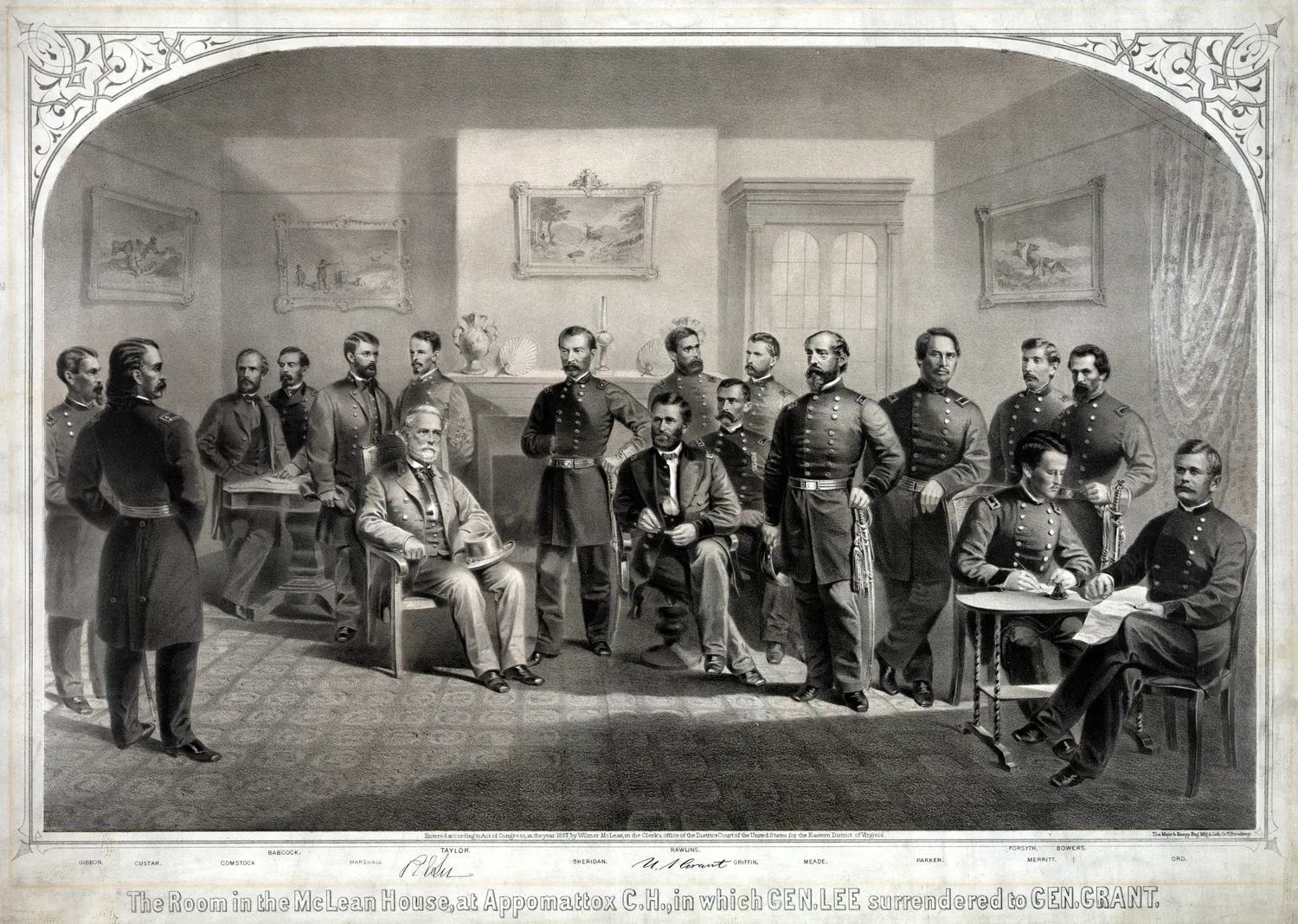
Lee Surrenders to Grant at Appomattox.jpg
Source: Wikimedia Commons - The Major & Knapp Eng. Mfg. & Lith. Co. 71 Broadway

The United States Civil War was a conflict between the North and the South from 1861 to 1865. Two important generals led the armies on opposite sides. General Robert E. Lee was the leader of the Confederate Army from the South. General Ulysses S. Grant was the leader of the Union Army from the North.

Both men were skilled military leaders. Lee was known for his bravery and clever plans in battles. Grant was known for his determination and willingness to keep fighting, even when things were tough. Their choices and actions affected the outcome of many battles during the war.

By 1865, the war had lasted four years. Many people and soldiers were tired and wanted peace. Grant's army grew stronger while Lee's army grew weaker. Grant's forces surrounded Lee's men at a place called Appomattox Court House in Virginia. Lee saw that his army could not win. He decided it was better to surrender and end the fighting.

On April 9, 1865, Lee and Grant met in a house at Appomattox. Lee wore his best uniform to show respect. Grant wore a simple coat, but he was friendly and polite. Grant told his men not to cheer at the surrender. He wanted to show respect to Lee and his soldiers.

Grant allowed Lee's soldiers to go home instead of becoming prisoners. He even let them keep their horses so they could farm and return to their families. This was a kind act that helped the country heal after a long and painful war.

The meeting at Appomattox ended the Civil War. It showed that even in difficult times, people can act with honor and respect. Lee and Grant both showed leadership and cared about the future of the United States.

Interesting Fact: After the war, Ulysses S. Grant later became the 18th President of the United States.

Comprehension quiz (8 questions)

1. Who led the Confederate Army?

Robert E. Lee
Ulysses S. Grant
Abraham Lincoln
George Washington

2. Where did Lee surrender?

Gettysburg
Appomattox
Richmond
Atlanta

3. What year did the Civil War end?

1861
1863
1865
1870

4. Why did Lee surrender?

His army was weak
He wanted more land
He won the battle
He wanted to travel

5. How did Grant show respect to Lee?

Let Lee go home
Took all weapons
Yelled at Lee
Ignored Lee

6. What was the result of the meeting?

The war ended
Lee won
More battles started
Grant surrendered

7. Lee and Grant were both generals. True or false?

True
False

8. What does 'surrender' mean?

To stop fighting
To start a war
To lead an army
To cheer
Curriculum

Common Core standards for General Robert E. Lee and Grant

RI.4.3

Explain events, procedures, ideas, or concepts in a historical, scientific, or technical text, including what happened and why, based on specific information in the text.

RI.4.4

Determine the meaning of general academic and domain-specific words or phrases in a text relevant to a grade 4 topic or subject area.

RI.5.3

Explain the relationships or interactions between two or more individuals, events, ideas, or concepts in a historical, scientific, or technical text based on specific information in the text.

RI.5.4

Determine the meaning of general academic and domain-specific words and phrases in a text relevant to a grade 5 topic or subject area.

Who it's for

Perfect for the way you teach

Teachers
  • Build comprehension skills
  • Auto-graded quiz
  • Differentiated reading
Parents
  • Read together at home
  • Improve fluency
  • Quiet reading time
Homeschoolers
  • Reading curriculum support
  • Independent practice
  • Track Lexile growth
Topics

Reviews & Ratings

No reviews yet. Be the first to share your experience!

More reading you might love

20 more
Passage
Native American Tribes Across America - reading educational content
Grades 3–5

Native American Tribes Across America

us history · D2.HIS.1.3-5

Free
Passage
Teepees: Homes on the Great Plains - reading educational content
Grades 3–5

Teepees: Homes on the Great Plains

us history · D2.HIS.2.3-5

$1.50
Passage
Traditional Native American Clothing - reading educational content
Grades 3–5

Traditional Native American Clothing

us history · D2.HIS.2.3-5

$1.50
Passage
The Iroquois Confederacy: A System of Peace - reading educational content
Grades 3–5

The Iroquois Confederacy: A System of Peace

us history · D2.HIS.2.3-5

Free
Passage
The Cherokee Nation: History and Culture - reading educational content
Grades 3–5

The Cherokee Nation: History and Culture

us history · D2.HIS.2.3-5

$1.50
Passage
The Sioux: Warriors and Tribal Leaders - reading educational content
Grades 3–5

The Sioux: Warriors and Tribal Leaders

us history · D2.HIS.1.3-5

$1.50
Passage
Native American Respect for Nature - reading educational content
Grades 3–5

Native American Respect for Nature

us history · D2.HIS.2.3-5

$1.50
Passage
Jamestown: The First Permanent English Colony - reading educational content
Grades 3–5

Jamestown: The First Permanent English Colony

us history · D2.HIS.1.3-5

$1.50
Passage
Pocahontas and the Powhatan People - reading educational content
Grades 3–5

Pocahontas and the Powhatan People

us history · D2.HIS.1.3-5

Free
Passage
Colonial Children: School and Chores - reading educational content
Grades 3–5

Colonial Children: School and Chores

us history · D2.HIS.2.3-5

$1.50
Passage
Colonial Clothing and Homemade Goods - reading educational content
Grades 3–5

Colonial Clothing and Homemade Goods

us history · D2.HIS.2.3-5

$1.50
Passage
Colonial Jobs: Blacksmiths, Bakers, and Craftsmen - reading educational content
Grades 3–5

Colonial Jobs: Blacksmiths, Bakers, and Craftsmen

us history · D2.HIS.2.3-5

$1.50
Passage
Colonial Towns and Village Life - reading educational content
Grades 3–5

Colonial Towns and Village Life

us history · D2.HIS.1.3-5

Free
Passage
Colonial Trade with England and Africa - reading educational content
Grades 3–5

Colonial Trade with England and Africa

us history · D2.HIS.2.3-5

$1.50
Passage
Benjamin Franklin: Printer, Inventor, and Leader - reading educational content
Grades 3–5

Benjamin Franklin: Printer, Inventor, and Leader

us history · D2.HIS.2.3-5

$1.50
Passage
George Washington Leads the Army - reading educational content
Grades 3–5

George Washington Leads the Army

us history · D2.HIS.1.3-5

$1.50
Passage
Women and Children During the Revolutionary War - reading educational content
Grades 3–5

Women and Children During the Revolutionary War

us history · D2.HIS.2.3-5

$1.50
Passage
The Battle of Yorktown Ends War - reading educational content
Grades 3–5

The Battle of Yorktown Ends War

us history · D2.HIS.1.3-5

$1.50
Passage
Loyalists vs. Patriots: Divided Families - reading educational content
Grades 3–5

Loyalists vs. Patriots: Divided Families

us history · D2.HIS.1.3-5

$1.50
Passage
John Adams: Second President - reading educational content
Grades 3–5

John Adams: Second President

us history · D2.HIS.2.3-5

$1.50
Copyright © 2026 Workybooks. Made with ♥ in California.