George Washington Leadership in Revolutionary War — Reading Comprehension
Rate this
Premium Resource
Present
Present in classroom. No work saved
Assign
Classroom with student accounts, Track progress
Quick Play
No student accounts, assign with a link
Grades
6
7
8
Standards
D2.HIS.2.3-5
D2.HIS.3.3-5
RI.4.3
RI.4.4
W.4.2
PRINT+DIGITAL RESOURCE
This learning resource is available in interactive and printable formats. The interactive worksheet can be played online and assigned to students. The Printable PDF version can be downloaded and printed for completion by hand.
In this engaging history reading passage, students will examine George Washington's leadership during the Revolutionary War. The passage provides an analytical look at the challenges faced by Washington and the Continental Army, including supply shortages, divided loyalties, and the struggle for independence. Multiple perspectives are presented, from the viewpoint of American patriots to British officials and Loyalists, offering a nuanced understanding of the conflict. Students will encounter key academic vocabulary, a primary source quote, and a focus on problem/solution text structure. Activities include a multiple-choice quiz, writing prompts emphasizing causation and significance, a timeline of major events, and a T-Chart graphic organizer comparing perspectives. The passage aligns to history and ELA standards D2.His.2.3-5, D2.His.3.3-5, RI.4.3, RI.4.4, W.4.2. Features include a read aloud audio and a full Spanish translation, supporting diverse learners and classrooms seeking high-quality, standards-based history content.
CONTENT PREVIEW
Expand content preview
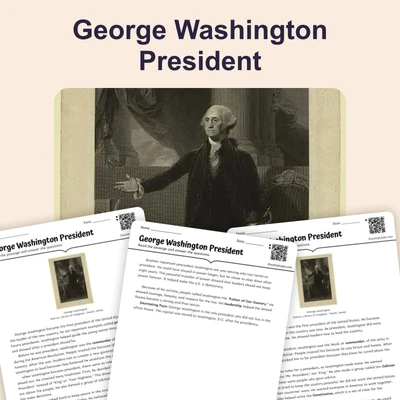
"[Washington and his generals]" by Ritchie, Alexander Hay, 1822-1895 / Library of Congress.
As commander-in-chief of the Continental Army, George Washington played a pivotal role in the American Revolution. The war for independence, which began in 1775, was filled with uncertainty and setbacks. Washington’s leadership was constantly tested by the strength of the British forces and the inexperience of his own soldiers. Despite these challenges, Washington’s commitment to the American cause never wavered. He understood that unity and determination were essential for victory.
One of the main problems Washington faced was maintaining the morale of his troops. The Continental Army often suffered from shortages of food, clothing, and weapons. Many soldiers became discouraged, and there were periods when large numbers deserted. Washington responded by setting a personal example of perseverance. He visited the camps, shared hardships with his troops, and encouraged them to remain loyal to the cause. His actions inspired confidence and helped keep the army together during hard times.
Washington’s military strategy was shaped by the realities he faced. He recognized that the British army was better trained and equipped. Instead of seeking direct confrontation, Washington chose to use surprise attacks and defensive tactics. For example, in December 1776, he led his troops across the icy Delaware River to launch a surprise attack on Hessian forces in Trenton. This bold maneuver boosted American spirits and showed the importance of creative leadership. Washington’s willingness to adapt his plans demonstrated his understanding of both his army’s strengths and its weaknesses.
Washington also faced political challenges. He had to balance the demands of the Continental Congress with the needs of his army. At times, Congress could not provide enough supplies or pay for the soldiers, leading to arguments and frustration. Washington wrote letters urging Congress to act, and he carefully managed relationships with other officers who sometimes disagreed with his decisions. His ability to communicate and compromise helped maintain stability within the army and the emerging government.
Throughout the war, Washington’s leadership became a symbol of hope for the new nation. He was respected not only for his military skills but also for his character. His sense of duty, honesty, and willingness to serve for the greater good inspired trust. By the end of the war in 1783, Washington’s leadership had helped turn a fragile group of colonies into an independent country. His example influenced the development of the presidency and continues to shape ideas about leadership in the United States.
Interesting Fact: During the harsh winter at Valley Forge in 1777-1778, Washington’s presence and encouragement were vital to the survival of the Continental Army.
Who was the commander-in-chief?
George WashingtonThomas JeffersonJohn AdamsKing George III
In which year did the war begin?
1775178317651801
Where did Washington lead his army in December 1776?
Across the Delaware RiverTo BostonTo YorktownTo Philadelphia
Why was morale low among the soldiers?
Lack of food and suppliesToo many celebrationsThey wanted to return to BritainThey disliked their commander
How did Washington inspire his troops?
By sharing hardshipsBy leaving the armyBy ignoring CongressBy refusing to adapt
What did Washington balance besides military duties?
Demands of CongressOnly weather conditionsBritish celebrationsPersonal business
Washington's leadership helped shape the presidency.
TrueFalse
What does perseverance mean?
Never giving upWinning every battleBeing a generalWriting letters
Perfect For:
👩🏫 Teachers
• Reading comprehension practice
• Auto-graded assessments
• Literacy skill development
👨👩👧👦 Parents
• Reading practice at home
• Comprehension improvement
• Educational reading time
🏠 Homeschoolers
• Reading curriculum support
• Independent reading practice
• Progress monitoring
Reading Features:
📖
Reading Passage
Engaging fiction or nonfiction text
❓
Comprehension Quiz
Auto-graded questions
📊
Instant Feedback
Immediate results and scoring
📄
Printable Version
Download for offline reading
🔊
Read Aloud
Voice-over with word highlighting
Reviews & Ratings
No reviews yet. Be the first to share your experience!
Related Content
Native American Tribes Across America
This engaging history reading passage introduces students to Native American tribes across America, focusing on their da...
D2.HIS.1.3-5D2.HIS.2.3-5RI.4.1RI.4.2
Teepees: Homes on the Great Plains
This engaging history reading passage introduces students to teepees, the unique homes of Native American tribes on the ...
D2.HIS.2.3-5D2.HIS.14.3-5RI.4.1RI.4.2RI.4.4
Traditional Native American Clothing
This engaging history passage explores traditional Native American clothing and how it reflected the environment, values...
D2.HIS.2.3-5D2.HIS.3.3-5RI.4.3RI.4.4
The Iroquois Confederacy: A System of Peace
This engaging U.S. History reading passage introduces students to the Iroquois Confederacy, a powerful alliance of Nativ...
D2.HIS.2.3-5D2.HIS.3.3-5RI.4.3RI.4.4
The Cherokee Nation: History and Culture
This reading passage explores the rich history and culture of the Cherokee Nation, one of the largest Native American tr...
D2.HIS.2.3-5D2.HIS.14.3-5RI.4.3RI.4.4RI.4.10
The Sioux: Warriors and Tribal Leaders
This history reading passage explores the Sioux Nation, focusing on their roles as warriors and tribal leaders. Students...
D2.HIS.1.3-5D2.HIS.2.3-5RI.4.1RI.4.3
Native American Respect for Nature
This engaging history reading passage explores Native American respect for nature, emphasizing the close relationship be...
D2.HIS.2.3-5D2.HIS.3.3-5RI.4.3RI.4.4
Jamestown: The First Permanent English Colony
This engaging history passage explores the founding of Jamestown, the first permanent English colony in America. Aligned...
D2.HIS.1.3-5D2.HIS.2.3-5RI.4.3RI.4.4
Pocahontas and the Powhatan People
This engaging reading passage explores the life of Pocahontas and the Powhatan people and their important role in early ...
D2.HIS.1.3-5D2.HIS.2.3-5RI.4.1RI.4.3
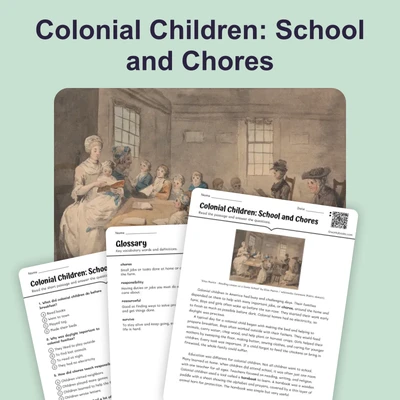
Colonial Children: School and Chores
This reading passage explores the daily lives of colonial children, focusing on their experiences at school and their ma...
D2.HIS.2.3-5D2.HIS.3.3-5RI.4.1RI.4.2RI.4.4
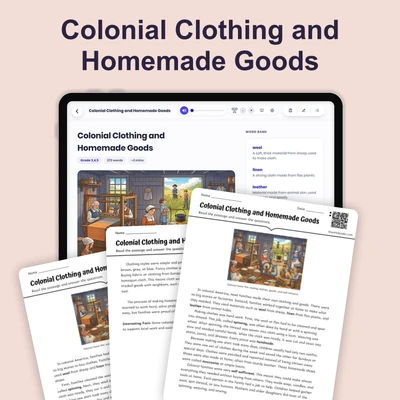
Colonial Clothing and Homemade Goods
This engaging U.S. history passage explores the daily life of early American colonists with a focus on colonial clothing...
D2.HIS.2.3-5RI.4.3RI.4.4
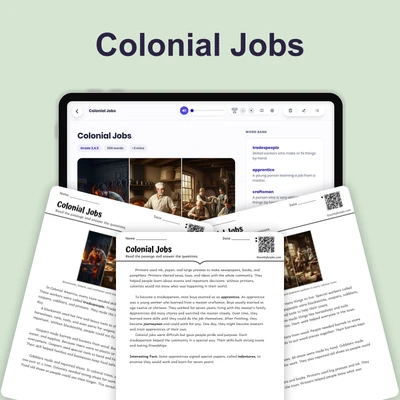
Colonial Jobs: Blacksmiths, Bakers, and Craftsmen
This engaging history reading passage explores the vital roles of blacksmiths, bakers, and craftsmen in colonial America...
D2.HIS.2.3-5D2.HIS.3.3-5RI.4.3RI.4.4
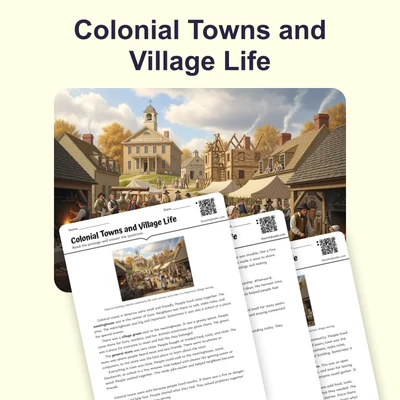
Colonial Towns and Village Life
This engaging history reading passage explores the daily life, work, and unity found in colonial towns and villages. Ali...
D2.HIS.1.3-5D2.HIS.2.3-5RI.4.3RI.4.4
Colonial Trade with England and Africa
This history reading passage explores colonial trade between the American colonies, England, and Africa, focusing on the...
D2.HIS.2.3-5D2.HIS.14.3-5RI.4.3RI.4.4
Benjamin Franklin: Printer, Inventor, and Leader
This history reading passage explores the life and achievements of Benjamin Franklin, one of America's most important ea...
D2.HIS.2.3-5D2.HIS.3.3-5RI.4.1RI.4.3
George Washington Leads the Army
This engaging history reading passage explores how George Washington bravely led the Continental Army during the America...
D2.HIS.1.3-5D2.HIS.2.3-5RI.4.3RI.4.4
Women and Children During the Revolutionary War
This reading passage explores the important roles women and children played during the Revolutionary War. Students will ...
D2.HIS.2.3-5RI.4.3RI.5.3
African Americans Fight for Freedom
This educational passage explores the brave and inspiring story of how African Americans fought for freedom in the Unite...
D2.HIS.2.3-5D2.HIS.3.3-5RI.4.3RI.4.4
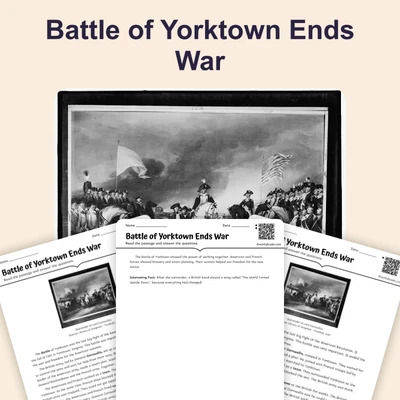
The Battle of Yorktown Ends War
This engaging U.S. history reading passage explores the Battle of Yorktown, a key event that ended the American Revoluti...
D2.HIS.1.3-5D2.HIS.2.3-5RI.4.1RI.4.3
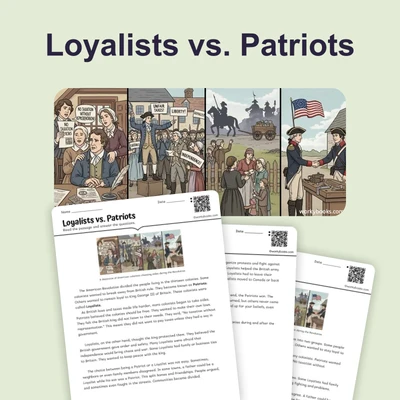
Loyalists vs. Patriots: Divided Families
This engaging U.S. history reading passage explores the division between Loyalists and Patriots during the American Revo...