How Land and Water Heat Differently
Interactive passage with audio narration, comprehension questions, and printable PDF.
By completing this purchase you agree to our Terms of Use and Privacy Policy. Your subscription renews automatically until you cancel. You can cancel anytime from your account settings. All sales are final and non-refundable. Digital content is available for download in your account immediately upon purchase.
What's included
How Land and Water Heat Differently preview and details
About this printable How Land and Water Heat Differently science reading passage, NGSS-aligned (Grade 6)
Sample passage and quiz from How Land and Water Heat Differently
Reading passage and comprehension quiz preview
How Land and Water Heat Differently
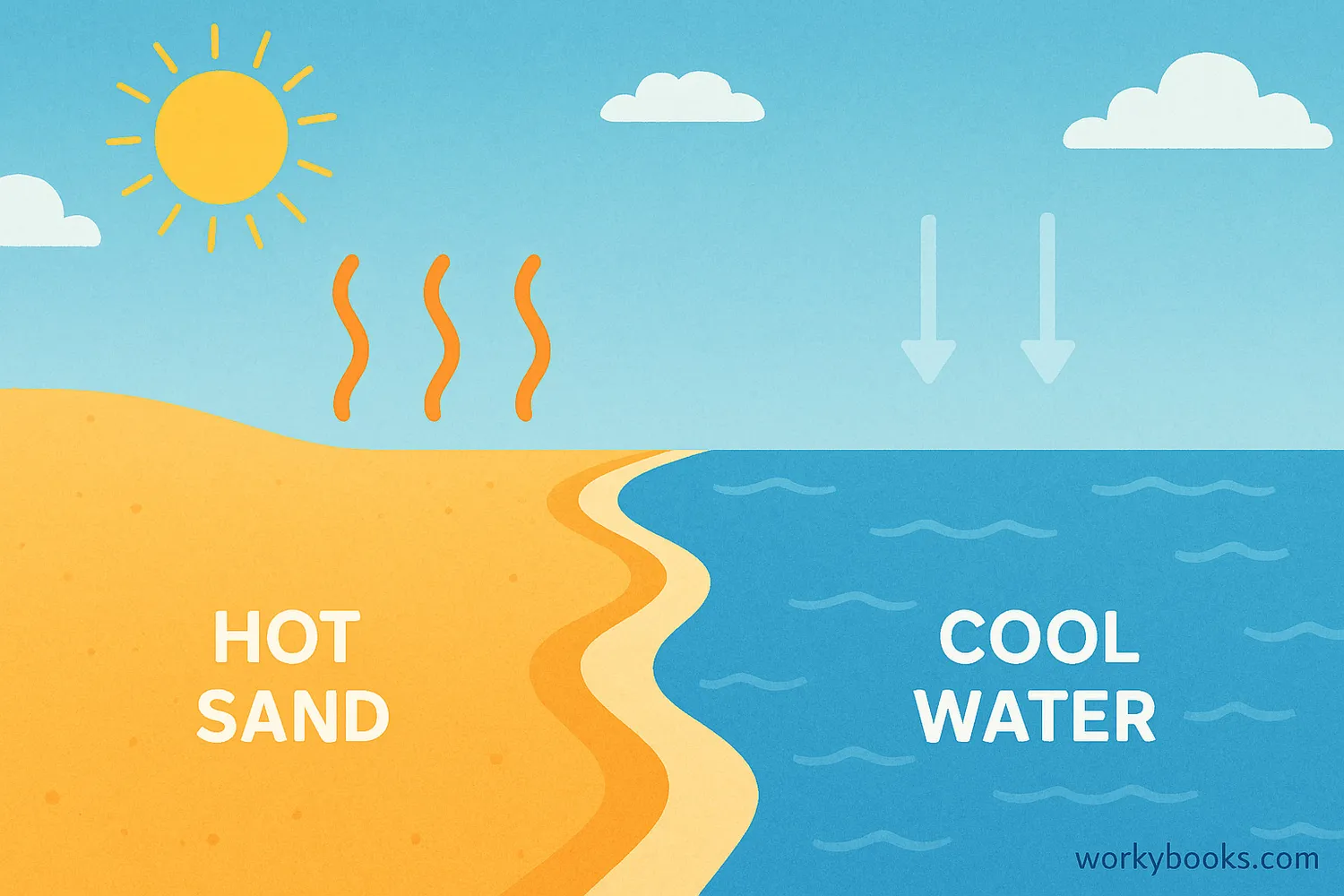
Imagine a sunny day at the beach. You step onto the sand, and it feels incredibly hot, almost too hot to stand on! Then, you run into the ocean, and the water feels much cooler. This isn't just a coincidence; it's a fundamental difference in how land and water interact with the sun's energy, which plays a huge role in Earth's climate and weather.
The main reason for this difference lies in a property called specific heat. Specific heat is how much heat energy it takes to raise the temperature of a substance. Water has a very high specific heat compared to land. This means that water needs to absorb a lot more thermal energy from the sun to get just a little bit warmer. Land, on the other hand, with its lower specific heat, heats up much faster when exposed to the same amount of sunlight.
Think of it like this: if you put a metal spoon and a wooden spoon in a pot of hot water, the metal spoon will get hot much faster because metal has a lower specific heat. Water is more like the wooden spoon; it resists changing its temperature quickly. This is also why water takes a long time to cool down. Once it has absorbed a lot of thermal energy, it releases that energy slowly over time.
Because land heats up and cools down quickly, places far from the ocean, called continental areas, often have extreme temperatures. They can be very hot in the summer and very cold in the winter. Coastal areas, however, experience more moderate temperatures. The ocean acts like a giant temperature regulator. During the day, it absorbs a lot of the sun's heat, preventing the land from getting too hot. At night, or in winter, the ocean slowly releases that stored heat, keeping nearby land warmer than inland areas would be.
This constant difference in heating and cooling between land and sea creates important weather patterns, including sea breezes, which are cool winds blowing from the ocean onto land during the day. It's a key part of how the Earth's atmosphere and oceans move heat around the planet, shaping the environments we live in. Understanding this unequal heating is essential for understanding global circulation patterns and regional climates.
Interesting Fact: The ocean stores so much heat that if you released all the thermal energy stored in just the top 10 feet of the ocean, it could heat the entire landmass of the Earth by over 20 degrees Fahrenheit!
Comprehension quiz (10 questions)
1. Which has a higher specific heat?
2. What term describes heat energy needed?
3. True or False: Land cools down slower than water.
4. What happens to land temperature quickly?
5. How does the ocean affect coastal temperatures?
6. What causes sea breezes?
7. Why do continental areas have extreme temperatures?
8. What is 'thermal energy'?
9. If a new planet had very low specific heat oceans, what would its coastal climates likely be like?
10. How might knowing about specific heat help someone choose a location for building a house if they prefer moderate temperatures?
Perfect for the way you teach
- Build comprehension skills
- Auto-graded quiz
- Differentiated reading
- Read together at home
- Improve fluency
- Quiet reading time
- Reading curriculum support
- Independent practice
- Track Lexile growth