Natural Climate Variability
Interactive passage with audio narration, comprehension questions, and printable PDF.
By completing this purchase you agree to our Terms of Use and Privacy Policy. Your subscription renews automatically until you cancel. You can cancel anytime from your account settings. All sales are final and non-refundable. Digital content is available for download in your account immediately upon purchase.
What's included
Natural Climate Variability preview and details
About this printable Natural Climate Variability science reading passage, NGSS-aligned (Grades 5-8)
Sample passage and quiz from Natural Climate Variability
Reading passage and comprehension quiz preview
Natural Climate Variability
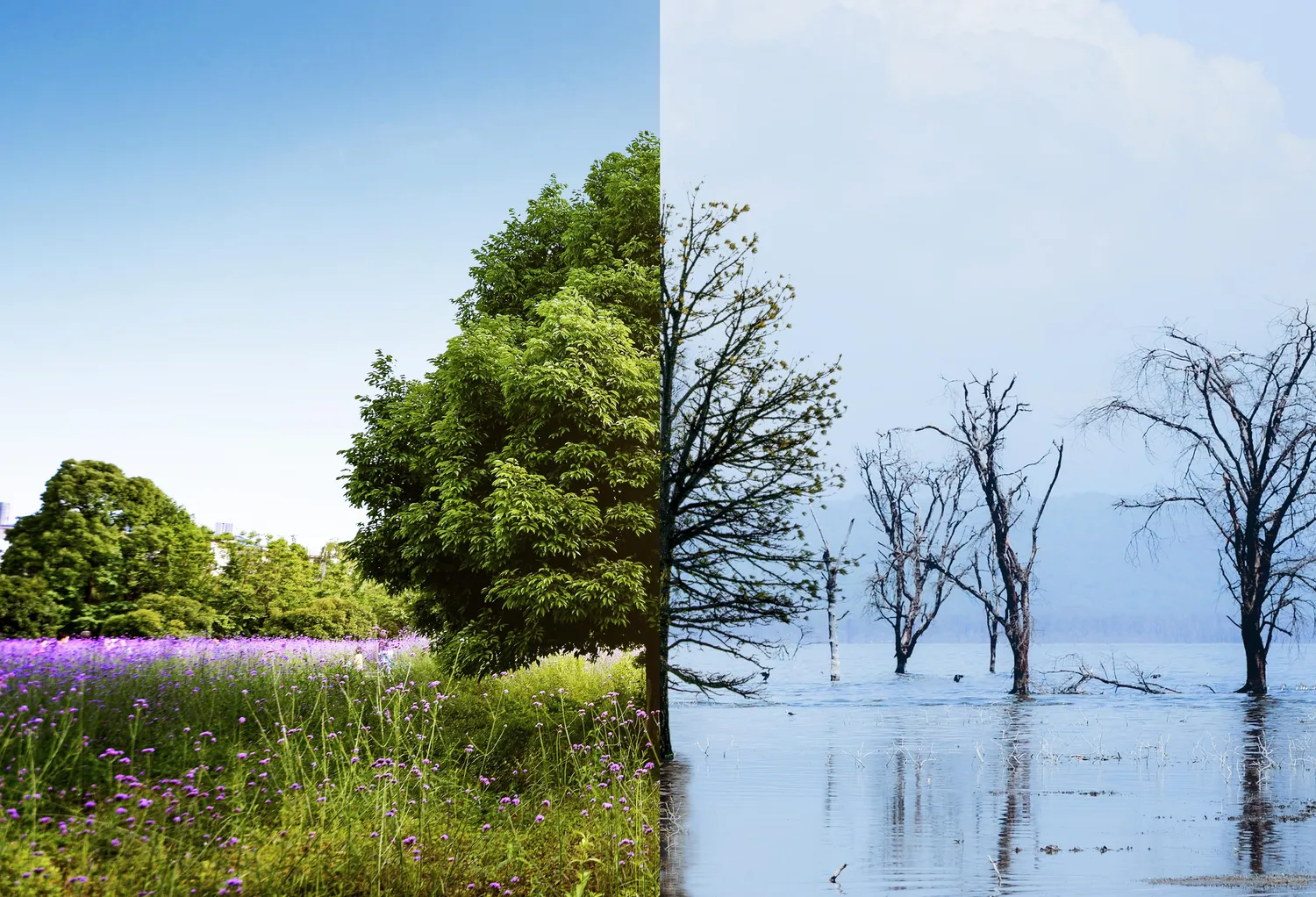
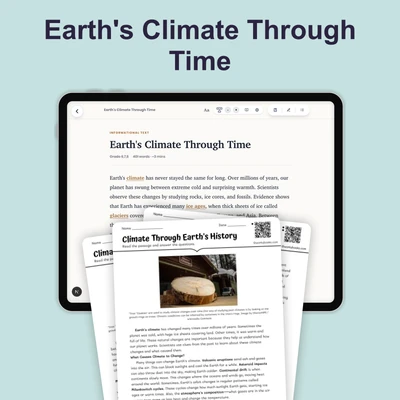
Earth’s climate has always been changing. Throughout history, temperatures have risen and fallen, causing ice ages and warm periods. These changes can be seen in the evidence left behind, such as layers in ice cores and tree rings. Understanding natural climate variability is important because it helps scientists distinguish between changes caused by nature and those caused by humans.
Natural Drivers of Climate Change
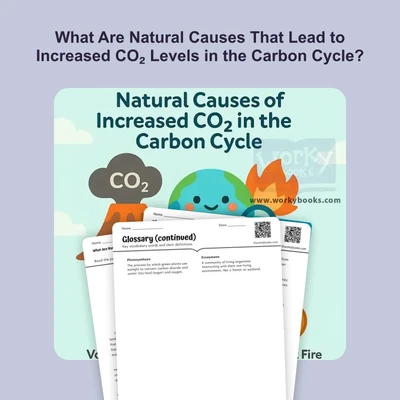
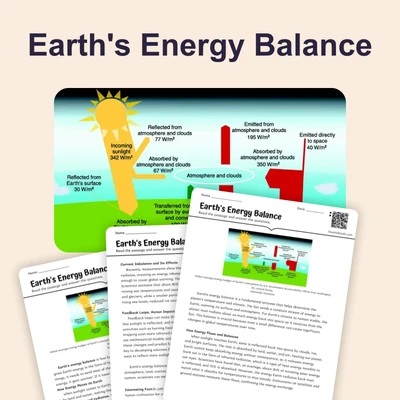
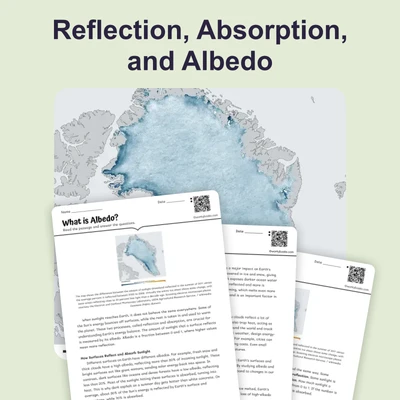
Several natural factors influence Earth’s climate over time. One key factor is the Milankovitch cycles, which are slow changes in Earth’s orbit and tilt that occur over tens of thousands of years. These cycles affect how much sunlight reaches different parts of the planet, leading to long-term climate shifts like ice ages. Another factor is solar variability, or changes in the sun’s energy output. Even small variations in solar radiation can influence global temperatures. Volcanic eruptions are another natural driver. When volcanoes erupt, they release ash and gases like sulfur dioxide into the atmosphere. These particles can reflect sunlight, causing temporary cooling that sometimes lasts for several years.
Ocean Circulation and El Niño
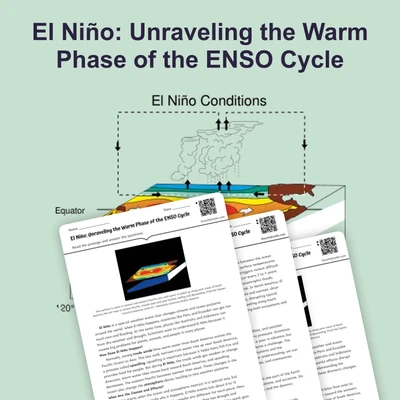
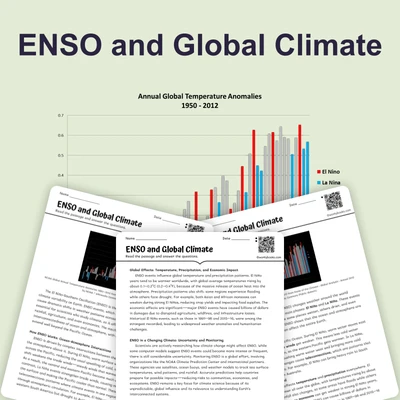
Earth’s oceans play a major role in climate variability. Large-scale patterns of ocean circulation, like the El Niño-Southern Oscillation (ENSO), shift heat and moisture around the globe. During El Niño years, warm water spreads across the Pacific Ocean, altering weather patterns and often causing heavy rains or droughts in different regions. These ocean changes can affect the climate for months or even years. Scientists monitor sea surface temperatures and atmospheric pressure to track ENSO events and predict their impacts.
Evidence from the Past
To study natural climate variability, scientists look for evidence in the environment. Ice cores drilled from Antarctica and Greenland contain trapped bubbles of ancient air, revealing information about past temperatures and greenhouse gas levels over hundreds of thousands of years. Tree rings provide another valuable record. In wet, warm years, trees grow wider rings; in cold, dry years, rings are narrower. By analyzing these patterns, researchers can reconstruct climate conditions going back thousands of years. These natural records show that climate has changed many times before humans began burning fossil fuels.
Natural Variability vs. Recent Change
While natural factors have always influenced climate, recent changes are happening much faster than before. Most natural changes occur over thousands or millions of years, but the current warming trend has taken place over a few decades. Scientists use knowledge of natural climate variability to compare past and present changes. This helps them understand the difference between normal, natural cycles and the rapid warming caused by human activities like burning coal, oil, and gas.
Understanding natural climate variability is essential for predicting future changes and making informed decisions about our planet. It allows scientists to separate natural patterns from human influence and prepares society for climate impacts.
Interesting Fact: Some ice cores from Antarctica are over 800,000 years old, letting scientists study climate changes far into Earth’s past.
Comprehension quiz (10 questions)
1. What is one main reason scientists study natural climate variability?
2. Which of the following is a natural cause of climate change described in the passage?
3. What evidence do scientists use to study past climates?
4. What happens during an El Niño event?
5. What does 'solar variability' mean as used in the passage?
6. What is the meaning of 'ice cores' in the passage?
7. Based on the passage, why do volcanic eruptions sometimes cause cooling?
8. Why is the current warming trend different from past natural changes?
9. True or False: Tree rings can only show the age of a tree and not anything about the climate.
10. True or False: Milankovitch cycles occur over thousands of years and affect how much sunlight Earth receives.
Perfect for the way you teach
- Build comprehension skills
- Auto-graded quiz
- Differentiated reading
- Read together at home
- Improve fluency
- Quiet reading time
- Reading curriculum support
- Independent practice
- Track Lexile growth