Gold Rush Environmental Impact
Interactive passage with audio narration, comprehension questions, and printable PDF.
By completing this purchase you agree to our Terms of Use and Privacy Policy. Your subscription renews automatically until you cancel. You can cancel anytime from your account settings. All sales are final and non-refundable. Digital content is available for download in your account immediately upon purchase.
What's included
Gold Rush Environmental Impact preview and details
About this printable Gold Rush Environmental Impact reading passage (Grades 6-8)
Sample passage and quiz from Gold Rush Environmental Impact
Reading passage and comprehension quiz preview
Gold Rush Environmental Impact
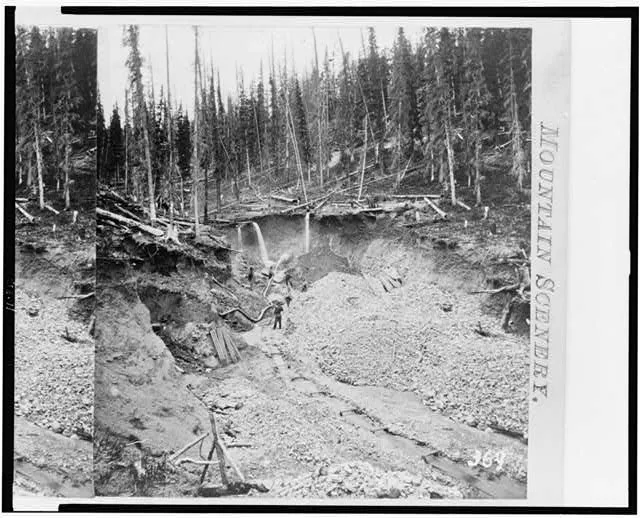
"Hydraulic mining, California gulch, Colorado" by Chamberlain, W. G. (William Gunnison) / Library of Congress.
The California Gold Rush of 1848-1855 was a period of rapid change in the American West, fueled by the discovery of gold at Sutter’s Mill. Thousands of people rushed to California, hoping to strike it rich. However, this search for gold brought major changes to the environment. Miners cut down forests, dug up hillsides, and polluted rivers. These actions had lasting consequences for California’s landscapes and people.
One of the most destructive mining practices was hydraulic mining. In this method, miners used powerful water jets to wash away entire hillsides and release gold from the soil. Although this technique was efficient, it caused significant erosion and sent huge amounts of mud and debris into rivers. Riverbeds became clogged, which led to flooding in nearby towns and farmland. The pollution from mining operations also poisoned fish and made water unsafe for drinking and farming.
As forests were cleared to make way for mining camps and fuel, deforestation became a serious problem. The loss of trees disrupted animal habitats and made the soil more likely to wash away in rainstorms. In many places, landscapes were permanently changed by the removal of vegetation and topsoil. These changes made it difficult for farmers to grow crops after the miners left.
The Gold Rush also brought more people and new settlements, which increased demand for natural resources. Towns grew quickly, often without careful planning. Waste from mining and towns was dumped into waterways, adding to existing environmental stress. Some local communities protested the destruction, but mining companies often ignored their concerns in pursuit of profit.
Over time, the consequences of these actions became clear. Flooded fields, polluted rivers, and barren hillsides remained long after the gold was gone. In the late 1800s, courts and lawmakers responded to protests by restricting hydraulic mining and requiring companies to take more responsibility for their impact. These legal changes helped protect the environment, but much of the original landscape was already lost.
The California Gold Rush shows the complex relationship between human activity and nature. While gold mining brought wealth and growth, it also created lasting environmental damage. Today, historians use evidence from this period to study how economic choices can have far-reaching effects on the environment, both positive and negative.
Interesting Fact: The debris from hydraulic mining during the Gold Rush raised some riverbeds in California by more than 20 feet, causing floods that changed the course of entire rivers.
Comprehension quiz (8 questions)
1. When did the California Gold Rush begin?
2. What is hydraulic mining?
3. Which natural resource was most affected by deforestation?
4. What problem did river pollution cause?
5. Why did towns grow quickly during the Gold Rush?
6. What was a result of hydraulic mining?
7. Deforestation means cutting down trees.
8. What does 'consequences' mean?
Common Core standards for Gold Rush Environmental Impact
Explain events, procedures, ideas, or concepts in a historical, scientific, or technical text, including what happened and why, based on specific information in the text.
Determine the meaning of general academic and domain-specific words or phrases in a text relevant to a grade 4 topic or subject area.
Write informative/explanatory texts to examine a topic and convey ideas and information clearly.
Perfect for the way you teach
- Build comprehension skills
- Auto-graded quiz
- Differentiated reading
- Read together at home
- Improve fluency
- Quiet reading time
- Reading curriculum support
- Independent practice
- Track Lexile growth